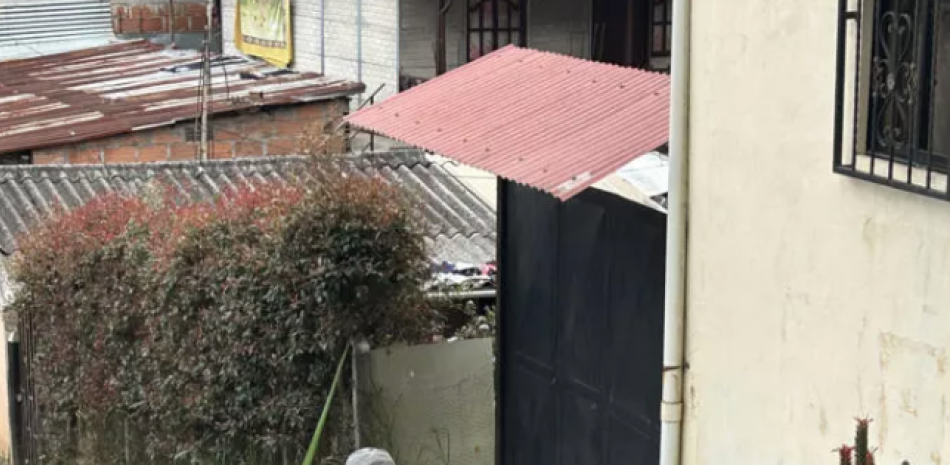
“None of them have water down there”says a voice while pointing to the houses that hang down the mountain. From the highest part of Altos de Oriente you can see a good part of the Granizal sidewalk: zinc roofs, improvised stairs and steep streets that for three decades have been built by those who arrived looking for a place to start again. But in this landscape there is an absence that is felt every day: drinking water.
The routine starts early. Around seven in the morning the tank trucks (tank trucks) appear that supply the community tanks located next to the road. When they arrive, the scene repeats itself over and over again. People with buckets, cans and containers of all sizes form lines to collect the water they will need during the day. The problem is that the journey just begins there. From the tank to the house there is still a climb to do carrying dozens of liters on our shoulders.
“Take the can, take the coke, throw it there, carry it here,” explains a resident while describing a task that has become a habit for her. “It’s not the same as opening a tap and that’s it. Doing things takes longer”. Every wash of clothes, every clean dish, and every bath is preceded by the physical effort of carrying water.
In El Pinar, one of the neighborhoods founded in the nineties and that belongs to this truth, the neighbors still remember when the sector was just a patch of mud. “There were no roads here. That was pure swamp,” says a woman. “People hammered away until one in the morning fixing their little houses.”
There were also no sewers or aqueduct networks. The water came as it could. And in many ways, it keeps coming the same.
As the years went by, more inhabitants arrived. Many families were victims of the armed conflict who found in these mountains a place to rebuild their lives.
New forms of control also arrived. Some residents relate how community water administration was replaced by groups that took over the management of connections and charges. “They told us they were coming,” recalls a former leader in the sector. “They told us if we wanted to continue, but with those conditions I said no.”
The consequence is that today many people must choose between carrying drinking water from the road or paying for untreated water distributed through informal networks. None of the options is easy.
“That’s the hardest thing. We see the water as gold,” says another resident. The phrase is not an exaggerated metaphor. In these houses every drop has a function. The water used to wash dishes can end up being used to flush the toilet. What is left over after cleaning a cup is saved for another need. Nothing is wasted. “When you don’t have water in the tap, you don’t throw away that little bit where you washed something because you need it later,” he explains.
Scarcity also transforms the emotional relationship with the resource. “What I do think is nice is that you learn to appreciate it,” says one woman. “Any water goth is a treasure.” Then he remains silent for a few seconds before adding: “But going from living in the countryside, where there is plenty of water, to coming here and suffering for it… that is very hard.”
Domestic tasks are perhaps where the weight of that reality is felt most. Several families keep separate containers according to the use they will give to the water. A cooking container. Another for washing food. Another for mopping (cleaning the floor) or flushing the toilet. Maintaining this balance requires permanent management of the resource. And it is almost always women who carry that responsibility.
Added to the difficulty in obtaining water is concern about its quality. Some people report that water stored for several days takes on a muddy smell or deteriorates quickly. “We are animals of habit and we get used to it,” says a resident with resigned laughter. However, she admits that she does not feel comfortable using it for everything. “That water is not clean,” he says.
The paradox is impossible to ignore. The Granizal village is located next to Medellín, a city recognized for its urban transformations. On the other side of the mountain there are water sources that supply large sectors of the Aburrá Valley. However, here the water continues to arrive in trucks and travel in buckets.
When the tank car appears; conversations are interrupted. Someone shouts that he has arrived. People leave their homes with empty containers and hurry to catch a turn. The line forms again. The water begins to flow and, for a few minutes, everything revolves around it. Then it will be time to take the uphill path again. Because in these mountains, getting water is still an everyday job. A journey that is measured in effort, time and, many times, in kilometers.