The hard blow to the Democrats continues 2024 elections Their heavy loss of the White House and the majority in both chambers of Congress is fresh in the minds of its leaders and voters, as they search for a candidate for the party in the next presidential election.
The list of potential contenders for the Democratic Party nomination in the upcoming presidential race includes state governors, senators, and some who previously ran in states that typically hold early voting, as they seek to attract donors and reveal their strategy – familiar steps in running in the presidential election against the final Republican candidate to succeed Trump, whose term is expiring.
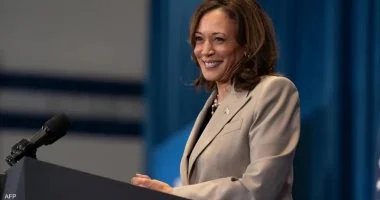
Kamala Harris…the most prominent so far
Reuters published a list of the most prominent potential candidates in the Democratic race for the White House in 2028, and among the prominent names was Kamala Harris.
Harris has clearly indicated her willingness to run for the White House for a third time, as she previously competed against Biden in the 2020 Democratic primary race and then ran for the party’s nomination in the 2024 race.
Last April, Harris responded to a question about whether she was thinking about running, and said, “I am thinking about it.” “The status quo is not working, and has not been for many for a long time.”
She added, “Look, the American people have the right to expect that anyone who wants to run for office, or to be a leader, is not motivated by their own personal interests.”
Harris is well-known and has strong support among Democratic voters in early 2028 polls. But given the fact that this will be her third candidacy, primary voters often view candidates who have previously run and lost with suspicion. Her relationship with former President Joe Biden could also be problematic, as some Democrats see his late withdrawal from the 2024 race as hurting the party’s chances.
Reuters says that Harris’s support in the upcoming primary elections has reached 50% in new polls, including the Center for American Policy Studies, which strengthens her position as a more likely candidate if she decides to run.
Gavin Newsom, Governor of California
Among the names also nominated to run in the Democratic race Governor of California Gavin Newsom. Last October, Newsom said he was considering running for president, indicating that he would make his decision after the 2026 midterm elections.

Last year, Newsom sought to gauge the waters regarding his potential presidential candidacy, and gained support within his party in confronting President Trump on a range of issues. The California governor indicated that he looked forward to “those who will present themselves (for candidacy) in 2028 and who will rise to the occasion.” Asked if he was considering running, Newsom said, “Yes, I would be lying (if I said) otherwise.”
Newsom published his memoirs last February, and visited South Carolina, a potential early state in the primary race, in an implicit reference to his possible candidacy. According to Federal Election Commission data, Newsom has more than $4 million in his political committee.
Newsom’s widespread fame at the national level and his harsh criticism of Trump are among his most prominent strengths. But the rise in fuel prices in California, which are the highest ever, and the increase in homelessness rates are potential weaknesses that Republicans could exploit against him if he decides to run.
Andy Beshear, Governor of Kentucky
Joining Harris and Newsom on the list of potential candidates is Kentucky Governor Andy Beshear, who became chairman of the Democratic Governors Association this year, giving him a platform to promote his record in his strongly Republican state. Beshear has raised more than $1.2 million in his political action committee and visited South Carolina.
When asked in a television interview this month whether he was comfortable being talked about as a potential candidate for the 2028 elections, he replied: “I am comfortable with that.”
One of Beshear’s most prominent strengths is that he was elected twice in a state that Trump won by more than 30 percentage points in 2024. But the most important challenge he faces remains that he is not widely known outside of Kentucky, and his bipartisan political approach may not appeal to Democratic primary voters, as polls have shown that many believe their party is not doing enough to confront Trump and his policies.
Illinois Governor JB Pritzker
Pritzker visited states likely to see early primaries, including New Hampshire and Nevada, and did not rule out a presidential run. Last April, he said he was focusing on his campaign for re-election as governor in 2026, but later added: “I will be more involved than ever in 2028 because we cannot lose.”
Pritzker gained national fame through his criticism of Trump’s deployment of National Guard troops and federal immigration agents in American cities. As heir to the Hyatt hotel empire, Pritzker is a billionaire, which allows him to rely less on donations.
However, this wealth, which is one of the sources of his strength, may expose him to attacks from his competitors who portray him as disconnected from voters facing economic difficulties, or overly dependent on his personal wealth.
Pennsylvania Governor Josh Shapiro
Shapiro released a memoir this year and has about $36 million in cash for his re-election campaign as governor next November. When asked in April about his potential presidential run, Shapiro said Democrats would need to have a discussion about the country’s direction after the midterm elections next November. “And I will be part of this discussion,” he added.
Like his potential rivals, Shapiro enjoys wide popularity as governor in a key swing state in the presidential election, which Trump will win in 2024. But Shapiro, who is Jewish, is viewed by some as a pro-Israel Democrat at a time when criticism of Israel is increasing among Democrats over its wars in Gaza and Iran, despite his opposition to the US-Israeli war against Iran.
Potential contenders are members of Congress
Besides state governors, a number of Democratic US senators have sparked speculation about the 2028 election, but only one of them, Mark Kelly of Arizona, has received early and sustained scrutiny. The others are Ruben Gallego of Arizona, Chris Murphy of Connecticut, Jon Ossoff of Georgia, and Cory Booker of New Jersey.
Among those rising strongly in the nomination race is young progressive Representative Alexandria Ocasio-Cortez, known as AOC. Ocasio-Cortez describes herself as a democratic socialist and is seen as the most suitable heir to the movement built by US Senator Bernie Sanders during his two presidential campaigns.
When the New York representative was asked about her presidential ambitions, she did not rule out her candidacy, and said: “My ambition is to change this country.”
Despite AOC’s broad popularity among Democratic voters, and her frequent draw of enthusiastic crowds at her public appearances, Republicans portray her as a prominent figure on the party’s left wing, citing her support for taxing the wealthy and government-funded programs.
Axios says that although Cortez has not yet decided to run for president, she has taken actual steps toward this potential move. It has begun a state-level campaign in recent weeks, and Democratic experts expect it to be able to easily raise $100 million from donors who donate small amounts, not to mention its ability to mobilize Sanders supporters.
In addition to the previous names, the name of the former Secretary of Transportation in the Biden administration, Pete Buttigieg, is being proposed as one of the potential contenders in the Democratic race. Buttigieg had previously selected the primary race against Biden in 2020, before withdrawing at an early stage.