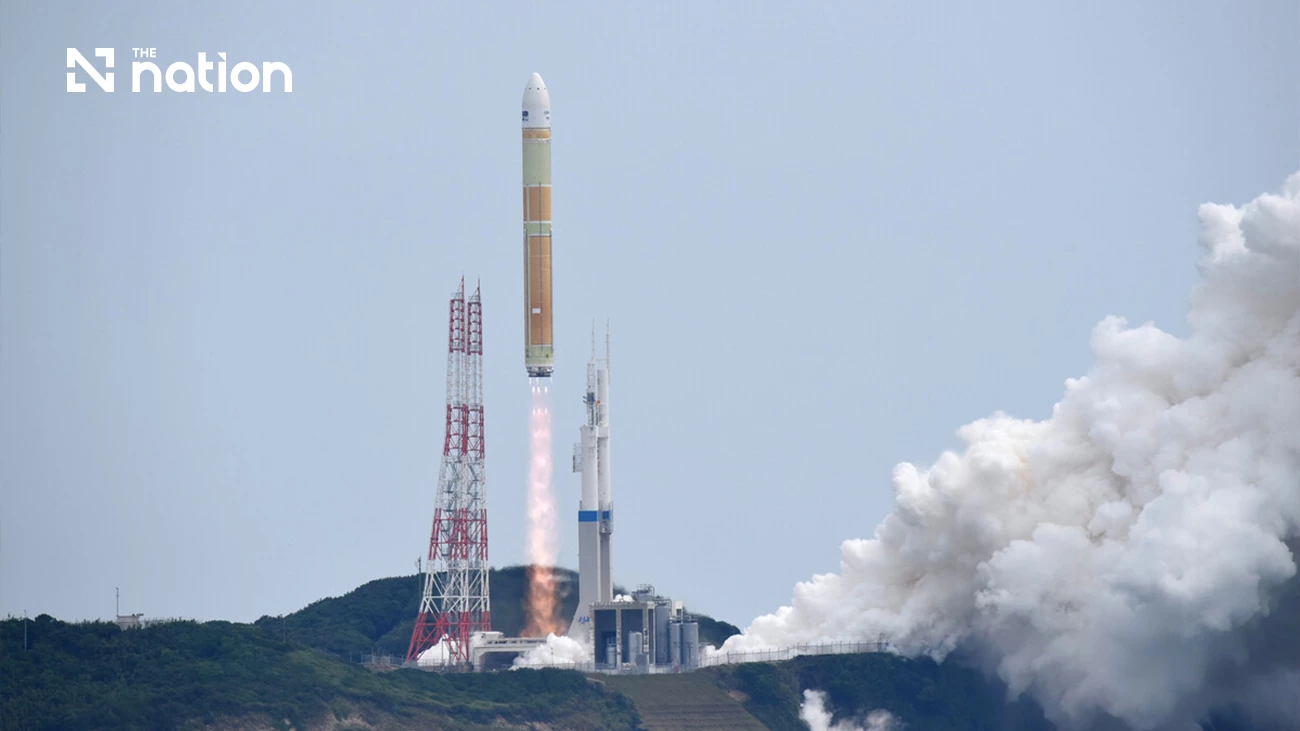
The Japan Aerospace Exploration Agency, better known as JAXA, successfully launched an H3 rocket on Friday morning (June 12), six months after a launch attempt ended in failure last December.
The rocket lifted off from the Tanegashima Space Centre in Kagoshima Prefecture, south-western Japan, at 9.53am.
Around 15 minutes later, it reached its intended orbit at an altitude of about 580 kilometres.
The sixth H3 rocket was carrying six small satellites built by universities and other organisations.
All six satellites were released successfully after the vehicle arrived in orbit.
The mission was also a major test of the H3’s simplest, low-cost configuration, which flies without a solid rocket booster.
For JAXA, the success marked an important step towards restoring confidence in the programme and making progress in the satellite launch market.
“The six months felt short yet long.
We’ve come this far thanks to everyone’s support,” Makoto Arita, manager of JAXA’s H3 project team, said with relief at a press conference on Friday.
The H3 is a two-stage, liquid-fuel rocket that JAXA and Mitsubishi Heavy Industries Ltd have jointly developed since 2014.