The phrase
“Animal fat was never the problem. It was always part of the solution.”
– Sara Marilyn
The context
Digital influencer Sara Marilyn, star of “integrative medicine” – a new name for pseudoscientific therapies – is at the forefront of the disinformation agenda about animal fat. “The war on fat was a huge mistake.” This is one of the false narratives that it spreads to sell its courses, consultations and retreats that promise to cure “modern diseases with ancestral habits and without medication”.
“Saturated fat is not the villain we were made to believe. It is vital for cell construction and hormone production”, he writes in the second post on his Instagram with the highest interaction rate in the last three years (the first praises 20th century sanatoriums to treat tuberculosis). At the rate of interaction is an indicator of attention to content, which corresponds to the average number of interactions that content receives per follower.
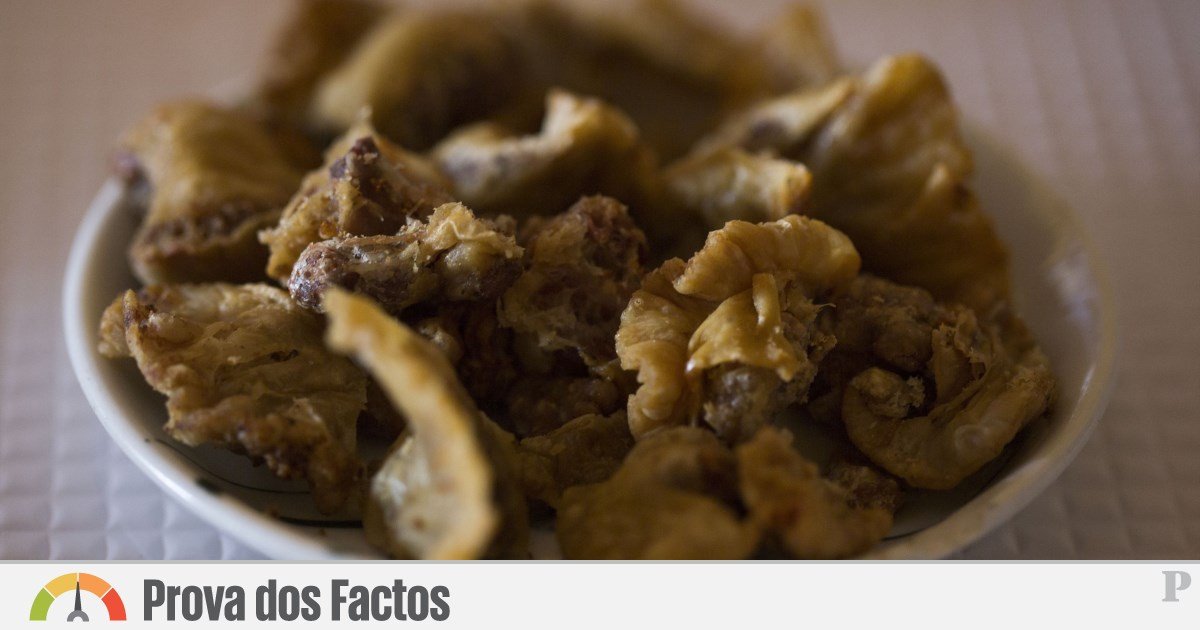
In the video about saturated fat, which reached 835 thousand views, Sara Marilyn recommends the consumption of pork rinds while snack everyday: “What makes pork rinds so special is their unique combination of proteins and high-quality fats.” The digital influencer claims that pork rinds “are the second best source of collagen”, citing “various research” to state that a “collagen-rich diet improves intestinal health and strengthens the immune system”.
In the fourth publication with the highest interaction rate, Sara Marilyn suggests beef tallow to fry food. This “fat extracted from pastured beef” would bring, in the words of the digital influencer, “numerous health benefits”, such as improving heart health and reducing inflammation.
In another video played more than 230 thousand times, the influencer also advises replacing margarine with butter, claiming that the former “is a processed product full of trans fats, which are harmful to health”. And, in turn, he characterizes butter as “a natural fat full of nutrients that your body needs”. Sara Marilyn surpassed the barrier of 65 thousand followers on Instagram this week.
DR
The facts
Let’s start with the truths – which disinformation instrumentalizes. There is no doubt that “the fats they are very important elements in a healthy diet”: they are relevant energy sources, being involved, in particular, in the absorption of fat-soluble vitamins, such as vitamins A, D, E and K, explains doctor Carlos Bello, member of the board of directors of the Portuguese Society of Endocrinology, Diabetes and Metabolism.
“It is true that we need fats and cholesterol for cellular structure and hormonal synthesis” – as the digital influencer states –, “but this does not prove that a diet rich in saturated fats is beneficial”, explains nutritionist Gabriela Ribeiro, professor of metabolism and nutrition at the Faculty of Medical Sciences of Universidade Nova de Lisboa.
It is not because a nutrient or a food has a relevant biological function, he highlights the nutritionistthat increasing its consumption will bring benefits to the health – it is through this wrong assumption that Sara Marilyn constructs most of her argumentative fallacies.
In fact, “the World Health Organization recommends that saturated fat represents less than 10% of total energy”, recalls Gabriela Ribeiro, who also cites the European Food Safety Authority and the United States National Academy of Medicine. On both sides of the Atlantic, “they recommend that saturated fat intake be as low as possible in the context of a balanced diet”.
In the face of success online of conspiracy theories anti-science, it is worth highlighting that those organizations do not do so because they are allegedly controlled by the pharmaceutical industry – as Sara Marilyn often says. The recommendations go in this direction, because the most robust and consensual scientific evidence indicates that “saturated fat causes increases in LDL cholesterol levels (known as ‘bad cholesterol‘), which, in turn, are associated with an increased risk of cardiovascular events and mortality”, adds endocrinologist Carlos Bello.
Conversely, the doctor notes that it is also documented that reducing the consumption of saturated fats is linked to a reduction in cardiovascular problems.
As for pork rinds, Gabriela Ribeiro states that there is no solid scientific basis to recommend them as a “source of collagen”. “Research on oral collagen has focused mainly on the skin and joints, with evidence still limited and heterogeneous.” There is, therefore, no robust scientific basis that allows us to state that a diet rich in collagen “improves intestinal health” or “strengthens the immune system”he adds.
The nutrition specialist concludes that citing the richness in collagen “is not a valid argument” to recommend the consumption of pork rinds as snack daily. In fact, as they have a high caloric content, being rich in saturated fat and salteating pork rinds can be associated with an increase in bad cholesterol, high blood pressure and cardiovascular risk, warns Carlos Bello.
The claim that beef tallow improves heart health and reduces inflammation “contradicts the consensus of scientific societies”, emphasizes Gabriela Ribeiro, recalling what has long been known: animal fat is rich in saturated fatty acids – therefore, it must be ingested with care. Doctor Carlos Bello also highlights that excessive consumption of beef tallow can negatively affect blood fat levels, increasing the risk of vascular events.
The accusation that margarine is a product “full of trans fats” is outdated. It is true, points out Carlos Bello, that old margarines had high levels of trans fats that increased the bad cholesterol and reduced the “good cholesterol”whose scientific name is HDL cholesterol. However, since the end of the last decade, when regulatory authorities European and North American “partially hydrogenated oils were banned, margarines available on the market now have substantially less saturated and trans fat, mitigating the risks previously described”, recalls the endocrinologist.
For this reason, nutritionist Gabriela Ribeiro states that “it is not correct to use the historical problem of trans fats to conclude that butter is automatically the best option”. On the contrary, in the opinion of doctor Carlos Bello, the regulation of the presence of trans fats in foods has even made “margarine a potentially healthier option from a vascular point of view, when compared to butter”.
Composed of around 70% saturated fat, butter can increase the already stated risks of cardiovascular problems. “If the objective is to reduce this risk, recommendations continue to favor sources of unsaturated fats”, such as oilother vegetable oils and fatty fish, says Gabriela Ribeiro.
Replacing butter with oils of vegetable origin with a predominance of unsaturated fat is associated with a reduction in bad cholesterol and cardiovascular risk, explains Carlos Bello. “The most recent data suggests that extra virgin olive oil should be used as the preferred fat, given its cardiovascular benefits documented in randomized controlled clinical trials”, he concludes.
Ronald Rammelkamp
The verdict
In short, it is false that it is healthy to adopt a diet rich in saturated fat. The experts consulted by PÚBLICO, as well as scientific and medical authorities, are unanimous: the consumption of saturated fat increases the risk of death and cardiovascular events.
Neither greaves, nor beef tallow, nor butter – “none of these three foods should be promoted as a general strategy to improve intestinal health, immunity or cardiovascular health”, concludes nutrition specialist Gabriela Ribeiro.