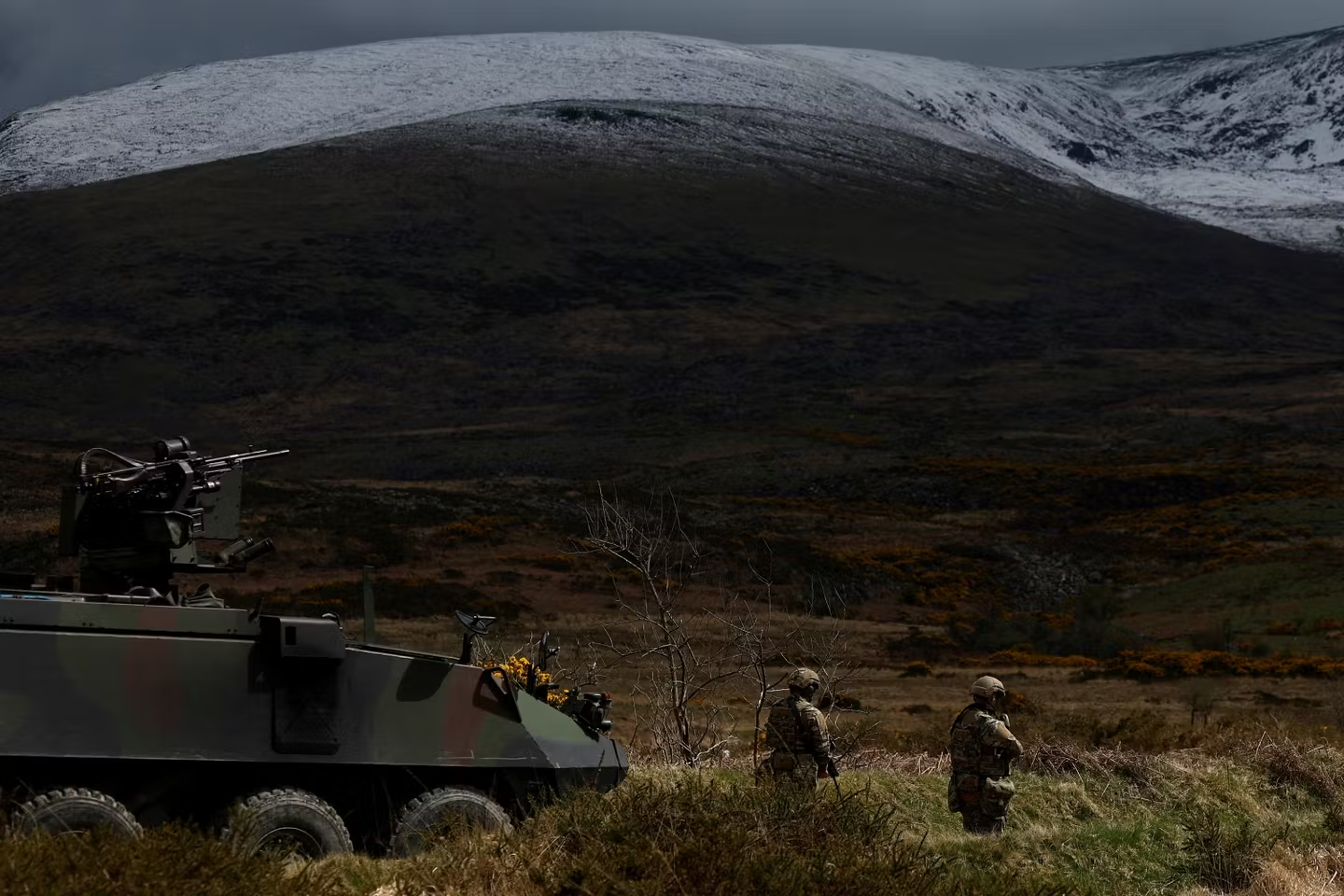
In Cobh, in the south of Ireland, just a few kilometers from Cork city, the waterfront promenade offers a stunning view of Haulbowline Island, the main base of the Irish Naval Service, the country’s navy. On a day at the end of February, beneath rain clouds streaking across the horizon, black and white boats made constant trips back and forth, transporting military personnel. “You can make out a Martello tower [a small fortress built at the start of the 19th century], built by the British to prevent the risk of a Napoleonic invasion. And you can see the masts of four of our patrol vessels,” said Caoimhin Mac Unfraidh, a naval officer, pointing out the island.
Mac Unfraidh was once the commander of the LE Eithne, a helicopter carrier in the Irish fleet that was decommissioned at the end of 2022 after 38 years of service. Retired since 2023, the fifty-something was watching Haulbowline Island from the shore, torn between pride and bitterness. “My personal story is part of the overall picture. I left because I had reached almost the highest rank I could, because the navy is so small. The number of ships was falling and they weren’t being replaced,” he explained.
“The navy has currently eight ships, of which about three or four are currently operational. These are patrol vessels, they don’t have subsurface surveillance capability, they don’t have a credible air defense capability,” explained Vice Admiral Mark Mellett, who served as chief of staff of the Irish Defence Forces, the country’s military, until 2021. In addition, there are two maritime patrol aircraft and fewer than 900 active personnel. These are modest resources for an island nation with an exclusive economic zone (EEZ) covering 450,000 square kilometers in the North Atlantic, and tasked with protecting major national and international economic interests, both on land and at sea.
You have 89.86% of this article left to read. The rest is for subscribers only.