Checkmate Or “The king is dead.” It is the most famous phrase in chess, copied from Persian: “Shah is dead.” The game moved to Persia after originating in India, where the phrase “Chaturanga” meant the four divisions of an army (infantry, cavalry, elephants, and chariots).
In any case, the Iranians seem to have a clear imprint on the game of chess. Will they transfer that imprint to the field? Is it even possible to transfer it to the field?
On the face of it, it is possible. The game’s lessons may even be applicable to other human domains. For a hero Chess The legendary Garry Kasparov’s famous book goes in this vein: “How Life Imitates Chess: Life is a Game, Play to Win” (first edition 2008). Will Iran win its game, or will Trump pull off a surprise?
Iranian chess…4 keys to power
In his blog on Substack last month, he saidGeopolitical intelligence analyst Chris Townsend inspiredly rang the line between chess and war on Iran. Townsend started from the basic keys to the strength of the game, which are the number of “stones” (between pawns and pieces) and their “position” towards each other and towards the king-opponent, and the “transferable move”. (Tempo) That forces the opponent to react rather than choose, and long-term “initiative”.
The American president won Donald Trump The upper hand in the opening initiative. Here, the defender finds himself choosing between bad moves. Townsend compared this scene to the sixth match of the World Chess Championship in 1972 between Russian Boris Spassky and American Bobby Fischer, when the latter won to the sound of applause from the former. For the first time in an official tournament, Fischer chose a start other than the one he was accustomed to, thus disrupting his opponent’s plans. (There is a movie about Fisher and this tournament called “The Pawn Sacrifice.”) Pawn Sacrifice2014).

Former world chess champion Bobby Fischer (right) faces Boris Spassky in one of the most prominent historical confrontations. (dad)
Also, Iran’s random response, that is, bombing everything within its reach, was not as decisive as it seemed, but rather the last option left to it. In theory, as the game’s coaches say to beginners: “If you only have one move, the move isn’t really your move.” In practice, it lost the trust of the Arab Gulf states that it had built with it over decades.
Trump’s speed of action is similar to what happened in a chess tournament in 1960, when Mikhail Tal’s random moves created intellectual confusion in his rival, Mikhail Botvinnik (nicknamed the “patriarch” of Soviet chess, according to Kasparov), which led to his defeat.

Tal (right) facing Botvinnik, 1960. (FIDE)
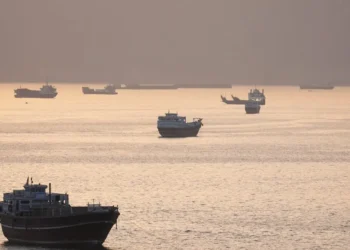
However, given that the pieces are usually the least important in chess, Townsend notes that Iran retains a “position” advantage that “keeps it in the game,” i.e. Strait of Hormuz. He added: “Iran cannot be defeated as long as it is able to close the strait.”
Indeed, Kasparov mentioned in his book that the number of steps he was able to count in advance was related to the position in which he found himself during the game.
Iran or Trump… who will win?
Although the initiative was relatively in Trump’s hands, he is trying Revolutionary Guard Grab this paper. Therefore, Guard Intelligence recently gave the US President a choice between concluding a “bad agreement” or resuming the war. Both options are bad for the Americans, but the agreement may be the least bad if it results in lower inflation.
Here, the Revolutionary Guards are trying to urge Trump to accelerate the launch of the next “move,” hoping that it will be reckless and, at a minimum, the last escalatory move. If Trump resorts to it, he will be like a chess player arriving at a position where every move becomes more costly.
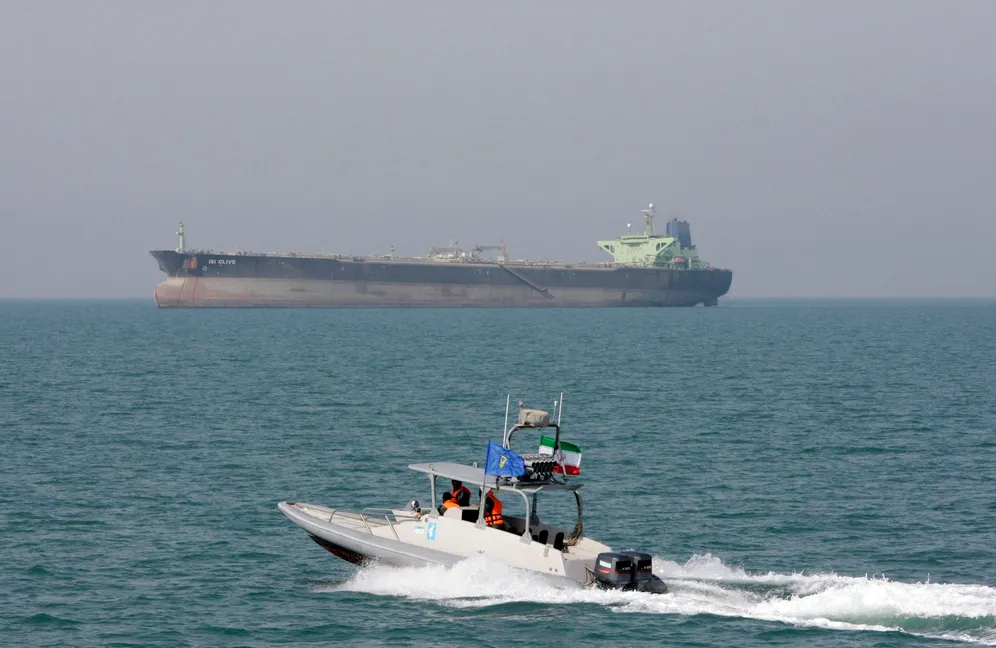
Revolutionary Guard speedboat, 2012 (AP)
The truth is that Trump is not forced to act, due to his stifling naval blockade. What is at stake for me? US Iran is clear: the risk of inflation for the former versus the risk of economic collapse for the latter. But the Iranian bet is that Trump is always in a hurry, and this is his weakness. In any case, even a possible US military attack, even if it does not break the stalemate, may not force Trump to back down from his blockade. On the contrary, Iran will continue to face the blockade, but from a more vulnerable position.
Hence, the “Freedom Project” that Trump recently launched to free ships stuck in the Strait of Hormuz deserves special follow-up. Will Iran allow this project to be completed without harassing Trump’s ships? If you allow this, will Trump view this step as an Iranian weakness?
It can be said that Iran resumed its attack on Monday evening The UAE United Arab Emirates to compensate for Her weakness In front of the Americans.
Iran is also trying to distract Trump’s attention from its core strengths, which are important “pieces” that it still maintains, most notably the missile and drone program. In fact, this program may resemble the “queen” piece, which is the strongest piece in chess.
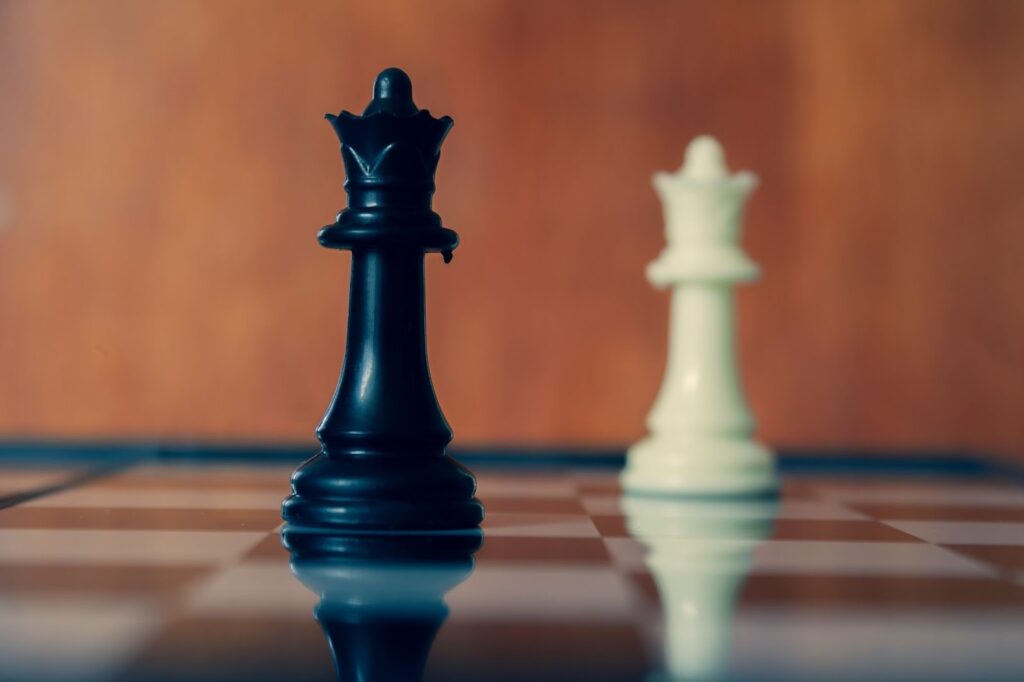
Two queens, one white and one black, on a chess board. The queen is worth nine pawns. (Unsplash)
All Iranian focus today is not only in the interest of removing this piece from Trump’s attention; On disassembly The paths between the Strait of Hormuz, the nuclear program, and the missile program. Here, Iran may try to “temporarily sacrifice the nuclear piece” (now corroded) to preserve the most important piece, which is the missile program and, ideally, permanent control of the Strait of Hormuz, at To recover Its nuclear program decades later.
Finally, it’s still a game Chess A rough attempt to understand the Iranian war, nothing more. In fact, even Kasparov stresses in his book that he tries to read life through the lens of chess because it is his specialty, and at the same time points out that other lenses (approaches) could be valid. The points of difference between chess and wars are clear.

Garry Kasparov plays chess in Spain after his retirement, 2009. (AP)
The game has clear rules and precise times for starting tournaments, in addition to equal power at the beginning. These features are mostly absent from real battlefields. “Unknown unknown points” (unknown unknowns) It is the most prominent and most tyrannical feature in the world of wars, and life as a whole.