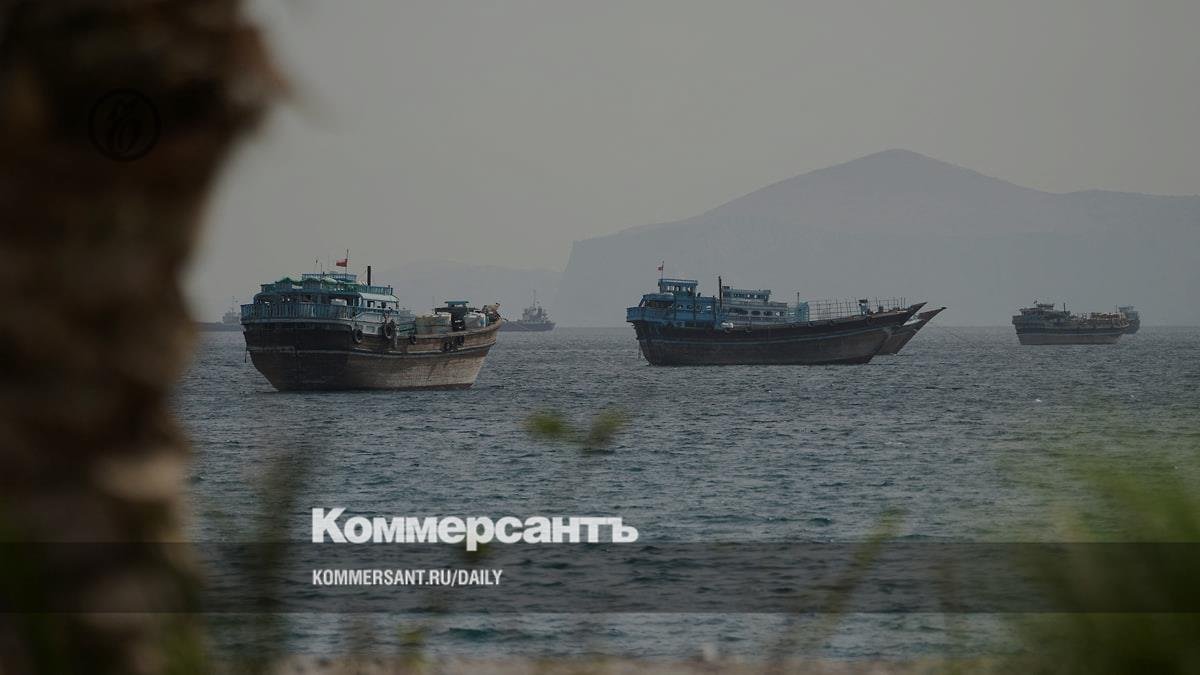
Iran will manage the Strait of Hormuz jointly with Oman. This was announced by Foreign Minister of the Islamic Republic Abbas Araqchi on June 4, calling it the “natural right” of the two countries. The sultanate has not publicly confirmed its agreement to share control of Hormuz, although there have been reports that it is willing to join Iran’s system of providing “paid services” for flights passing through Hormuz. Negotiations with Iran did not provide a guarantee of security for Oman. On the morning of June 5, it became known that an unidentified drone had attacked its Mina al-Fahal oil terminal, an important oil loading point outside the Strait of Hormuz.
Iran and Oman will jointly manage the Strait of Hormuz based on international law, Abbas Araqchi said on June 4. According to him, the two countries bordering this strategically important shipping route have a “natural right” to coordinate their actions and decide on the principles of its operation. An exchange of views on the status of Hormuz is also ongoing with other Gulf states, but the last word will remain with Oman and Iran – they are the ones who can ensure safe passage for all commercial flights, the chief of Iranian diplomacy emphasized.
As Iranian Deputy Foreign Minister Kazem Gharibabadi explained on June 4, the Hormuz management system does not involve collecting money for transit.
“Rather, our goal is to receive payment for the services that we provide jointly with Oman in the area,” the diplomat said. “These services include navigation support, search and rescue operations, navigation safety services, as well as environmental services, such as cleanup of pollution in the event of environmental damage.” All these measures “do not contradict international maritime law,” Mr. Gharibabadi emphasized.
The New York Times reported earlier, on May 21, that Oman was reconsidering its position on the concept of governing Hormuz, citing sources. She noted that the Sultanate, which until recently adhered to the principle of neutrality in the Middle East conflict, began to discuss with Iran the allocation of a share of the funds that will be collected from sea vessels “for paid services” in the field of shipping. Later it became known that the clause on a joint Omani-Iranian system of control over Hormuz was spelled out in the draft agreement to end the war in the Middle East, which Tehran presented to Washington through intermediaries.
Speaking on the evening of May 27, President Donald Trump said that no one has the right to control Hormuz because of its international status, and threatened to “blow up” Oman if it follows Iran’s lead.
The next day, Treasury Secretary Scott Bessent explained that “the President wanted to emphasize freedom of navigation in the strait.” The head of the Ministry of Finance also informed that he had held negotiations with the Omani diplomatic mission in the United States and it assured him that the Sultanate “has no plans to charge fees for the passage of ships through the strait.”
At the same time, Mr. Bessent warned the Omani side that if it joins the Iranian system of governance by Hormuz, the US Treasury will use the sanctions tools in its hands. “Oman should know that the US Department of the Treasury will vigorously pursue any parties directly or indirectly involved in facilitating the implementation of strait fees, and any partners willing to do so will be subject to sanctions,” Mr. Bessent said on social media X on May 28.
As informed sources told The Wall Street Journal (WSJ), Mr. Trump’s administration has recently begun to view Iranian-Omani contacts as a threat to its interests and openly called on the Sultanate to choose a side in the Middle East conflict. Muscat is being demanded to take practical steps, including severing diplomatic relations with Tehran, WSJ sources said.
Attempts to negotiate with Iran have not given Oman security guarantees.
On the morning of June 5, Reuters reported that the Omani oil terminal at the port of Mina al-Fakhal temporarily suspended oil shipments after an explosion, which was allegedly caused by an attack by an unidentified drone. Petroleum Development Oman later announced that operations at the port were continuing as normal.
However, the very fact of arrival leaves many questions. The Mina al-Fakhal port terminal was one of the last operational shipping points for Middle Eastern oil after Iran unilaterally closed the Strait of Hormuz since the start of the war. The strike on the oil facility was a clear warning to the sultanate that its current position remains very precarious, observers say.