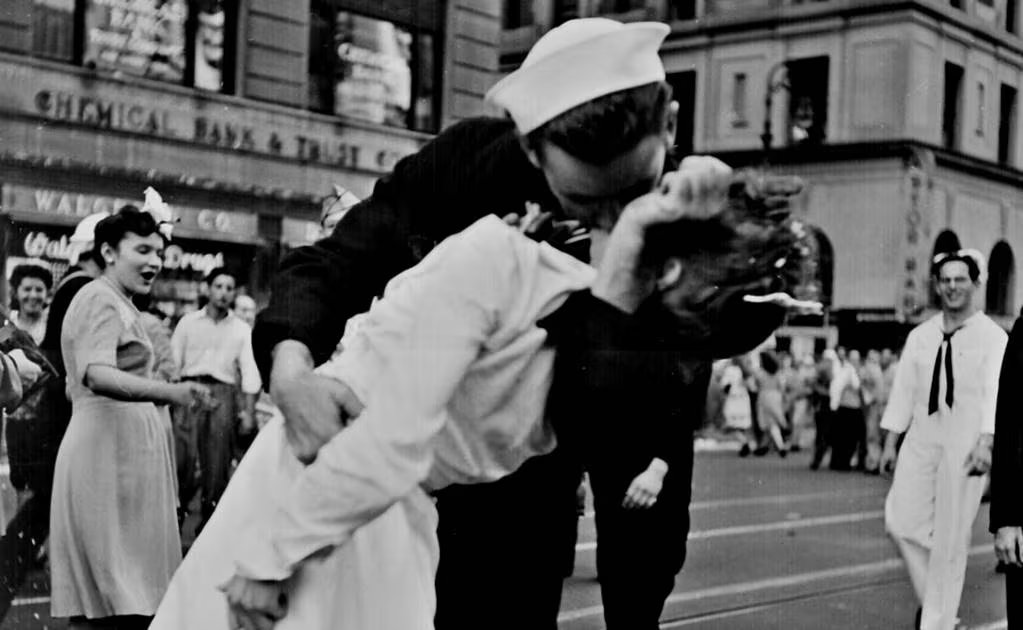
The commemoration of International Kiss Dayevery April 13, invites us to delve deeper into how this practice—documented since the year 2,500 BC in ancient Mesopotamia and Egypt—impacts the overall health of human beings.
According to records published in the scientific journal Sciencethe romantic-sexual kiss did not emerge abruptly in a single society, but has been manifested in various cultures over millennia as a tool bonding and survival social.

Kiss scene between Jack and Rose in “Titanic”
From a perspective physiologicalkissing sets off a neurochemical storm. According to Nora Alma Fierro González (from the Biomedical Research Institute (IIBO) of the UNAM), this stimulus activates the nervous systems and endocrine to release neurotransmitters such as dopamineoxytocin, serotonin and endorphins. These compounds are directly related with pleasure and general well-being.
Likewise, the specialist points out that kissing has a positive impact on the cardiovascular system by increasing heart rate and dilating blood vessels. This process improves blood oxygenation and helps regulate blood pressure.
In the immunological field, Fierro González affirms that the axis neuroendocrine-immunological is activated with emotional stimuli, favoring the release of cytokines that regulate inflammation.
A relevant piece of information comes from the study Shaping the oral microbiota through intimate kissing (2014), which suggests that up to 80 million bacteria are exchanged in a kiss lasting just 10 seconds.
This exchange of microbiota strengthens the defenses under the “hygiene theory”which maintains that exposure to agents external ones train the immune system. However, the expert warns that it also implies transmission risks from conditions such as infectious mononucleosis (caused by the Epstein-Barr virus), colds or mumps.

From Dante to Rodin and Doisneau, the analysis of the art of kissing
Beyond the chemistrythe kiss fulfills a function psychological and evolutionary crucial. Gabriel Gutiérrez Ospina (IIBO specialist) assures that kissing activates a brain circuit where the limbic system, the amygdala and the prefrontal cortex participate. “When we have a safe, loving and caring relationship, the frontal cortex dominates the amygdala (which manages fear). This allows us to enter a state of greater calm,” explains the academic.
From the point of view of natural selection, the United States National Library of Medicine (NLM) indicates that kissing romantic They serve to evaluate the suitability of a potential partner. This analysis is performed through the “sampling of semiochemical gustatory signals found in skin oils and saliva compounds.” According to the NLM, this initial kiss is more likely to affect attraction to a potential partner for women than for men.
Finally, Gutiérrez Ospina highlights that the impact of kiss changes throughout life. In childhood, it reinforces bonds of protectionwhile in adulthood it functions as a bridge of reconciliation. “A well-given kiss can reconcile a couple in the middle of a fight,” concludes the researcher, emphasizing that we are a species social that requires physical contact to guarantee its emotional stability.
You will also be interested in:
How to remove yellow stains from white clothes? practical and economical solutions
April planetary alignment; practical tips for photographing the cosmic spectacle
Tax for having pets in Mexico?; know where and for whom it applies
Join our channel EL UNIVERSAL is now on Whatsapp! From your mobile device, find out the most relevant news of the day, opinion articles, entertainment, trends and more.
aov