The official Program for Peace and Democratic Coexistence of Venezuela reported this Wednesday that it asked the president in charge, Delcy Rodríguez, remove restrictions against media domains on the Internet in order to promote free expression.
According to a brief statement, the program, created by Rodríguez last January, has recommended this measure to the president after a process of consultations with different sectors of the media to “favor an environment of greater and better communication, transparency, diversity and pluralism.”
The statement was published in X by the program, which is made up of officials and representatives from various sectors, and by the Ministry of Communication.
In Venezuela, A total of 202 Internet domains, most related to news, remain blocked, according to the NGO VE without filterwhich considers that the government “arbitrarily censors media, human rights organizations, social networks and digital tools” that allow these restrictions to be evaded.
On September 7, the organization stressed that “censorship can end now,” stating that the National Telecommunications Commission (Conatel), the regulatory body, can “order Internet providers to stop blocking” and to do so only “political will is needed.”
The Democratic Peace and Coexistence Program was created a few weeks after Nicolás Maduro was captured by the United States in a military operation in Venezuela.
Since then, the program has met with representatives from various sectors, including the press, and has promoted actions such as the evaluation of cases and release of political prisoners.
This Thursday the government and an opposition group are expected to begin the second cycle of US-backed negotiations for a transition, in which they are expected to address civil and political guarantees and freedom of expression.
Organizations demand changes in regulations
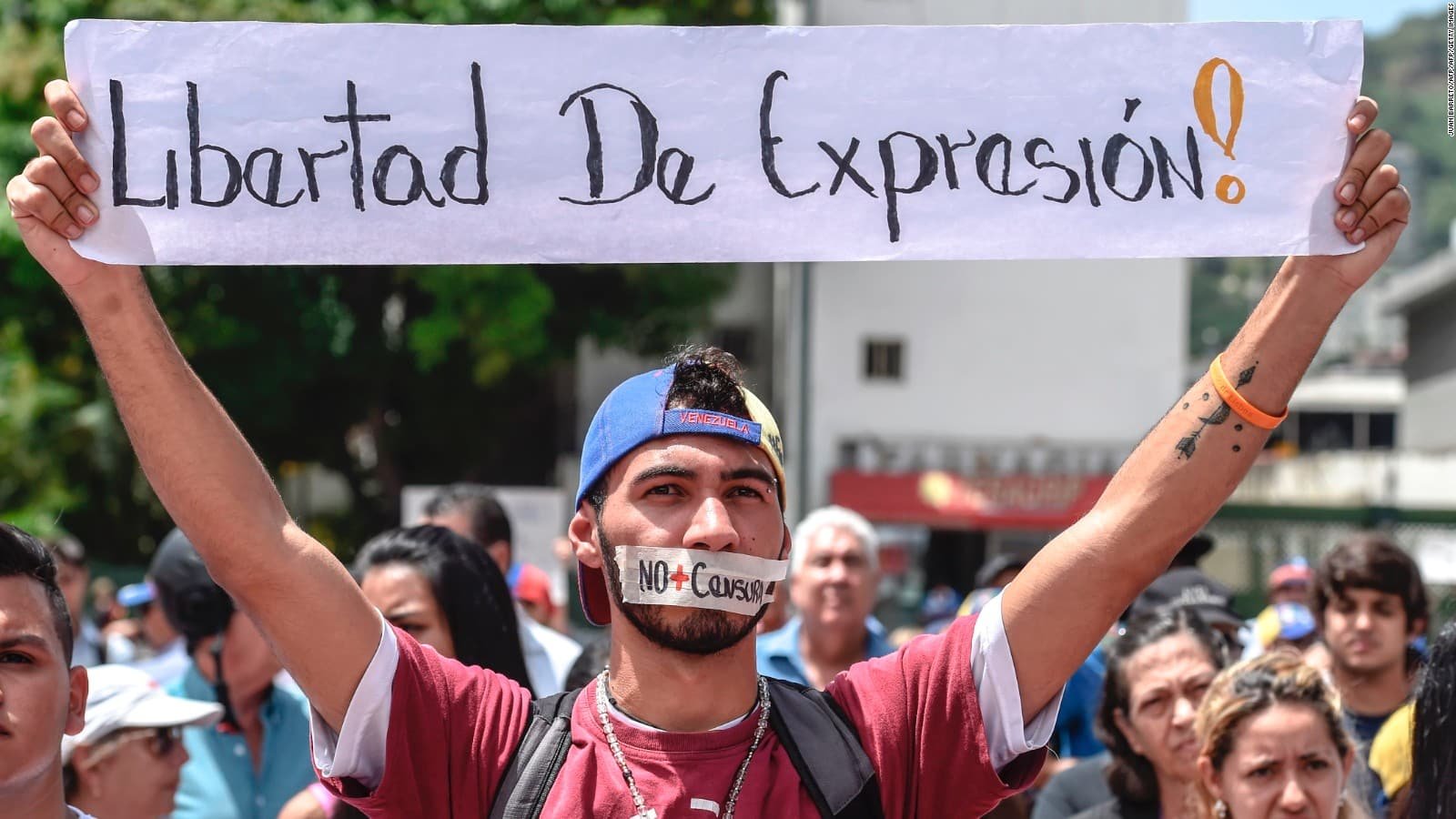
The accusation occurs a few days after the media and civil society organizations demanded guarantees to exercise the freedom of expression in Venezuela.
A total of 38 media outlets and 63 organizations signed the “Manifesto for Freedom of Expression in Venezuela,” a document in which they requested modifications to the legal framework that, according to the signatories, has allowed “the criminalization of dissent.”
Among the proposals they also proposed a transformation of Conatel, due to the role they attribute to the organization in the restrictions on access to digital content and platforms.
VE sin Filtro insisted that limitations on Internet access should not be applied generally and demanded that any measure of this type be subject to legal controls.
“Any blockade must be exceptional, be subject to judicial control and comply with the principles of legality, necessity and proportionality,” the organization stated.