– I’m not going to just run over and get that breakfast bread there?
– Yes, do it.
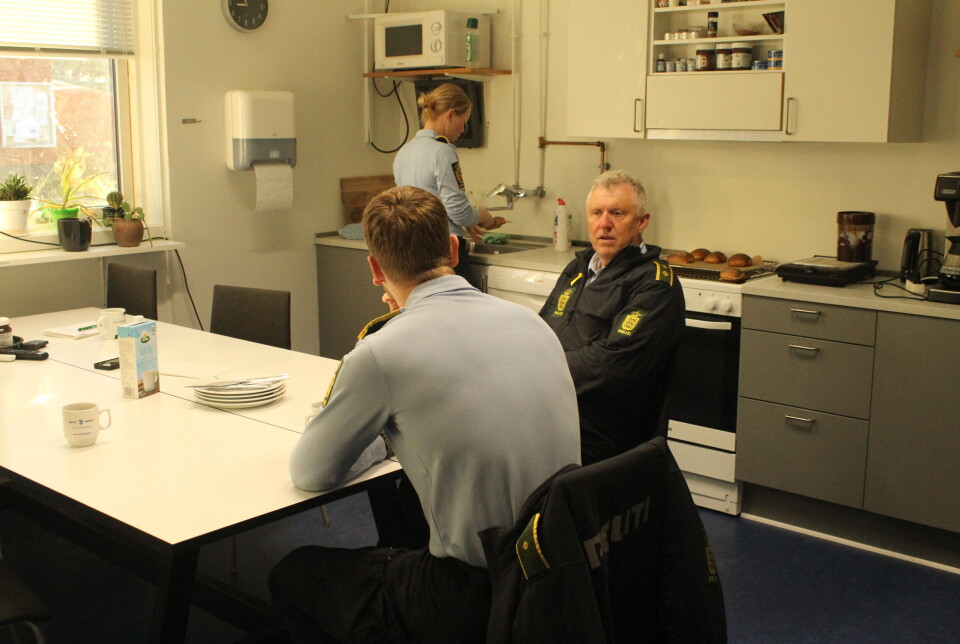
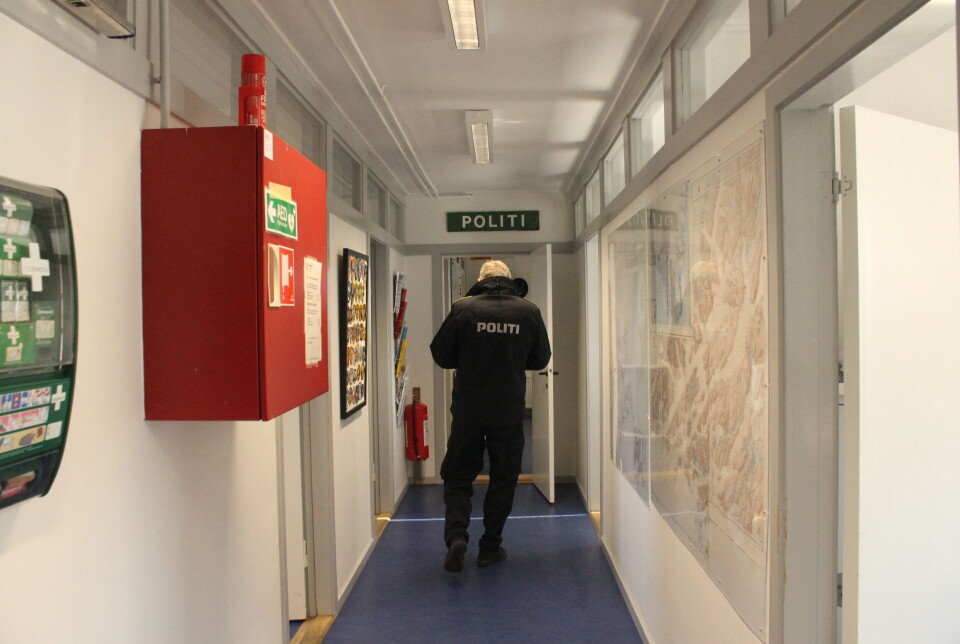
It is early morning at the local police station in Narsaq. True to form, police assistant Jens Christian Fisker has just finished a morning briefing in the station’s communal kitchen with all the other units around the coast.
However, the TV screen and webcam hanging at the end of the table will have to be used again in a few minutes, when there will be another meeting. Before that, one of Jens Christian Fisker’s two police colleagues runs out the door and across the parking lot to pick up rolls in Pilersuisoq. While the coffee is brewing, Jens Christian Fisker’s phone rings.
– Yes, hello, it’s Fisker, he says and slips out of the communal kitchen.
We have had a few colleagues who have been here in connection with holiday relief, but it challenges us that we do not have a permanent Greenlandic-speaking colleague.
Since September 1, they have been three police officers at the small station in Narsaq. Before that, it was only Jens Christian Fisker and the city’s local reserve officer who made up the permanent “blue shirts” in the city.
To get an insight into the work of the police and the challenges they face in Narsaq, Sermitsiaq accompanied police assistant and subject coordinator at the Greenland Police Jens Christian Fisker one day in September.
– We would really like to have a Greenlandic-speaking permanent colleague, says Jens Christian Fisker, when he has re-entered the communal kitchen.
He pours himself a cup of coffee and sits down.
While the reserve officer, who is used when the person in question has time off from his full-time job and there is a need for support from someone who speaks Greenlandic, Jens Christian Fisker and his new colleagues are all brought in from one of the twelve other political circles in Denmark. None of them speak Greenlandic.
– The language problems are probably the biggest problem down here.
‘You figure it out’
The lack of local officers is the biggest challenge in the Greenland Police, said Police Director Bjørn Tegner Bay in June last year. where he spoke to the police’s own trade magazine.
With a police force that consists of 50 percent local police officers and 50 percent called-in police officers from Denmark, this is the lowest proportion of local police officers in decades, the same article said.
The situation is worst on the coast. Because while 70 local police officers were employed in Nuuk on 30 June this year, according to the police’s own figures, not a single local police officer was employed at 10 out of 18 duty stations in Greenland.
Whether the local officers can speak Greenlandic, the police have no way of ascertaining. Just as they also do not have the opportunity to register which languages the called police personnel speak.
After all, we’re just ourselves, and we’re all down here, we’re psychologists, the technical department – we can do a bit of everything.
Jens Christian Fisker does not know the last time there was a Greenlandic-speaking police officer in Narsaq.
– There hasn’t been one in the time I’ve been here. We have had a few individual colleagues who have been here in connection with holiday relief, but it challenges us that we do not have a permanent Greenlandic-speaking colleague, he says.
The colleague, who has been out to get breakfast bread, returns to the room and opens the oven. Six artisans from frost are placed on a grid and pushed inside.
In what situations is it a challenge that none of you speak Greenlandic?, asks Sermitsiaq.
– Well, when the phone rings or when there is someone standing at the reception who needs help, answers Jens Christian Fisker.
In those cases, the problems are often solved by going out and getting help from people on the street who speak the language. You figure it out, says his colleague.
– Yes, things will work out. They do. It’s not the case that everything comes to a standstill because you can’t just solve a task now and then, says Jens Christian Fisker.
Always available
Most people in the city and in the police call Jens Christian Fisker by his surname ‘Fisker’.
– It’s actually only my mother who calls me Jens Christian, he says.
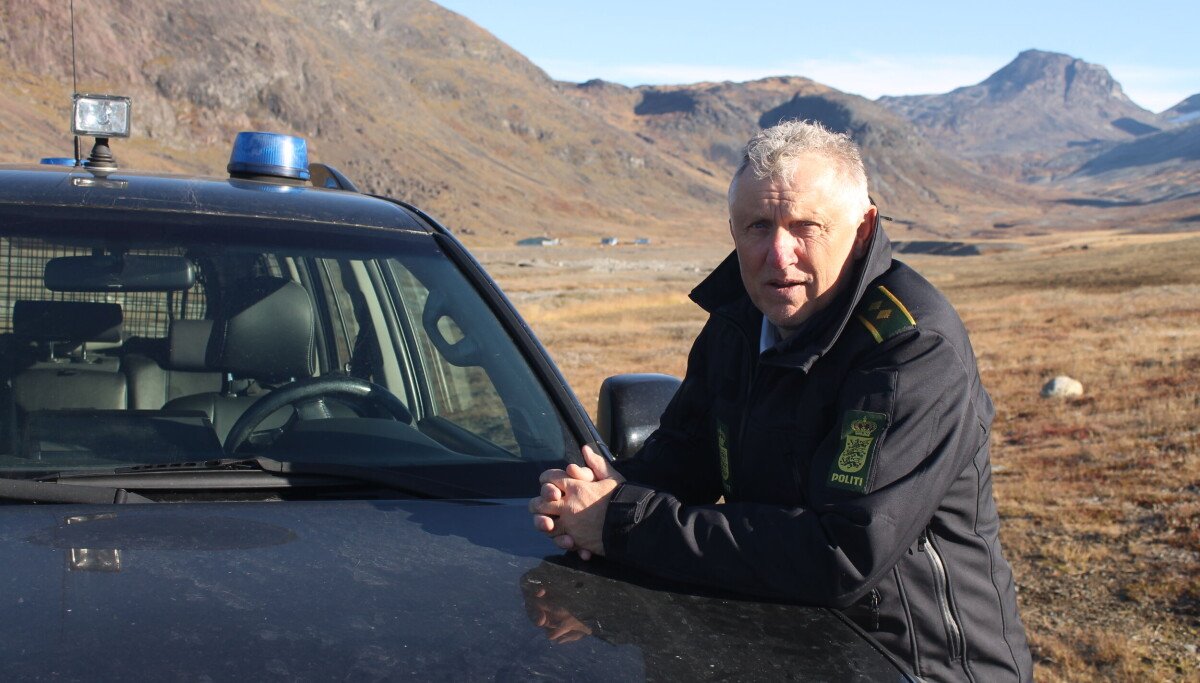
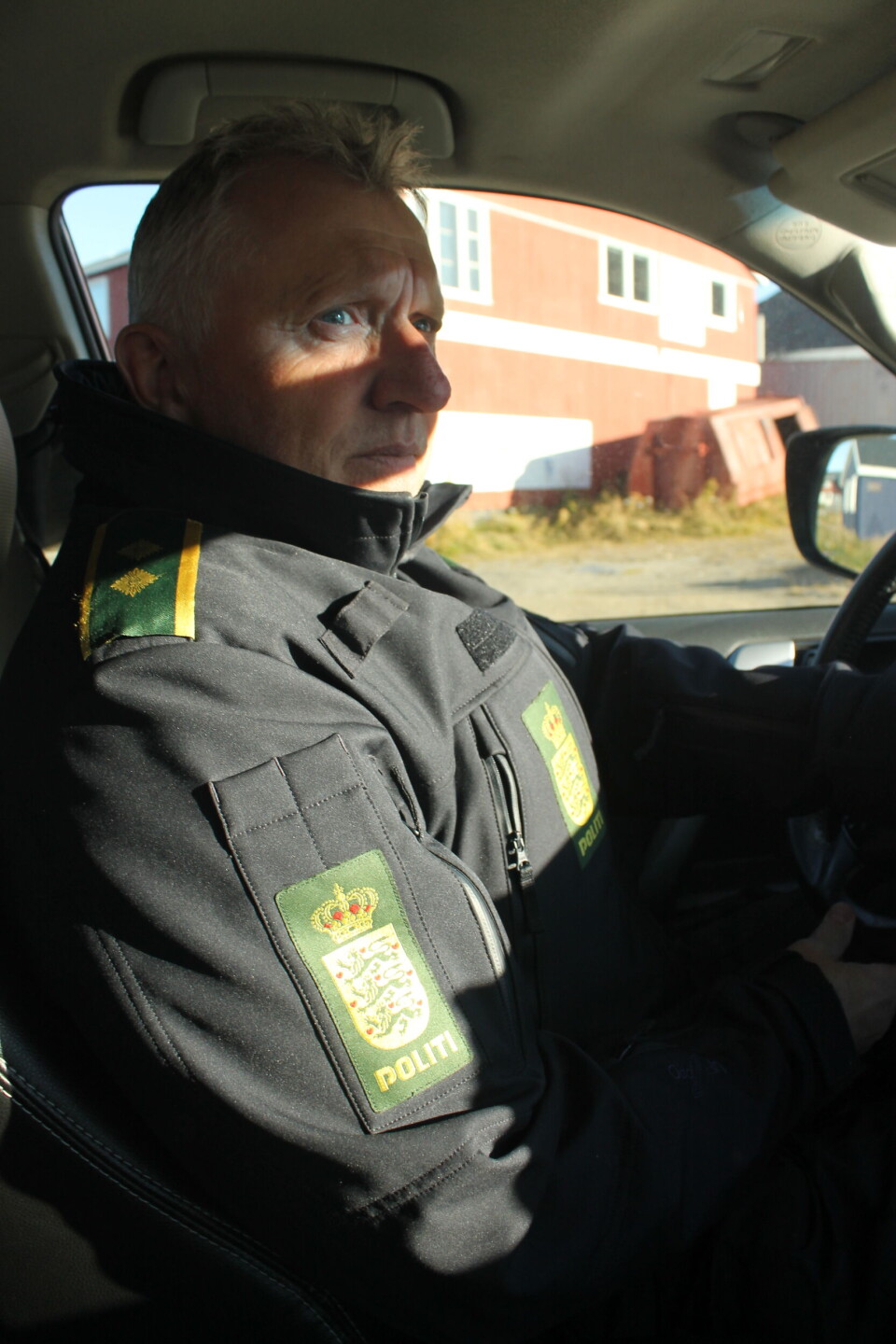
After breakfast and the morning meetings, he drives around town in the police four-wheel drive Toyota. In addition to it, the police in Narsaq have an ATV that they use. There is also a police boat in Qaqortoq, which they can use if they have to visit villages.
On the drive through the city, Jens Christian Fisker stops several times and greets people. Near the harbor he slows down and pulls up on the side of a dinghy lying on the side of the road. A woman and two men are fixing something on the engine.
Jens Christian Fisker addresses the woman.
– So what? When will you fix my boat?
The police assistant has rolled down the window and rests his arm on the side of the car.
– I can probably get it ready this weekend, is the answer from the woman.
She walks closer. There is a bit of talk about loose and fixed. The woman’s father is ill, she says, which one must understand is that her father neither cares nor has the time to take care of her. Jens Christian Fisker laughs in agreement.
– See you, Jens Christian Fisker says at the end in a sounding Norjutsk and drives on.
Do you think everyone in town knows who you are?
– I’m actually 99 percent sure that they do, he replies.
– Occasionally, some also come over and knock on the door of my home if there is anything. It can be about anything. In those cases, I assess whether there is a need for the police’s help, and then I ask them to call the call center – or I do it myself if I have the on-call guard, he explains.
The standby guards are a concept that the stations out on the coast use. If you are on call, you are responsible for calling your colleagues if situations arise at weekends or after 4pm on weekdays.
When Sermitsiaq visits the police, it is one of Jens Christian Fisker’s colleagues who is on call.
– But we have agreed that you just say if you go sailing at the weekend and when you expect to be home. If something were to happen. So that way you are always a bit at work, says Jens Christian Fisker.
‘All in one policeman’
After the morning’s drive, Jens Christian Fisker returns to his office. Later, he has to go over to the city’s nursing home and have a talk with the management about a resident who often leaves the building and for whom the police are often out looking.
– It’s a bit of a shame, because they should have him under control over there. The problem becomes ours if one day things go wrong and he disappears, he says.
When Sermitsiaq asks what a typical day for the police in Narsaq looks like, the answer is that there is no such thing as a ‘typical day’. Because as a police officer in Narsaq, you have to be ready to take on the role of a little bit of everything.
– After all, we are only ourselves, and we are all down here, we are psychologists, technical department – we can do a bit of everything, says Jens Christian Fisker and adds:
– If there is something we cannot find out, we naturally have some departments and resources we can draw on.
It is far from the first time that the 63-year-old police officer is in Narsaq. In 2000 and 2001, Jens Christian Fisker was up here for the first time as a police officer, but the relationship with Greenland goes back even further.
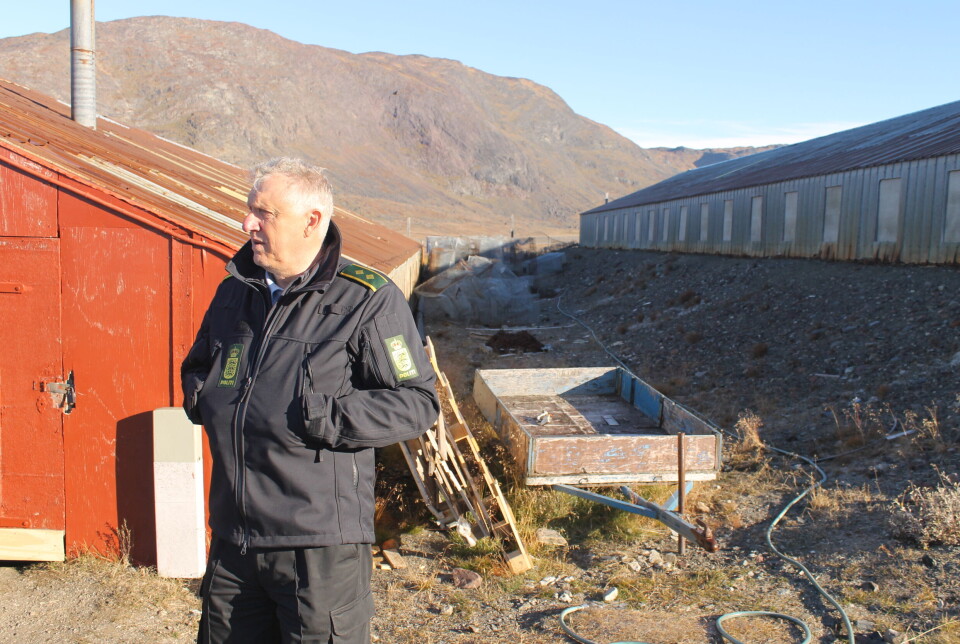
In 1972, when he was nine years old, he moved with his parents from Skagen to Narsaq. His parents ran a mink farm a little outside the city, right next to the house where the family lived.
For four years, Jens Christian Fisker went to school in Narsaq, after which he moved back to Denmark to continue his schooling there. Since then, Jens Christian Fisker has spent many of his holidays in South Greenland, and has also made sure to keep up his acquaintances.
– I don’t know the young people that well anymore, but I know their parents, he says and smiles.
Although you’re always a bit on the job when you wear a police badge and live in a small town like Narsaq, it’s rare for serious incidents to happen in the town. In 2025, the police responded to 93 reports of crime in the city. In comparison, the police responded to more than twice as many cases in Nanortalik.
– We are clearly at the low end when it comes to the number of cases. Often it is also a few people who create 80 percent of the cases, says Jens Christian Fisker.
When Sermitsiaq visits the police in Narsaq, it was the week before the alcohol ban in Kujalleq Municipality came into force. According to Jens Christian Fisker, the vast majority of the tasks they drive out for are alcohol-related.
– And many tasks have already been solved once we get out there, says Jens Christian Fisker.
One knows God and every man
Narsaq’s reserve officer plays a big role when it comes to solving the tasks that Narsaq Police have to handle. According to Jens Christian Fisker, it would ease the language challenges if more people could be recruited.
Unfortunately, the reserve officers do not hang from the trees.
– We lead with lights and lanterns, but for some reason the job is not that attractive, says Jens Christian Fisker.
The clearest picture of how important it is to have a Greenlandic-speaking police colleague emerges when the reserve officer is out on patrol.
On those occasions, it is almost exclusively the reserve officer who speaks.
Does the fact that you do not have a Greenlandic-speaking colleague mean that there are some tasks that you simply cannot do?
– No, we can do all tasks down here. I would say that there are some who are made difficult by the fact that we do not know the language, but we solve them all, replies Jens Christian Fisker.
And there is also help to track out on the horizon.
Because at the station in Narsaq, a new Greenlandic-speaking employee has been hired to sit in the administration. However, the person in question must be security cleared, just as all other police employees must be, and when Sermitsiaq was visiting at the end of September, the security clearance had not yet gone through.
Why do you think it is difficult to recruit local manpower for the police force in a town like Narsaq?
– As a Greenlandic colleague in this city, you know God and every man. It is clear. And as a police officer, you are often the strict one. I can imagine that, it can be difficult to be a model for as a local.
Despite the language challenges, there should be no mistake that Jens Christian Fisker thrives in Narsaq. Therefore, he has also extended his one-year contract by another year.
– Actually, I should have stopped on 31 October. It has already been well received all around that I am staying here, he says.
In addition, things have also been made easier by the fact that there are now three officers in Narsaq.
– Much, much easier. There has been greater freedom, he says.
What is it about this job that you like so much?
– Well, I like being here. Things are going in a way here that I like. I think there are some lovely people here. It’s really hard to put into words.