Monday, November 16, 2026
    The GeoStrategic Consensus
    No Result
    View All Result
    • Login
    • HOME
    • AMERICAS
      • Argentina
      • Brazil
      • Canada
      • Chile
      • Colombia
      • Costa Rica
      • Cuba
      • Dominican Republic
      • Ecuador
      • El Salvador
      • Greenland
      • Guatemala
      • Honduras
      • Mexico
      • Nicaragua
      • Panama
      • Paraguay
      • Peru
      • United States
      • Uruguay
      • Venezuela
    • ASIA-PACIFIC
      • Australia
      • Brunei Darussalam
      • Cambodia
      • China
      • Federated States of Micronesia
      • Fiji
      • Indonesia
      • Japan
      • Kiribati
      • Laos
      • Malaysia
      • Marshall Islands
      • Mongolia
      • Myanmar
      • Nauru
      • New Zealand
      • North Korea
      • Palau
      • Papua New Guinea
      • Philippines
      • Samoa
      • Singapore
      • Solomon Islands
      • South Korea
      • Taiwan
      • Thailand
      • Timor-Leste
      • Tonga
      • Tuvalu
      • Vanuatu
      • Vietnam
    • CARICOM
      • CARICOM – Non-English
        • Haiti
        • Suriname
      • CARICOM Associates
        • Anguilla
        • Bermuda
        • British-Virgin-Islands
        • Cayman-Islands
        • Curacao
        • Turks-and-Caicos
      • CARICOM English
        • Antigua and Barbuda
        • Barbados
        • Belize
        • Dominica
        • Grenada
        • Guyana
        • Jamaica
        • Montserrat
        • Saint Kitts and Nevis
        • Saint Lucia
        • Saint Vincent and the Grenadines
        • The Bahamas
        • Trinidad and Tobago
    • EURASIA
      • Armenia
      • Azerbaijan
      • Balarus
      • Georgia
      • Kazakhstan
      • Kyrgyzstan
      • Moldova
      • Russia
      • Tajikistan
      • Turkmenistan
      • Ukraine
      • Uzbekistan
    • EUROPE
      • Albania
      • Andorra
      • Austria
      • Bosnia and Herzegovina
      • Bulgaria
      • Croatia
      • Cyprus
      • Czech Republic
      • Denmark
      • Estonia
      • Finland
      • France
      • Germany
      • Greece
      • Holy See
      • Hungary
      • Iceland
      • Ireland
      • Italy
      • Kosovo
      • Latvia
      • Liechtenstein
      • Lithuania
      • Luxembourg
      • Malta
      • Monaco
      • Montenegro
      • Netherlands
      • North Macedonia
      • Norway
      • Poland
      • Portugal
      • Romania
      • San Marino
      • Serbia
      • Slovakia
      • Slovenia
      • Spain
      • Sweden
      • Switzerland
      • United Kingdom
    • MIDDLE EAST AND NORTH AFRICA
      • Algeria
      • Bahrain
      • Egypt
      • Iran
      • Iraq
      • Israel
      • Jordan
      • Kuwait
      • Lebanon
      • Lybia
      • Morocco
      • Oman
      • Palestinian Territories
      • Qatar
      • Saudi Arabia
      • Syria
      • Tunisia
      • Turkey
      • United Arab Emirates
      • Western Sahara
      • Yemen
    • SOUTH ASIA
      • Afghanistan
      • Bangladesh
      • Bhutan
      • India
      • Maldives
      • Nepal
      • Pakistan
      • Sri Lanka
    • SUB-SAHARAN AFRICA
      • Angola
      • Benin
      • Botswana
      • Burkina Faso
      • Burundi
      • Cabo Verde
      • Cameroon
      • Central African Republic
      • Chad
      • Comoros
      • Cote d’Ivoire
      • Democratic Republic of the Congo
      • Djibouti
      • Equatorial Guinea
      • Eritrea
      • Eswatini
      • Ethiopia
      • Gabon
      • Gambia
      • Ghana
      • Guinea
      • Guinea Bissau
      • Kenya
      • Lesotho
      • Liberia
      • Madagascar
      • Malawi
      • Mali
      • Mauritania
      • Mauritius
      • Mozambique
      • Namibia
      • Niger
      • Nigeria
      • Republic of the Congo
      • Rwanda
      • Sao Tome and Principe
      • Senegal
      • Seychelles
      • Sierra Leone
      • Somalia
      • South Africa
      • South Sudan
      • Sudan
      • Tanzania
      • Togo
      • Uganda
      • Zambia
      • Zimbabwe
    No Result
    View All Result
    Agentially
    No Result
    View All Result
    Home AMERICAS Greenland

    Frederik Braüner vying for Paasisavut: Why do our cities look the way they do?

    The Analyst by The Analyst
    November 16, 2026
    in Greenland
    Frederik Braüner vying for Paasisavut: Why do our cities look the way they do?


    Why see our towns out like they do?

    READ ALSO

    Orientation: Passengers need to pocket money to strengthen Greenland Airports

    Between the sea, the ice and history

    Frederik Braüner investigates this in a thesis that he finished earlier this year.

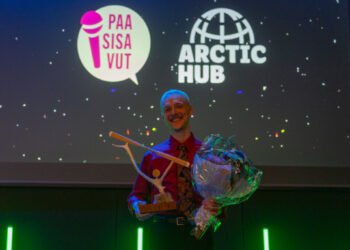
    He has a background as an architect, and is in Nuuk to compete in Arctic Hub’s communication competition Paasisavut.

    In his research, he has taken a closer look at the apartment blocks that were built during the so-called modernization of Greenland – and their significance for how we live together today.

    Now he stands at Block T on Tuapannguit wearing a white hat and a fabric net over his shoulder. Because even if the weather isn’t exactly for this kind of thing, we have to go out and look at the blocks in the city.

    According to him, they are more than architectural manifestations – they are the expression of an experiment with far-reaching consequences. And at the same time for cultural resilience.

    No room for people

    Block T is the last remaining of the blocks that were built at Tuapannguit in the sixties.

    Homes in Nuuk Qaqortoq, Paamiut, Maniitsoq and Sisimiut were built in the same way as the block here – with black painted boards on the ground floor, white painted concrete walls cast in place, dark red doors and prefabricated balconies and railings.

    – It was quite a shift in the Greenlandic building culture, says Frederik Braüner, who emphasizes how extensive the housing standardization was: Many blocks were built within a few years.

    – It was effective, but was it necessary? It might not give as much space for people, says Frederik Braüner.
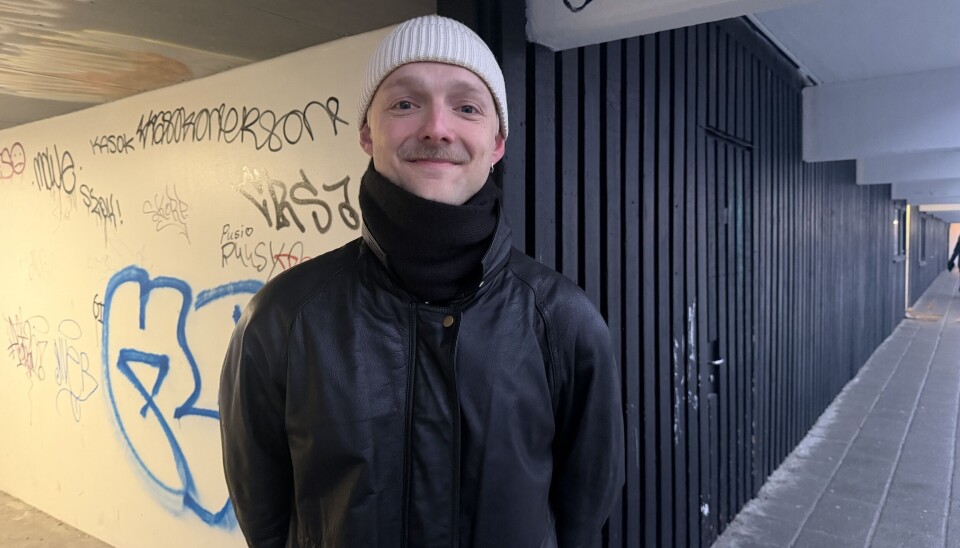

    Frederik Braüner has a background as an architect, and looks at buildings with critical eyes. According to him, they shape how we live together.
    Photo: Mette Kierstein

    In his thesis, which he wrote at the University of California in Berkeley, USA, he maps the urban development and thus also the settlement closure in Greenland, which took place from 1953-1979. His starting point is Paamiut.

    – Because Paamiut is the city where the most and fastest construction was done in relation to the city’s size, says Frederik Braüner.

    – It was planned that Paamiut should be a so-called “sucking place”. It should “suck” people from the villages into the cities, says Frederik Braüner.

    Didn’t want to sneak in

    – Do you want to hear something funny? I’ve actually never been inside, says Frederik Braüner and nods in the direction of the blocks on Qapiarfiusaaq (Radio Mountain).

    It’s funny because his final project for the candidate in architecture was about the buildings here.

    The project brought Frederik Braüner, who was born in Silkeborg, to Greenland for the first time in 2020. As he walked around Nuuk, he noticed the many blocks in the city, and then a wonder was awakened:

    – I couldn’t find much literature on what the behavior of the blocks had meant for people and had consequences for society in Greenland, says Frederik Braüner.

    It was the estimate for the thesis, which he has now put the final sentence in.

    The fact that he has not yet been inside the blocks at Qapiarfiusaaq tells a lot about his scientific approach. Architects, he says, have a reputation for being uninvited guests. Their fascination with buildings makes them move into where people live and work.

    Instead, he waited for an invitation – and later he got it from the residents of several of the blocks in Paamiut and Nuuk.

    Frederik Brauner

    Frederik Braüner was born in 1993 in Silkeborg in Denmark.

    He has a bachelor’s degree in art history and a master’s degree in architecture from the University of Copenhagen and the Royal Academy in Copenhagen, respectively.

    In 2021, he won the Ministry of Education and Research’s Commonwealth thesis award of DKK 40,000 for his graduation project ‘An Intersectional Architecture’, which is based on a field study of the blocks at Qapiarfiusaaq.

    From 2021-2026, he wrote his PhD at the University of California in Berkeley. His thesis is entitled: ‘Arctic Modernity: Welfare Colonial Architecture in Kalaallit Nunaat (Greenland)’. It is not publicly available yet, but in the article here you can read about some of his ideas.

    Today he works as a postdoc at Colombia University in New York. Here he examines how ideals of modernity have moved between states – for example, how the Canadian and Danish governments were in contact regarding the relocation of Inuit.

    His research includes interviews with people who have been able to call the standardized blocks in Paamiut, Maniitsoq and Nuuk their home.

    – I would not risk telling the story as it has not been experienced, explains Frederik Braüner.

    Most of his interviewees were children when the concentration policy was implemented.

    They talked about what it was like to move into the blocks for the first time. About a completely new and different way of living. The playmates were close – but there was also a lot of noise. And their parents did not always prosper.

    The residents’ own stories have been crucial to his research – and have not been written down and archived until now.

    – Because people were very rarely asked what they really thought of the blocks and what it was like to live there.

    People are inventive

    As we pass blocks 2-10, Frederik Braüner takes out his mobile phone and takes a picture of the renovation work that is going on.

    – It is important to say that even though it was a Danish modernization plan, people made the apartments their own, says Frederik Braüner.
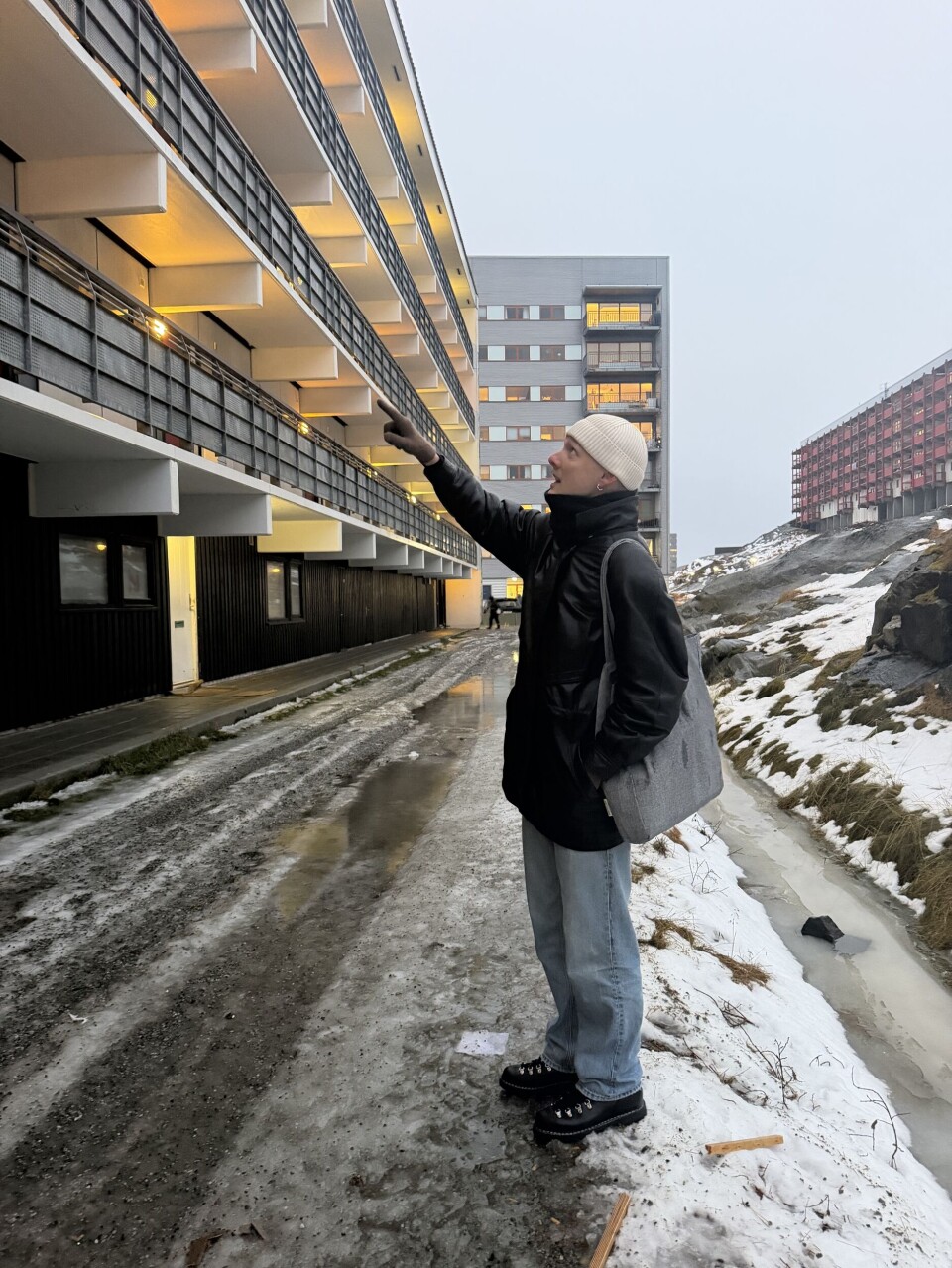
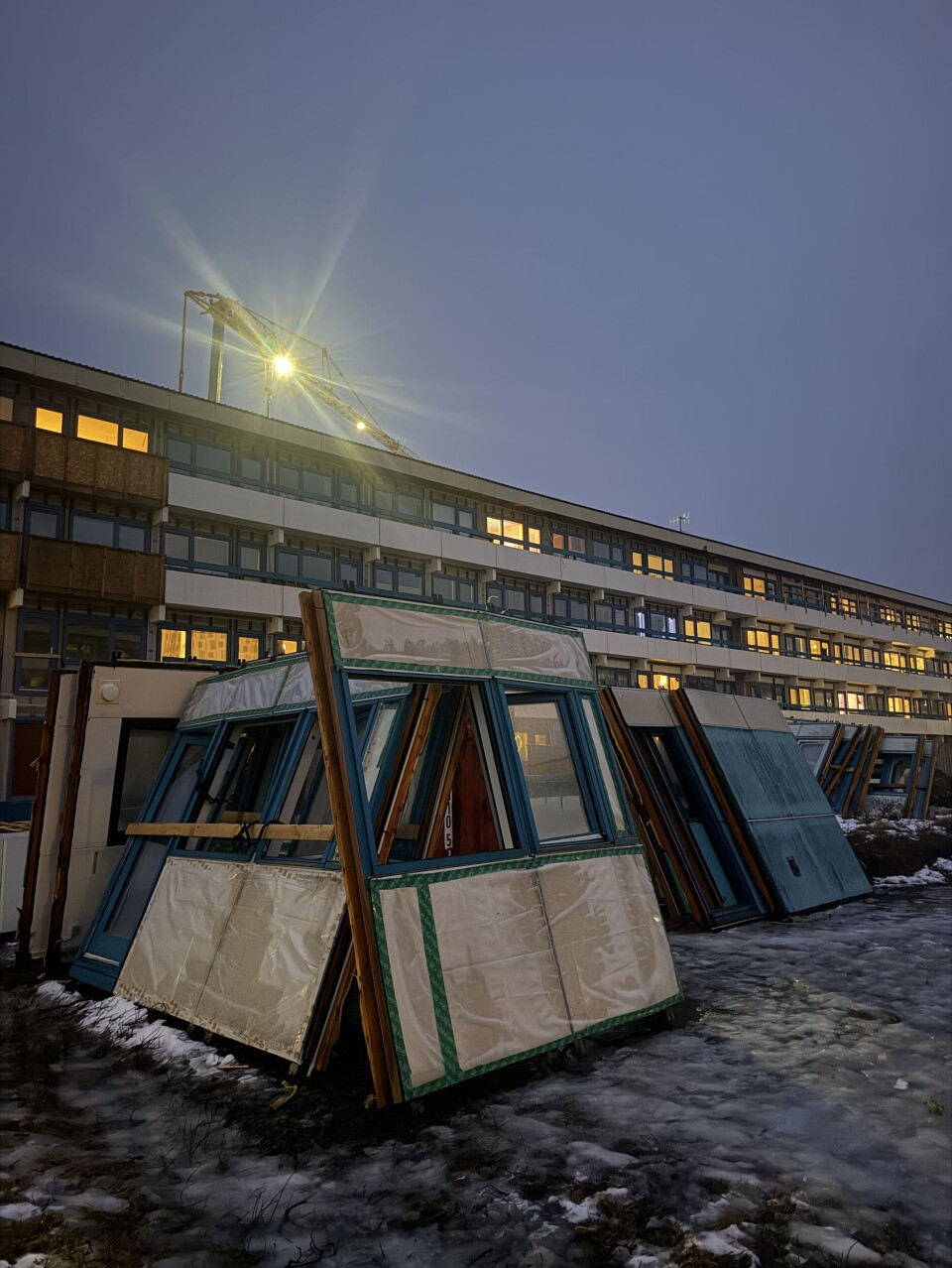
    Frederik Braüner talks about Blok T, which was renovated for 52 million in 2005.
    Photo: Mette Kierstein


    Frederik Braüner believes that the urban development that took place in Greenland during the G50 and G60 must be understood as an experiment.
    Photo: Mette Kierstein

    Fish were hung to dry and antlers attached to the balconies, which the architects had otherwise intended as these long, clean lines.

    – People are inventive – and … resilient, says Frederik Braüner, looking for the Danish word after 5 years in the USA.

    – It is life-affirming, I think. That cultural peculiarities survive, despite these violent modernisations, he says.

    The meeting with the people has been the best part of doing research, he believes. During his fieldwork in Paamiut, he was invited to coffee parties, concerts and weddings.

    – I have been greeted with so much warmth, says Frederik Braüner.

    It was an experiment

    In his thesis, Frederik Braüner argues that the urban development that took place in Greenland during the G50 and G60 must be understood as an experiment:

    They wanted to build modernist cities from scratch. But they didn’t actually know how to do it.

    – The narrative has often been that the visions came to Greenland from Denmark as a ready-made package. But that is not true, says Frederik Braüner, who has been to both Greenland’s National Museum & Archives in Nuuk and the National Archives in Copenhagen during his research.

    On the other hand, he argues that urban development in Greenland is absolutely central to understanding Danish modernism – that is, the way in which buildings were thought about and erected in Denmark in the period from approximately 1930-1970s.

    The buildings that were built by the Greenland Technical Organization (GTO) helped to develop a design language, building techniques and spatial constellations that influenced what was later built in Denmark.

    – It is an important story if you want to understand the welfare state in Denmark, and because it also places Greenland in a much more important place in the history of architecture than so far, says Frederik Braüner.

    Denmark cannot escape responsibility

    Although Frederik Braüner has a background as an architect, he believes that we should look at the blocks in Paamiut, Nuuk, Maniitsoq and Sisimiut as more than just buildings. According to him, they are the expression of ideas which have a far heavier weight than the concrete they are cast from.

    – The way they were built enabled the transformation of Greenland, he says.

    One of the terms he uses to argue for it is called ‘welfare colonialism’. It is formulated by the anthropologist Robert Paine. He uses this term to distinguish between different forms of colonialism.

    – Instead of colonizing through settlement or extraction of values, welfare colonialism takes place through the supply of resources, explains Frederik Braüner.
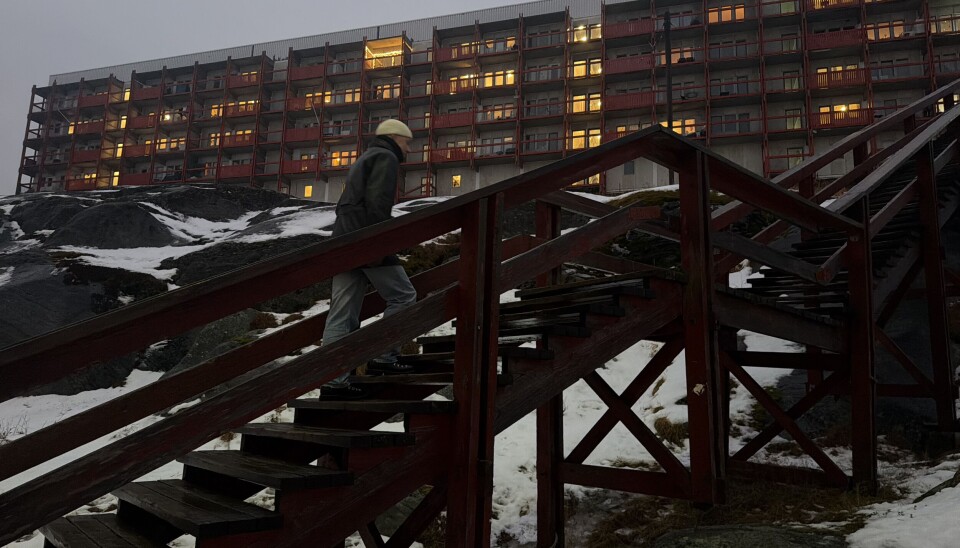

    An important part of Frederik Braüner’s research has been about collecting stories from people who have lived in Paamiut, Nuuk and Maniitsoq housing blocks. Because when they were performed, they were rarely heard.
    Photo: Mette Kierstein

    According to Robert Paine, the purpose of this is to create a cultural norm – and thus shape a certain type of society.

    – So when you see ten identical blocks of flats standing side by side in a relatively small town, it is about creating cultural dominance and shaping a type of society that resembles the Danish one.

    The Danish national economist Mogens Boserup called the concentration policy “forced by circumstances”.

    And what do you call it?

    – I probably just call it coercion, says Frederik Brauner, who has also made his voice heard in the Danish debate about the darker sides of the Commonwealth.

    During the project, he has thought about whether, as a Danish researcher at an American institution, he is entitled to deal with Greenland’s architectural history.

    – But the more I read up on the material, the more it dawned on me that there is also a Danish responsibility to correct history by investigating the mistakes that have been made, he says.

    He has thought a lot about who his thesis is for.

    – It is a platform for those who have told their story, and proof of what has happened, he says and elaborates:

    – I believe it is important that we are told what has not been good. Greenland deserves to be recognized by us in Denmark.
    Source link

    Related Posts

    Orientation: Passengers need to pocket money to strengthen Greenland Airports
    Greenland

    Orientation: Passengers need to pocket money to strengthen Greenland Airports

    November 16, 2026
    Between the sea, the ice and history
    Greenland

    Between the sea, the ice and history

    November 16, 2026
    Boligblok researcher ran with the victory for this year’s Paasisavut
    Greenland

    Boligblok researcher ran with the victory for this year’s Paasisavut

    November 16, 2026
    Air Greenland on routes to Upernavik: We are discussing possible improvements with the department
    Greenland

    Air Greenland on routes to Upernavik: We are discussing possible improvements with the department

    November 16, 2026
    Millions for Greenlandic documentaries – including a film about a helicopter accident
    Greenland

    Millions for Greenlandic documentaries – including a film about a helicopter accident

    November 16, 2026
    Nikkulaat Jerimiassen joins Naleraq
    Greenland

    Nikkulaat Jerimiassen joins Naleraq

    November 15, 2026

    POPULAR NEWS

    2026 Regional and International Conventions of Jehovah’s Witnesses

    2026 Regional and International Conventions of Jehovah’s Witnesses

    July 7, 2026

    All posts

    July 23, 2026
    OPINION: How Argentina used war, disease, enslavement, racial ideology, immigration policies, census practices, to erase blacks

    OPINION: How Argentina used war, disease, enslavement, racial ideology, immigration policies, census practices, to erase blacks

    July 15, 2026
    This is how Nicolás Maduro and Cilia Flores reappeared in their hearing

    This is how Nicolás Maduro and Cilia Flores reappeared in their hearing

    July 24, 2026
    Thaksin, Yingluck and Paetongtarn meet Indonesian President Prabowo for investment talks

    Thaksin, Yingluck and Paetongtarn meet Indonesian President Prabowo for investment talks

    July 13, 2026

    EDITOR'S PICK

    Salvation Army faces rising demand as donations fall

    Salvation Army faces rising demand as donations fall

    November 3, 2026
    3-year-old girl hospitalized after Maple Ridge, B.C., bear attack

    3-year-old girl hospitalized after Maple Ridge, B.C., bear attack

    August 9, 2026
    Big four in Walker Cup semi-finals showdown | Sports

    Big four in Walker Cup semi-finals showdown | Sports

    October 9, 2026
    Union calls for teacher wellness measures

    Union calls for teacher wellness measures

    November 2, 2026

    Recent Posts

    • Frederik Braüner vying for Paasisavut: Why do our cities look the way they do?
    • Des Vignes urges counselling for families after Chaguaramas boating tragedy
    • Tocumen Airport will invest more than $500 million to expand and renovate areas
    • More than 100 speeding tickets cancelled after sign error

      © 2026 Agentially - Navigating shifting sovereignties and global risk .

      Welcome Back!

      Login to your account below

      Forgotten Password?

      Retrieve your password

      Please enter your username or email address to reset your password.

      Log In
      No Result
      View All Result
      • HOME
      • AMERICAS
        • Argentina
        • Brazil
        • Canada
        • Chile
        • Colombia
        • Costa Rica
        • Cuba
        • Dominican Republic
        • Ecuador
        • El Salvador
        • Greenland
        • Guatemala
        • Honduras
        • Mexico
        • Nicaragua
        • Panama
        • Paraguay
        • Peru
        • United States
        • Uruguay
        • Venezuela
      • ASIA-PACIFIC
        • Australia
        • Brunei Darussalam
        • Cambodia
        • China
        • Federated States of Micronesia
        • Fiji
        • Indonesia
        • Japan
        • Kiribati
        • Laos
        • Malaysia
        • Marshall Islands
        • Mongolia
        • Myanmar
        • Nauru
        • New Zealand
        • North Korea
        • Palau
        • Papua New Guinea
        • Philippines
        • Samoa
        • Singapore
        • Solomon Islands
        • South Korea
        • Taiwan
        • Thailand
        • Timor-Leste
        • Tonga
        • Tuvalu
        • Vanuatu
        • Vietnam
      • CARICOM
        • CARICOM – Non-English
          • Haiti
          • Suriname
        • CARICOM Associates
          • Anguilla
          • Bermuda
          • British-Virgin-Islands
          • Cayman-Islands
          • Curacao
          • Turks-and-Caicos
        • CARICOM English
          • Antigua and Barbuda
          • Barbados
          • Belize
          • Dominica
          • Grenada
          • Guyana
          • Jamaica
          • Montserrat
          • Saint Kitts and Nevis
          • Saint Lucia
          • Saint Vincent and the Grenadines
          • The Bahamas
          • Trinidad and Tobago
      • EURASIA
        • Armenia
        • Azerbaijan
        • Balarus
        • Georgia
        • Kazakhstan
        • Kyrgyzstan
        • Moldova
        • Russia
        • Tajikistan
        • Turkmenistan
        • Ukraine
        • Uzbekistan
      • EUROPE
        • Albania
        • Andorra
        • Austria
        • Bosnia and Herzegovina
        • Bulgaria
        • Croatia
        • Cyprus
        • Czech Republic
        • Denmark
        • Estonia
        • Finland
        • France
        • Germany
        • Greece
        • Holy See
        • Hungary
        • Iceland
        • Ireland
        • Italy
        • Kosovo
        • Latvia
        • Liechtenstein
        • Lithuania
        • Luxembourg
        • Malta
        • Monaco
        • Montenegro
        • Netherlands
        • North Macedonia
        • Norway
        • Poland
        • Portugal
        • Romania
        • San Marino
        • Serbia
        • Slovakia
        • Slovenia
        • Spain
        • Sweden
        • Switzerland
        • United Kingdom
      • MIDDLE EAST AND NORTH AFRICA
        • Algeria
        • Bahrain
        • Egypt
        • Iran
        • Iraq
        • Israel
        • Jordan
        • Kuwait
        • Lebanon
        • Lybia
        • Morocco
        • Oman
        • Palestinian Territories
        • Qatar
        • Saudi Arabia
        • Syria
        • Tunisia
        • Turkey
        • United Arab Emirates
        • Western Sahara
        • Yemen
      • SOUTH ASIA
        • Afghanistan
        • Bangladesh
        • Bhutan
        • India
        • Maldives
        • Nepal
        • Pakistan
        • Sri Lanka
      • SUB-SAHARAN AFRICA
        • Angola
        • Benin
        • Botswana
        • Burkina Faso
        • Burundi
        • Cabo Verde
        • Cameroon
        • Central African Republic
        • Chad
        • Comoros
        • Cote d’Ivoire
        • Democratic Republic of the Congo
        • Djibouti
        • Equatorial Guinea
        • Eritrea
        • Eswatini
        • Ethiopia
        • Gabon
        • Gambia
        • Ghana
        • Guinea
        • Guinea Bissau
        • Kenya
        • Lesotho
        • Liberia
        • Madagascar
        • Malawi
        • Mali
        • Mauritania
        • Mauritius
        • Mozambique
        • Namibia
        • Niger
        • Nigeria
        • Republic of the Congo
        • Rwanda
        • Sao Tome and Principe
        • Senegal
        • Seychelles
        • Sierra Leone
        • Somalia
        • South Africa
        • South Sudan
        • Sudan
        • Tanzania
        • Togo
        • Uganda
        • Zambia
        • Zimbabwe

      © 2026 Agentially - Navigating shifting sovereignties and global risk .

      This website uses cookies. By continuing to use this website you are giving consent to cookies being used. Visit our Privacy and Cookie Policy.