A call for tenders launched in recent weeks to supply public hospitals with immunoglobulins, essential drugs in the treatment of many serious pathologies, was unsuccessful. According to the Ministry of Health, the financial offer received from the only admitted competitor was considered excessive compared to the project owner’s estimate, leading to the procedure being declared unsuccessful on April 10, in accordance with the rules of public procurement.
This market, structured in three lots with a limit of one lot per supplier, nevertheless responded to a clearly assumed logic of securing supply. The Moroccan Agency for Blood and its Derivatives (AMSD) explains that this approach aims to avoid dependence on a single operator, which is particularly risky for critical products with a long and international supply chain. A failure of a supplier could in fact lead to a global disruption, compromising patients’ access to a vital medicine.
The ministry recalls, for its part, that this limitation is fully within the regulatory framework of public procurement, making it possible to guarantee security of supply, the capacity of service providers and compliance with execution deadlines. Despite these precautions, market reality prevailed.
>>Read also: Immunoglobulins: no vials in the public network, shortage in pharmacies
Because beyond this one-off failure, it is indeed a structural tension which affects the immunoglobulin market on a global scale. The Moroccan Agency for Medicines and Health Products (AMMPS) underlines that since the Covid-19 pandemic, these products have faced continued pressure: increased demand, limited plasma collection capacities and concentration of the market between a few industrial players. Result: a surge in prices which quickly makes the budgetary estimates established upstream obsolete.
In this context, the Directorate for the Supply of Medicines and Health Products (DAMPS) insists: the unsuccessful nature of the call for tenders does not reflect a lack of anticipation, but rather an unfavorable market reality. This situation, however, opens the way to alternative mechanisms, such as negotiation, exceptional imports or even the diversification of sources of supply.
Coordinated mobilization to avoid disruption
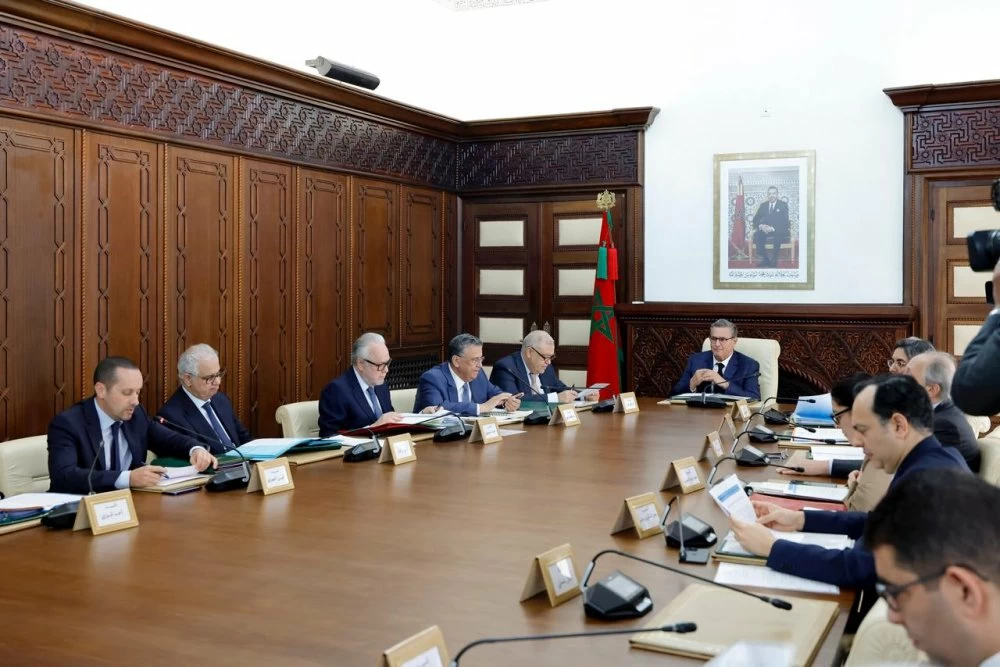
Faced with a risk of strain on stocks, the health authorities have put in place a multidimensional response. The Ministry of Health, in coordination with the AMSD, the AMMPS and the CHUs, has activated several levers to guarantee continuity of access to these treatments. Among the measures deployed is a national system for monitoring proper use, structured around a national medical committee and regional committees. The objective is clear: prioritize the most critical indications, in particular primary immune deficiencies, Guillain-Barré syndrome, certain neuropathies, myasthenia gravis and even Kawasaki disease.
The ministry also called on health establishments to strengthen their own stocks so as not to depend exclusively on the central stock. At the same time, the AMMPS is acting on the regulatory side by accelerating marketing authorizations, expanding the portfolio of products available, particularly via biosimilars, and facilitating exceptional imports in the event of an emergency.
The AMSD, for its part, is working to strengthen the national offer through several projects: valorization of Moroccan plasma, development of plasmapheresis, exceptional imports and registration of new specialties. Diversification considered essential to reduce the vulnerability of the system.
Existing stocks, but under surveillance
On the sensitive issue of stocks, the ministry ensures that it has security reserves and strategic stocks to meet current and future needs. The AMMPS reminds that industrial pharmaceutical establishments are required to maintain a stock equivalent to three months of consumption.
As of April 24, 2026, the stock under the AMSD included in particular 73 vials of CNTS immunoglobulin (10 g), 41 vials (5 g) and 3,978 vials of GLOBULIC (5 g). However, these volumes only represent a stock of strategic support and do not reflect all national availabilities, which must be evaluated by integrating the public and private sectors.
Structural dependence on imports
One of the main vulnerability factors remains the lack of national production of immunoglobulins. This total dependence on imports exposes Morocco to the fluctuations of a highly concentrated and unstable global market.
Added to this are other constraints: post-Covid tension on human plasma, limited fractionation capacities, continued increase in demand and under-diagnosis of certain pathologies, which suggests a structural increase in needs. The misuse of these treatments, sometimes prescribed outside of validated indications, also constitutes an issue requiring reinforced supervision.
A national strategy to strengthen health sovereignty
Faced with these challenges, a national strategy is being structured. In the short term, it aims to prevent shortages through close monitoring of stocks, prioritization of patients and targeted imports. In the medium term, the emphasis is placed on diversifying sources and improving prescription monitoring.
But it is above all in the long term that the major challenge is at stake: strengthening the health sovereignty of the country. This involves the development of national plasma collection and the exploration of local or regional fractionation capacity, in accordance with Law 10-22. In this system, the AMSD positions itself as a strategic player in the plasma sector, while the AMMPS provides the regulatory framework.
A vital medicine with no alternative
Immunoglobulins, derived from human plasma, occupy a central place in the management of numerous serious pathologies in immunology, neurology, hematology and even in intensive care. In certain indications, they have no therapeutic alternative. Their unavailability can therefore directly compromise patients’ chances of survival or recovery.
However, since the pandemic, the global market remains under tension, in particular due to the drop in plasma donations, the increase in therapeutic indications and industrial concentration. A reality that Morocco, like many countries, finds itself faced with.