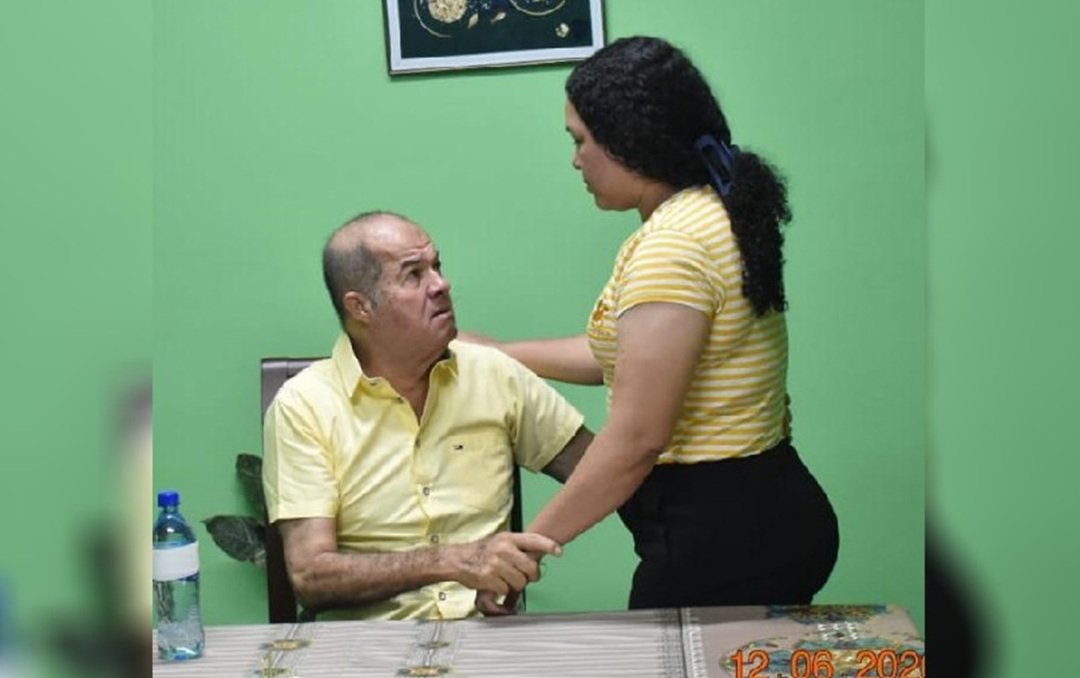
The dictatorship of Daniel Ortega and Rosario Murillo released on Sunday, June 14, 2026, several photographs of the Miskito leader and political prisoner Steadman Fagot Müller, about whom there was no information since his illegal arrest on September 14, 2024.
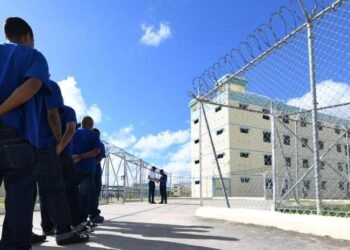
Daniel Ortega’s former presidential advisor appears in the images accompanied and talking with his wife Stefany Martínez, during an alleged “weekly” visit to La Modelo prison, on June 12, 2026, according to the Ortega propaganda media.
On social media, Fagot’s relatives stated that the 72-year-old Miskito leader does not receive “weekly” visits and demanded that his children and brothers be allowed to see him.
Steadman Fagot was arrested a day after he denounced the invasion and deforestation of indigenous territories on the Caribbean Coast of Nicaragua, for which he blamed local authorities and exonerated Ortega and Murillo.
The Miskito leader, who for decades has acted in the name of Ortega in the Río Coco areawas detained by the Nicaraguan Army in Waspán, a municipality in the Autonomous Region of the North Caribbean Coast. Through a brief statement, the Armed Forces reported that a patrol from the Northern Military Detachment “learned information about plans prepared by citizen Stedman Fagot Müller (sic), to carry out activities outside the law with elements linked to drug trafficking and organized crime, from Honduras.”
The objective was “to steal organic weapons from the institution in the military posts located on the banks of the Coco River,” according to the Army.
Steadman Fagot was arrested almost a year after the leaders of the Yatama indigenous party, Brooklyn Rivera Bryan and Nancy Elizabeth Henríquez. Rivera died in custody of the dictatorship on May 31, 2026, while Henríquez has been under “house arrest” since March 2026.
In forced disappearance
Steadman Fagot is part of the 46 political prisoners identified by the Mechanism for the Recognition of Political Prisoners until May 31, 2026. Of all the prisoners of conscience, thirteen are older adults and nine remain in a condition of forced disappearance. In both categories was the Miskito leader.
The organization emphasized the continuity of practices of state opacity regarding the whereabouts, integrity and detention conditions of a significant segment of the registered population.
Of the 46 political prisoners26% are members or leaders of indigenous communities, 21% are farmers, and 15% are people previously linked to the state apparatus or the ruling party, according to the information.
Who is Steadman Bassoon?
In the early 1980s, the first Sandinista Front government identified Steadman Fagot as a former Somoza security agent who attempted to “invade” Nicaragua from Honduran Moskitia. For his part, the Miskito leader denounced to international human rights organizations the massacre of 35 people in the Leimus community, who were later buried in common graves. The leader said that the 35 indigenous people were “buried alive” in December 1981, during the forced mobilization known as “Red Christmas.” In total, he added, almost 400 Miskitos were killed during the transfer.
In the mid-eighties, the FSLN Government demanded that the Government of Honduras extradite the Nicaraguan, after ensuring that he was directed by the Central Intelligence Agency (CIA) of the United States. By then, Steadman Fagot was the leader of MISURAKISAN or the Indigenous Unit of the Nicaraguan Coast, which brought together three indigenous ethnic groups in the counterrevolutionary struggle. In 1987, MISURAKISAN and MISURASATA (Miskito, Sumo, Rama, Sandinista Asla Takank), led by Brooklyn Rivera, joined together to found the Yatama indigenous party, of which only Rivera then retained the leadership.
After years on the opposite side, Steadman Fagot ended up allying himself with the Sandinista Front and had remained close to the ruling party since then, occupying different official representations since Daniel Ortega’s return to power in 2007, including director of the Nicaraguan Fisheries Institute (Inpesca).
In January 2017, the Miskito leader was named presidential advisor for policies towards indigenous peoples, coinciding with one of the ruptures in the FSLN alliance with Yatama, since Rivera and Fagot have been the traditional Miskito leaders who, from separate sides, have always been close or opposed to the FSLN. On August 16, 2024, Fagot was one of the 16 presidential advisors confirmed by Rosario Murillo as part, he said, of a process of “organization and optimization” of the state apparatus.