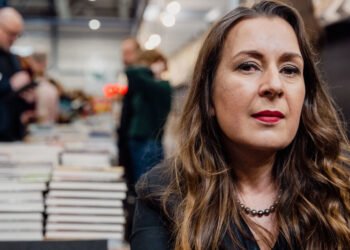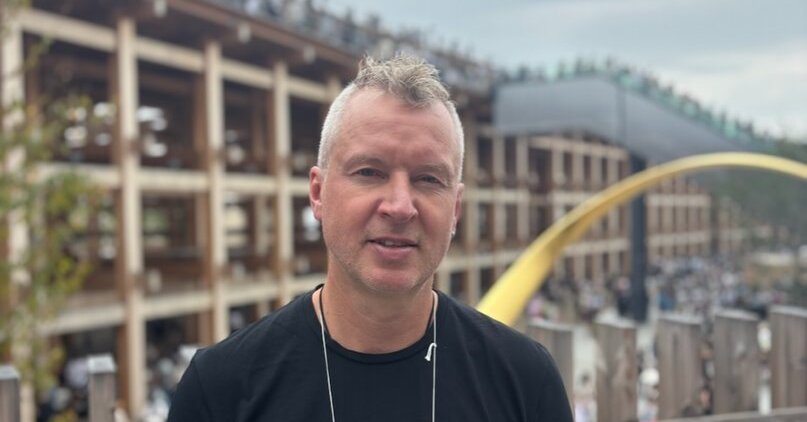
The producer and director of the film is Žilvinas Naujokas 15 minutes tells how the decision to abandon the drone and grandeur was born and why the second part begins and ends in the same homestead in Kintai, to the sound of gong music.
– After the first virtual reality film “Aš Lietuva” (dir. Donatas Ulvydas, prod. Žilvinas Naujokas) you received a lot of feedback. About 100 thousand people saw it. people. How did you decide to create the second part as well – “I Lithuania 2: Journey to Yourself”?
– Apparently, this is a natural impulse for every developer, when a lot of good feedback and reactions are received, thinking about a sequel. In other words, if the demand is felt, it should be continued. People who watched the first part asked the developers if it would be possible to see a little more. Lithuania may seem like a small country, but it holds much more than 20 minutes of filmed time.
We ourselves live in virtual reality, we like it, we spend a lot of time with it, we see how other people react. However, entering another space and another reality is impactful.
True, we really tried to show a different Lithuania than it was in the first film. I didn’t want to show the same thing, copy it.

“Hexa cinema” photo/Behind the scenes of the film “I Lithuania 2: Journey to Self”.
– And how is the second film different? Did the change come organically, or did you plan a lot?
– Just like in a feature film, a lot of things need to be planned in a documentary. Not only the locations are important, but also the time in which the filming is done – for example, the setting or rising sun affects the image, so we have to make plans in advance.
I think the difference from the first film is encoded in the subtitle of the title – Journey into Self. In the first film, we filmed more with a drone, it was going up, looking from a bird’s eye view. We wanted to show the beauty of Lithuania from above. And in the case of the second film, we wanted a closer, more intimate contact, so the film moves more slowly – a person can focus on looking around, objects are filmed from closer, creating a feeling of closeness. Being closer to Lithuania is also felt in the text that the viewer hears, I think it is a bit more intimate, deeper, more philosophical, reaching people’s consciousness through the subconscious.

“Hexa cinema” photo/Behind the scenes of the film “I Lithuania 2: Journey to Self”.
With that in mind, we also chose the locations we filmed. The film enters and exits at the same location, a homestead in Kintai, where gong music is playing. We wanted to create a meditative experience in the context of Lithuania.
– The first part seemed to focus on grandeur, while the second part aims to plunge into a meditative state. I even thought that it was a kind of reference to the Baltic culture, the mythical plane.
– Indeed it is! We had told ourselves that we wanted more nature in this part and a little less facilities and cities. It is true that one segment in the film is dedicated to smaller towns, because in the first part we focused on larger towns, so we did not want to forget the smaller ones as well. When we went to different towns with the first film, we heard people’s thoughts and wishes to see more, so we took them into consideration. We wanted the residents of other towns to have the opportunity to see their city.
Of course, the main criterion is the beauty of nature, so if we wanted to film more water, we also looked for beautiful places. Another criterion for choosing locations was places that perhaps not everyone can see, for example, the Pervalka lighthouse. It is not so easy to swim. Also – Dead Dunes.

“Hexa cinema” photo/Behind the scenes of the film “I Lithuania 2: Journey to Self”.
– And what feedback have you already heard from the film’s viewers?
– I noticed that the reaction when watching the virtual reality films we created is similar. Let’s say that the audience reacts personally to the animated film “Playing Life”, created based on the paintings of Algis Krisčiūnas. Similarly with films about Lithuania. People are left speechless, express their feelings through tears, and leave feeling lost. More vocal Lithuanians share that such films evoke feelings that they claim to have felt for a long time – say, a deep connection with their country, that this film made them feel a sense of patriotism,
– And when you thought about the aspirations of virtual reality films, did you expect something similar? What did you want people to feel?
– Of course, every creator wants his work to provoke a reaction. True, we did not expect such strong reactions. It’s a lot of fun.
By the way, our frequent viewers are pupils and students, that is, young people, so we definitely wanted to implement an educational line as well. Young people enjoy flying or just being in a place they haven’t seen yet.

“Hexa cinema” photo/Viewing of the film “I Lithuania 2: Journey to Self”.
We also welcome the visits of older people and senior citizens. It can be seen that we give them the right to visit places where they have not been or have been for a long time. It’s also a way to get out of a somewhat gloomy everyday life. The effect of a virtual reality movie is more profound than that of a regular movie. It’s nice to see the joy of older people when they visit. It is even more pleasant to see when all the families come: children bring their parents, grandparents bring their grandchildren. A nice way for families to spend time together.

“Hexa cinema” photo/Viewing of the film “I Lithuania 2: Journey to Self”.
– As I understand, you show films not only in Vilnius, but also in other Lithuanian cities? If so, where can they be seen?
– “Hexa cinema” virtual reality cinema spaces are located in Vilnius, Kaunas, Klaipėda, Šiauliai, Panevėžys, but there are also out-of-town screenings around Lithuania. We have already planned sessions in Utena, Kupiški, Kėdainiai and Ukmerge.
Sessions can also be booked: this can be done by schools and various other groups.

“Hexa cinema” photo/Viewing of the film “I Lithuania 2: Journey to Self”.