The war between the US and Iran devastated tourism in Dubai. Losses of almost 600 million pounds a day, but the real victims are the millions of foreign workers, now without jobs and without money to go home.
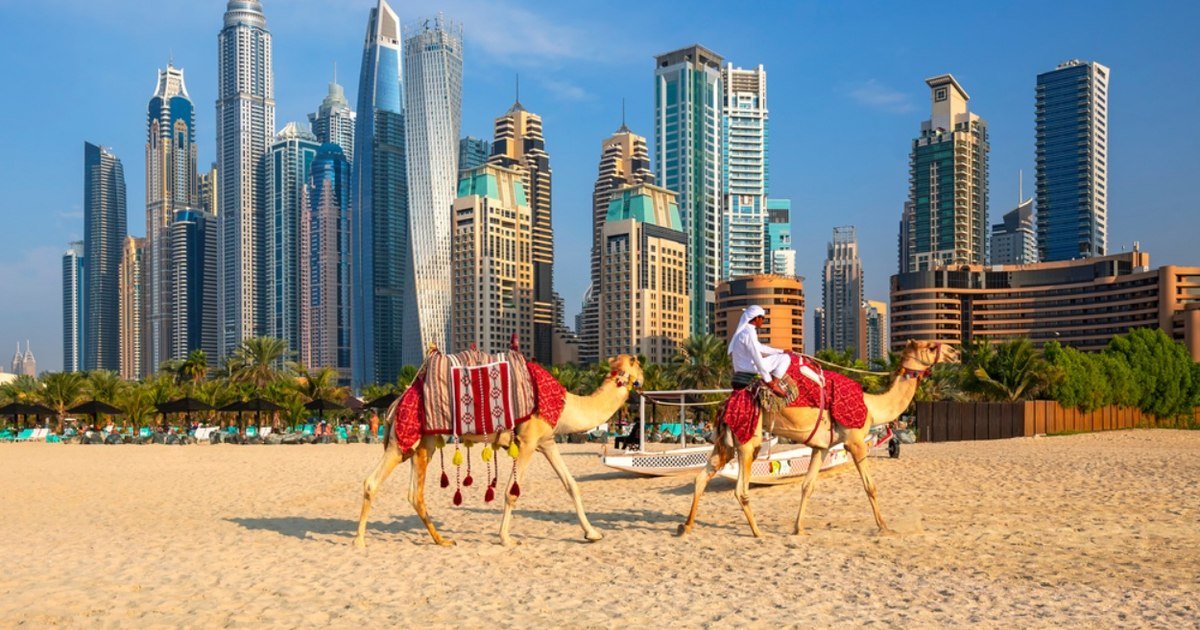
DUBAI is crying for tourists/PHOTO: Archive
Beach clubs, luxury restaurants and five-star resorts are almost deserted. More and more hotels are closed.
At the airport – which until March was the busiest in the world by the number of international travelers – the number of incoming flights is only a fraction of the normal traffic.
Dubai is dead. Iranian missiles and drones scared almost all the foreigners who used to come here.
For a city that had hoped to receive a record 20 million visitors this year, surpassing last year’s 19.59 million tourists, the situation is serious. The losses are estimated at up to 450 million pounds per day, writes the Daily Mail.
But the victims of this unprecedented decline are not the natives of Dubai, who run these businesses and whose wealth insulates them from the worst effects.
Instead, those who suffer the most are largely invisible – the millions of migrant workers holed up in sordid labor camps, unable to earn a wage but unable to afford to return home either.
The Daily Mail found that far from the glitzy but deserted city centre, the poorer, rarely seen areas reserved for those low-income immigrants who once kept the city alive are now hotbeds of despair.
The scale of Dubai’s economic problem
It’s clear as you walk through what were once tourist havens such as the Palm Jumeirah, Dubai Marina and Jumeirah Beach Residences that something is wrong – now there are almost no foreign visitors.
In the past week alone, no less than seven five-star hotels have announced their complete closure – meaning thousands of hospitality workers have either been made redundant or placed on indefinite unpaid leave.
The closures include some of the city’s most famous and expensive hotels, such as the St Regis on the Palm (rooms from £500 a night) and the Armani Hotel in the famous Burj Khalifa (rooms from £600).
Other resorts that have announced their sudden closures include the Park Hyatt Hotel, the Radisson Blu in Media City and the JW Marriott Marquis Hotel. Only the latter is rumored to have cut 400 jobs in one fell swoop.
One of the few remaining Westerners staying in a central hotel still open told Daily Mail reporters this week that staff had been cut so drastically that the same employee was handling security, doing laundry and fetching water bottles.
The fear of official sanctions means that all commercial announcements related to closures or suspensions are based on the old line from the series Fawlty Towers: “Don’t mention the war”.
Instead of blaming the Iranian missile scare for the loss of critical volumes of business, the standard euphemism in Dubai is: “we’re closing for renovation” or variations on that theme.
Those announcing it say they will remain closed until at least September – but some are already saying they may not reopen until next year… if they ever do.
The only recent exception was the Anantara World Islands Dubai Resort.
It once boasted that it was “the most luxurious hotel in the world” – located on the famous Islands of the World, an artificial archipelago in the shape of a world map, accessible only by boat, offering 12 villas with private pools on the “South American” island, at prices of up to 1,000 pounds a night.
Last week, however, its owners, Minor Hotels, announced that, “after a careful analysis”, the resort will “cease operations with immediate effect”. That means it closes permanently.
Despite this disastrous news for a business valued in the hundreds of millions, managers again took pains to be clear that it had nothing to do with the US-Iran conflict.
Instead, a statement said: “The closure is the result of a combination of external factors and cannot be attributed to a single problem.”
Of those hotels that are still struggling, their last source of income appears to be residents of the United Arab Emirates, who are taking advantage of the collapse in room prices to come in for a discount stay.
“It’s very quiet, we don’t have any more tourists“, explained a bartender on the roof. “The only people who stay here now are residents of the Emirates, who come on weekends to use the pool or have brunch here.”
Numerous tourist attractions have closed their doors
Elsewhere in the city, many tourist attractions such as Wild Wadi Water Park, Dubai Parks and Resorts and SkyDive Dubai have closed their doors.
And beach clubs such as Aura Sky Pool, The 305, Surf Club, O Beach and B Beach have started offering free entry to attract paying customers.
Dubai’s Old Quarter, described as the “historical and cultural heart of Dubai”, is usually packed with thousands of tourists who throng the spice markets and souvenir shops as buses jostle to make way for more to disembark. But now in the old Bur Dubai souk, the streets are almost empty.
The stalls remain open, displaying mounds of fragrant spices, silk scarves in countless colors or toy camels for children. But there are no children, and the souvenirs remain untouched.
Bored sellers sit in the shade of awnings, surfing on their phones.
The same story repeats itself in the historic Al Fahidi district. Tourists are missing.
Along the banks of Dubai Creek, the small tourist boats that usually ferry visitors along and across the river – a natural saltwater channel nine miles long – are similarly empty. Boatmen can be seen curled up in their own boats, sleeping.
Dubai restaurants are predictably struggling.
Some of the most famous places in the city, including those with Michelin stars, have tried to drastically reduce prices and staff to a minimum in order to stay afloat.
The sector has been hit so hard that the government hastily introduced a scheme that seems inspired by Rishi Sunak’s Eat Out to Help Out initiative during the pandemic.
Launched on March 28 and running for a month, the Dubai, A Fine Way to Dine scheme offered up to 50% off or full tasting menus for the deeply discounted price of AED 90 (£18) at some of the city’s best restaurants.
Establishments include restaurants such as MANĀO, a Thai restaurant, and the luxurious Italian restaurant Il Ristorante – Niko Romito Dubai, where a meal usually costs over 500 dirhams (100 pounds).
The most affected by this collapse are lower-level, lower-wage workers – many of them economic migrants, drawn here to make money, only this money tap has been shut off. In public discourse in Dubai, they are rarely mentioned.
It is estimated that 80-90% of Dubai’s population is foreign – up to 3.5 million people – and most are low-income migrants from India, Pakistan, Bangladesh and the Philippines, not Western influencers.
Many were sending home most of the money they earned, so the collapse of Dubai will make other victims, much further down the line.
The Sonapur area presents itself as row after row of dilapidated apartment blocks, with laundry hanging from every inch of outdoor space and little protection from the scorching heat. Buildings are faded, billboards are falling. There are Pakistani restaurants and Afghan bakeries, which remind many of home.
The men – and relatively few women – who live here are crammed into cramped dormitories with room for five or six people, often with bunk beds.
Sonapur seems a world away from the image of Dubai promoted by influencers and advertising campaigns.
When war broke out between Iran and America, and missiles and suicide drones headed for the city’s glittering skyline, many wealthy expats – influencers and tycoons – jumped at the first opportunity to fly out of the Emirates.
But for most Sonapur residents, this was not an option – plane ticket prices are prohibitive, and no job is guaranteed where they would return. So they continue.
And the foreign workers the Daily Mail spoke to seemed more afraid of the consequences of talking about the war – than the war itself.
A Pakistani who spoke on condition of anonymity told the Daily Mail that many were too scared to even exchange WhatsApp messages, claiming they had been explicitly told not to discuss the impact of the conflict on the Emirates.
“Nobody wants to talk about it (the ongoing war). Everyone is too terrified. We were told not to talk about it.
It’s the worst place in the world to be able to talk. We are terrified to send any message – saying that they are watching our every move.”
And what do they want to discuss but can’t? It’s about the economy.
He explained: “The big problem now is not Iran, but business. There are no tourists, and all business is very poor.
But even if you ask a small trader, he has to say that business is going well, because he is afraid of having problems.
So what you see in the press is completely wrong. Not everything is fine. We’re all watching what’s happening in Islamabad (peace talks, interrupted and resumed, between the US and Iran), because we think that if an agreement is reached, the tourists will come back very quickly.
But until then, it’s very bad for us.»
Of course, even before the outbreak of conflict in the Middle East, workers in the Gulf faced risks. It is an inconvenient fact that thousands of workers, often from countries like India, Nepal and Bangladesh, die every year. In 2022, a report estimated that up to 10,000 migrant workers die annually across the Gulf region. Most deaths are unexplained.
Many, however, are now silent and terrified. Not for fear of another attack, but of being caught sending or saying something wrong on the Internet.
Those who can afford to leave, leave.
A Filipino travel agent told the Daily Mail: “Many people have lost their jobs in restaurants, hospitality and sales as businesses have suddenly closed or downsized. There are now about four Emirates flights a day returning to the Philippines, and people are heading to the embassy to try to get on the repatriation lists. They repatriate around 100 people a day on repatriation flights. Most of those on the plane return home to look for work.»
The Sri Lankan Embassy in Dubai also offers repatriation flights home for anyone who can afford the return ticket or for large companies willing to pay for their employees’ return flights – now that there is less work.