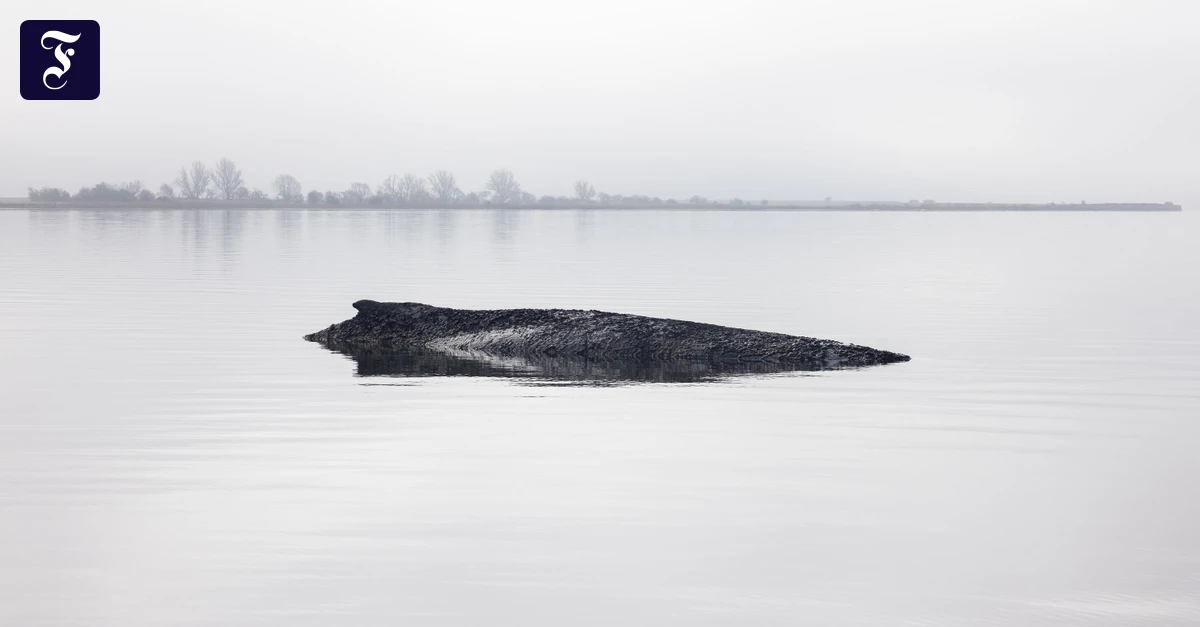
The drama surrounding the twelve-meter-long humpback whale, which the Germans took so deeply to their hearts that they named him “Timmy,” comes to its inglorious end. Named after the Timmendorfer beach on the Baltic Sea, where he lay in shallow water for weeks, more dead than alive, he had to endure that his death was staged for the public, commented on and shared millions of times. The bitter probability is that there is no happy ending. The spectacle ends with a body weighing several tons sinking somewhere to the bottom of the sea. It is a funeral service without liturgy.
Even the fact that he was called “Timmy,” which sounds like a child’s room and afternoon TV, doesn’t do the poor animal justice. Timmy, that was the name of George’s dog in Enid Blyton’s “Five Friends” and also the friendly, blonde boy from the old “Lassie” world. There’s the pastel of the 1970s in it, the soft-focus promise that if you’re just patient, things will somehow work out. But the 11.8-ton colossus was not Timmy, but sick. Maybe he came to this beach to die after all. Maybe he wanted one thing above all else: peace and quiet. It is not granted to him.
The fate of the whale became a series
Humpback whales are not otherwise found in the Baltic Sea, but strandings have increased since humans have disrupted their food sources and their orientation. Timmy was first sighted on March 23rd, his condition deteriorated, soon followed by daily bulletins, rescue attempts, setbacks, new plans, new equipment, new hope. The fate of the whale became a series. The quiet riverside street had turned into a party zone. Tourists from all over Germany set up camp and reporters swarmed out. Cameras continuously sent images onto the Internet in which the giant appeared to be a bobbing, whitish blob. A species of whale whisperer swam in the water next to the animal for hours during the first rescue attempt and posted everything on social media. A woman jumped from a boat into the bay to reach Timmy.
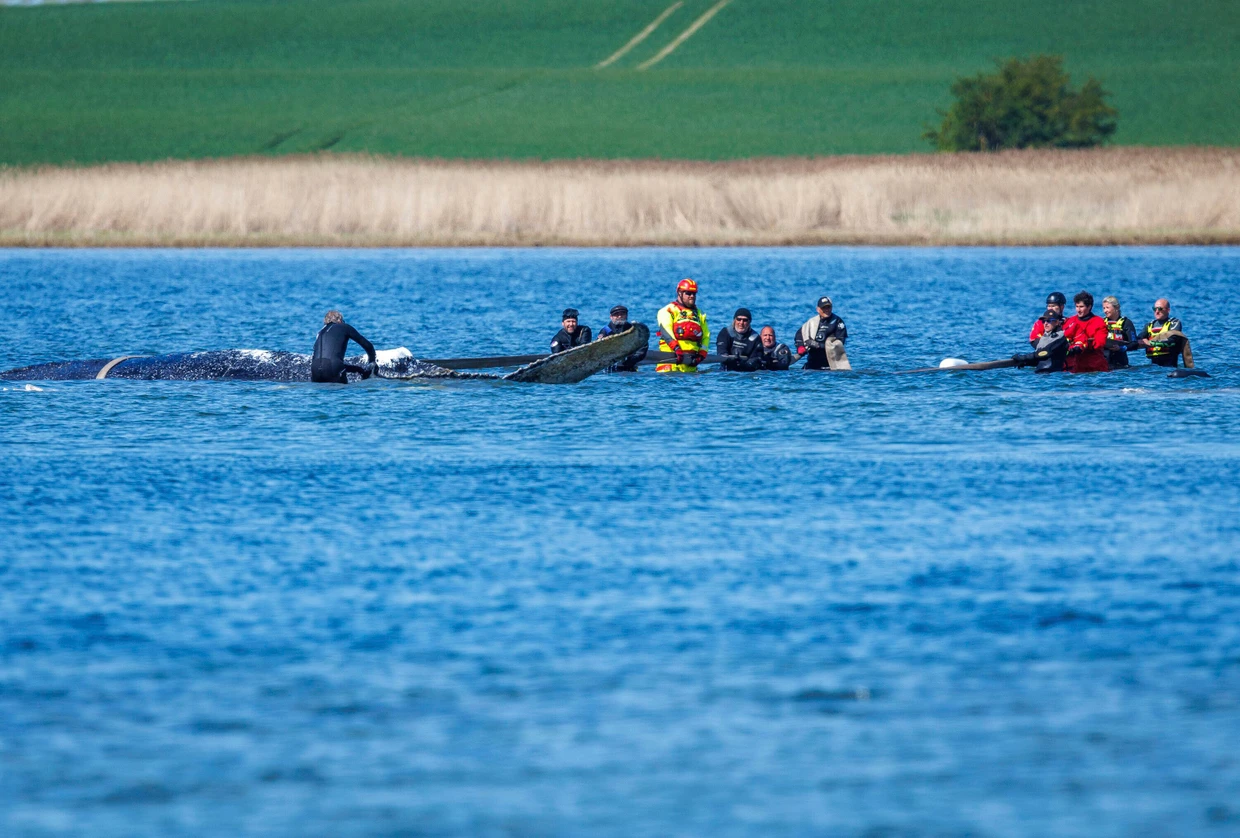
Watching an animal die on the beach is incredibly sad. In order not to expect this from his voters, the state father finally granted a final rescue operation financed by two multimillionaires, against the advice of animal rights activists. He was transported back into the open in a water-filled barge the length of half a football field. One of the two, the founder of MediaMarkt in his day job, told the press that he believed the whale had sensed this. That the rescuers wanted to help him: “He gave the lie to all those people who said he couldn’t swim anymore.”
It wasn’t just that people didn’t want to acknowledge the condition of the whale. During these crazy weeks – and who wouldn’t have wished it to survive – the animal also underwent a remarkable reinterpretation. Despite all the tourist whale watching tours, the whale stands above all for its immeasurable size and power. However, in Melville’s “Moby-Dick” he becomes a leviathan not just through sheer mass, but through the imposition on perception in which fascination and terror are coupled. “Enormity” doesn’t just mean physical size, but also affective shock. By stretching the imagination, the whale evades any ascription of meaning. Only this combination of real physical power and symbolic overload creates disaster.
Timmy’s story may at first seem like the reversal of this logic. In fact, it follows a related pattern. For Melville, physical size is the material of fear; obsession arises from the attack on the senses. With Timmy, it’s not his size that triggers the catastrophe – after all, everyone loves him – but rather his weakness. It was not majestic violence, but the helpless presence of a being that is so big and yet cannot leave that has led us to hysteria. The monster lay there, disarmed, helpless, a colossus as a patient. It is this inversion that has overwhelmed our senses in recent weeks. The whale as a sick person that we rush to help with the walker.
The American listens in amazement to German complaints
The New York Times, otherwise not exactly known as a chronicler of German sensitivities, devoted an entire series of articles to the drama. More than about the whale itself, she soon wrote with increasing irritation about a country in collective madness. She described the dispute over how to properly treat the animal and reported on those who experienced an unexpected sense of meaning. The American reporter listened in amazement as people explained to him that the Germans otherwise felt so powerless: the war in Ukraine, the war in the Middle East, the high energy prices, the health insurance crisis. Lots of large areas that are beyond reach. But maybe, just maybe, if they joined forces, they, the Germans, could save the whale. An act of self-efficacy.
Or do the Germans secretly see themselves reflected in this powerless colossus that once swam so large and proudly through the seas and now lies helpless on the coast and “crying,” as someone who observed the scene thought he heard? Does Timmy reveal something about us? Does rescue become a vicarious act because in times when politics is perceived as particularly abstract and helpless, the animal is concrete and therefore the help that is given to it?
Where connections are complex, a body becomes understandable in shallow water. Where responsibility is diffuse, empathy can be focused. So much hope drove people to the beach with their binoculars and telephoto lenses, touched by the helplessness they observed. One person thought he recognized “that the whale is looking for a way out and he can’t find it.” The sentence contains the whole story. Compassion, projection and the longing for narration.
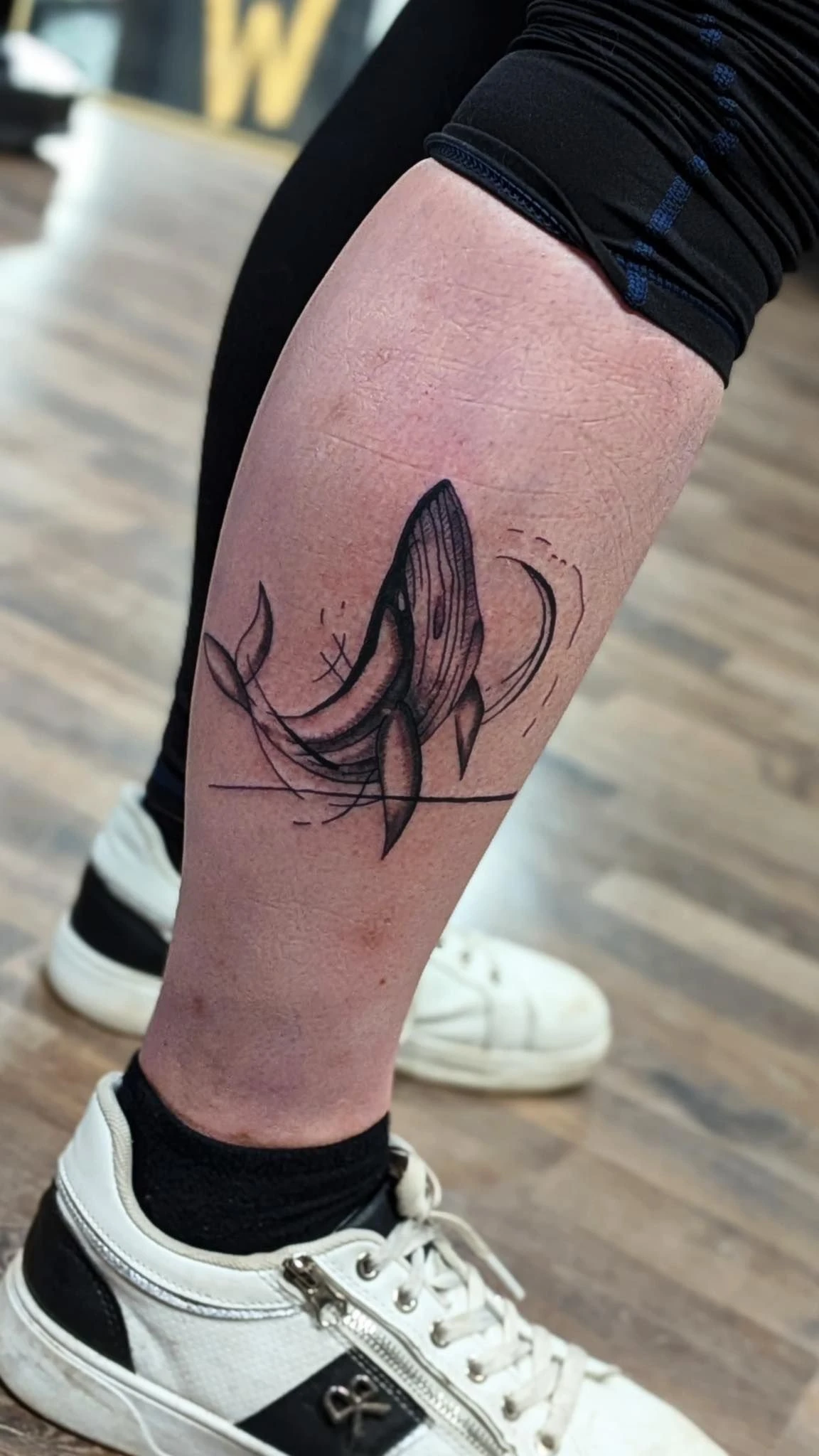
But we know better. This story is difficult to tell. That more than 300,000 whales and dolphins die every year because they get caught in fishing nets. The oceans are no longer a safe place for marine life. And this is where the entire ambivalence of the Timmy cult comes into play. He is empathy and distraction. A focused love that obscures the diffuse catastrophe from which it comes. If we don’t stop the wars, don’t pull the nets out of the seas, don’t throttle the engines of the cruise ships, then at least we’re saving this animal. That can be told. And also looks great as a tattoo on the arm.
The actual rescue does not begin on the beach, but far before it. The monstrous lurks out there, in the statistical repetition of the desecration of our seas. This is our powerlessness. This is our pain. The whale has been called “Hope” online since its death became a probability. Timmy was twelve meters of reality. And in the end perhaps all that remains of him is what Melville describes so impressively in his novel. The realization that the monster not only lives outside, but also within us and our need to give it a name.