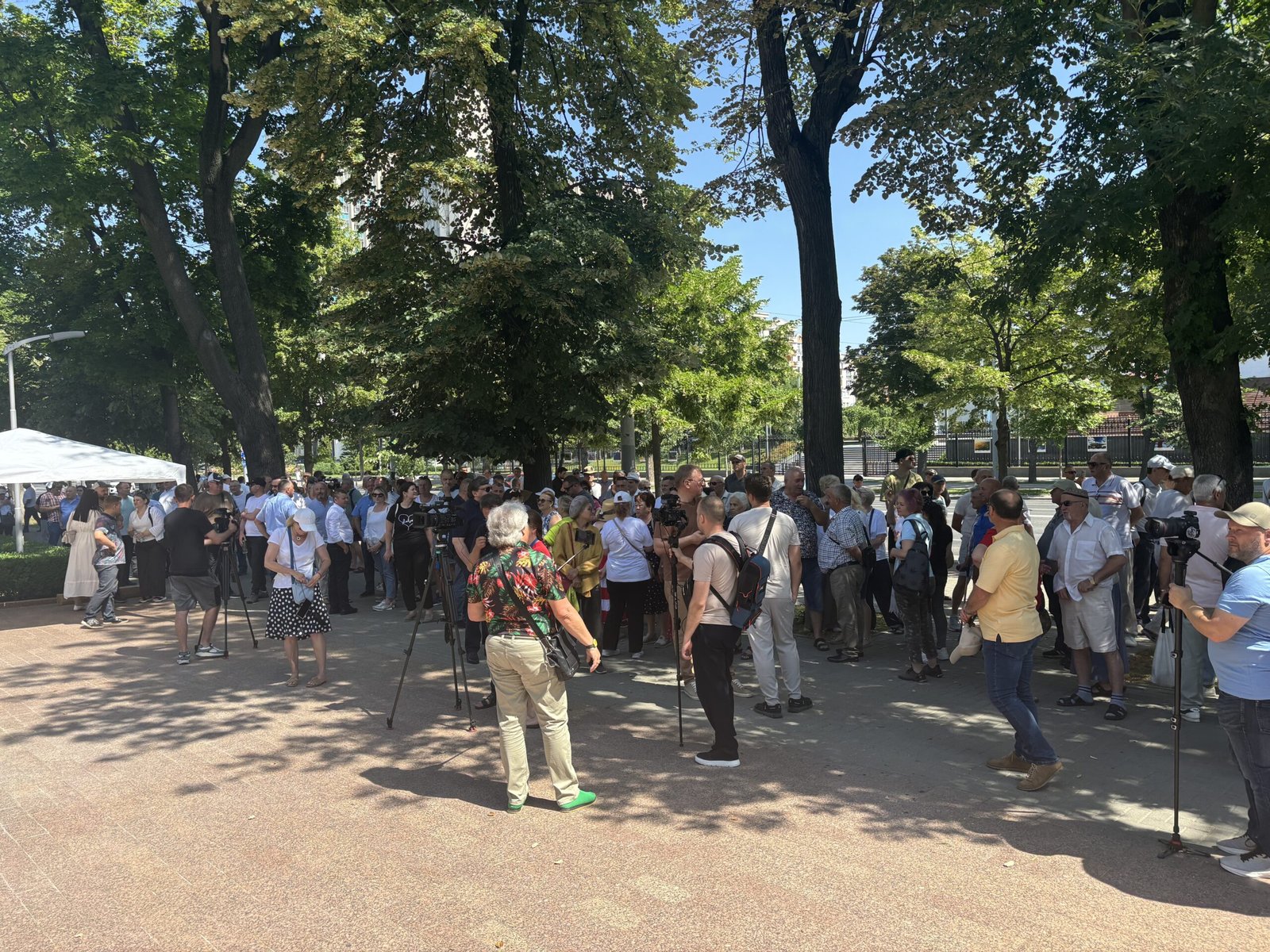
NewsMaker continues the special project “VOICES / VOCI” – a series of reports and conversations with residents of Moldovan villages who are rarely asked. In the new episode we talked about poverty. In almost all settlements countries: in the north, in the center, in the south – we noticed the same feature. People said that they save money on food, clothing, or medicine, but they did not always call themselves poor. For many, real poverty is a state of having “nothing to eat at all.”
But why do people who, according to official data, can live below the poverty line, not consider themselves poor? Where is the line between poverty and a normal life? Why are those most dissatisfied with their situation often representatives of the middle class, and the feeling of well-being depends not only on income? NewsMaker talked about this with IDIS Viitorul economic expert Veaceslav Ionita.
A person looks not at statistics, but at his neighbors
According to Ionita, poverty is not one category. Even among people whom statistics classify as poor, there is a gradation.
“The last 20% is already complete poverty. There is the next 20% – the really poor. And then there is the upper poor class. It is he who often perceives himself in the middle, because nearby there are those who live much worse.”, – explains the economist.
According to him, people assess their situation not by official income indicators, but by comparing themselves with others.
“What matters to us is not how I live. What matters to us is how I live compared to others.”, – says Ionita.
That is why a person who objectively lives below the poverty line can sincerely believe that he is still far from real poverty.
Feelings are more important than statistics
According to Ionita, economists often underestimate this: what is important for economics is not only how people actually live, but also how they themselves evaluate their lives.
“If a person believes that things are bad in the country and will only get worse, this is much more important than my scientific research. People live by sensations. Moreover, it is sensations that drive the economy,” – says the economist.
He explains that expectations directly influence people’s behavior. If they are sure that a crisis is ahead, they postpone the purchase of an apartment, car or household appliances, are in no hurry to take out loans and try to save money “just in case.” Even if objectively their financial situation has not yet changed.
Conversely, when people begin to feel that the worst is over, they spend more actively and return to large purchases.
“Economics is an exact science. But at the same time, it’s inaccurate, because people’s feelings influence the economy much more strongly than real economic processes.”.
The most dissatisfied are not the poorest
Another paradox concerns people’s attitude towards their own lives. The most dissatisfied, says Ionita, are usually not the poorest residents of the country, but the so-called lower middle class.
“These are people who can already afford to go on holiday abroad, but cannot yet afford a good hotel, convenient transport or a comfortable stay. They are the ones who most often say that everything is bad and will only get worse.”says the economist.
According to him, the higher a person’s expectations, the more critically he evaluates his own well-being. If the poor compare themselves with those who live even harder, then representatives of the middle class begin to compare themselves with those who live better. They think less about whether there will be enough money for food, and more about the quality of roads, medicine, education, transport, services and recreational opportunities.
“There is nothing more terrible for the authorities than a prosperous citizen.”
According to him, the higher the standard of living of people, the higher their demands on the state become. A prosperous person no longer fights for survival – he begins to demand quality of life.
At the same time, the economist notes, many Moldovans mistakenly consider themselves to be in the middle class. In his opinion, the criteria are much stricter. The middle class is a person who spends no more than 15% of their income on food, does not think about the cost of food every day, can buy or rent a home, maintain a car, pay for children’s clubs and go on vacation every year.
According to Ionita, there are about 15–20% of such people in Moldova. Approximately the same number are representatives of the lower middle class. They already feel higher, but in terms of well-being they do not yet reach the middle class.
Why feelings of well-being are not always linked to income
During filming, many of the characters said that they had never been richer before, but felt calmer and more confident.
According to Ionita, it’s not just the size of the salary.
People make decisions based not so much on the actual economic situation, but on their own expectations. If it seems that a crisis is ahead, they postpone major purchases, stop taking out loans and start saving, even if their income has not yet changed.
“The economy is driven by sensations. People’s feelings influence the economy much more strongly than real economic processes.”says the economist.
He cites the example of 2022, when, against the backdrop of the energy crisis, many families refused to buy apartments or large items, preferring to save money “just in case.” Later, when the anxiety subsided, demand increased sharply.
According to Ionita, people adapt quickly enough even to the most serious shocks.
“Any big shock: a pandemic, war, economic crisis lasts about six months. Then people get used to it and begin to live in a new reality.”he says.
Where is the poverty line?
Ionita suggests assessing poverty not so much by salary, but by what a person can afford. He considers nutrition to be one of the main criteria. According to his estimates, only about 20% of Moldovan residents can afford to eat well without thinking about the cost of food. The rest are forced to limit their diet or cannot provide themselves with adequate nutrition at all.
Another indicator is the opportunity to rest.
In the European Union, one of the indicators of material deprivation is a person’s ability to afford a full vacation at least once a year, which he is able to pay for himself.
“If a person cannot recover during rest, he is already considered poor”says the economist.
According to these criteria, about 60% of Moldovan residents cannot afford such a vacation, and, therefore, are considered poor.
Why do people think things were better before?
Ionita believes that memories of the past are often associated not so much with the standard of living, but with a sense of one’s own position in society. This is especially noticeable among pensioners.
According to him, today many of them can objectively afford more goods than several decades ago. However, they feel less protected and significant.
“A person is influenced not only by his well-being, but also by his well-being in comparison with others.”says the economist.
It is the feeling of loss of status, in his opinion, that often turns out to be more important than changes in income.
Another example is changes in consumption patterns. According to him, over the past decades, Moldovans have become much more likely to buy products that were previously considered more of a rarity than an everyday food.
“Thirty years ago, Moldovans ate per year about 400 grams of berries, now – about eight kilograms. It’s the same with cheese: before we ate very little of it, today it has become a common product.”
According to Ionita, this is why people often evaluate their standard of living based on recent events – rising prices or crises, and not on long-term changes.
Is it possible to get used to poverty?
When asked whether poverty is becoming the norm for Moldovan society, Ionita answers in the affirmative.
According to him, there is even a kind of “philosophy of poverty” – the habit of perceiving a low standard of living as normal.
However, at the same time he notes that the Moldovans themselves are gradually changing. This is noticeable both in the consumption structure and in the way people travel, use services and evaluate the quality of life.
According to the economist, the main sign that a country is truly becoming less poor is not the disappearance of poor people.
“There will always be poor people. The question is: can the state provide them with a decent life?”he says.
Ionita believes that the real indicator of well-being is the state’s ability to support the most vulnerable groups. Three things speak best about the civility of a country: how it treats children, the elderly and people with disabilities.
“If a country can provide a decent life for these categories, it means that it is no longer poor, and society is becoming noticeably richer.”.
“I’m not poor”
It turns out that a person who rarely buys meat and skimps on clothing and medicine may not sincerely consider himself poor. Not because he doesn’t notice his problems, but because poverty is not just statistical numbers and income levels. These are also expectations, self-esteem, comparing yourself with others and understanding your place in society.
And while there are people nearby whose lives are even harder, many will say: “No, I’m not poor.”
Want to support what we do?
You can contribute to quality journalism by supporting us one-time through the E-commerce system from maib bank or by taking out a monthly subscription to Patreon! This way you will become part of changing Moldova for the better. Thanks to your support, we will be able to implement even more new and important projects and remain independent. No matter how you support us, you will receive a small gift. Follow the link to become our partner. It’s not difficult and even pleasant.