Our vocabulary changes quietly, almost unnoticed – after a move or in a changed climate. Some vocabulary would have been nice to do without.

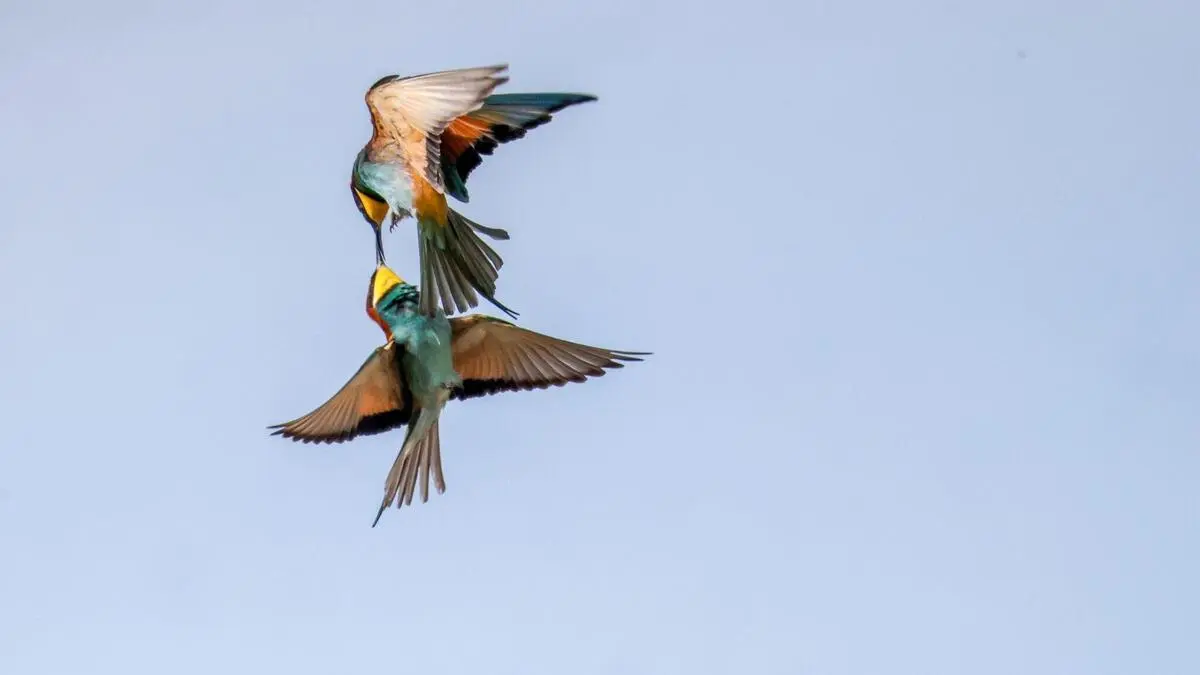
The eco-vocabulary is dwindling from generation to generation – this is not only a sign of an increasing distance from nature in everyday life, but also of the loss of diversity. Pictured: two bee-eaters (Merops apiaster). APA / dpa / Thomas Warnack

Add the Press on Google as your preferred news source.
My vocabulary has expanded quite a bit over the past fifteen years as I moved to Eastern Austria and the big city of Vienna. In addition to the classics like Mezzanin, Tandler and Panscherl, my repertoire – thanks to nature identification apps – has also been enriched with very specific animal and plant names. I met the sand bee at the playground, I said goodbye to the schoolchild in the morning under a leather pod tree, I was amazed at the rescue of an old plane tree during the construction of the U5 and watched white-bordered bats hunting in the beam of light from the lanterns. I’m still waiting to chance upon a bee-eater with its exotic bird plumage.