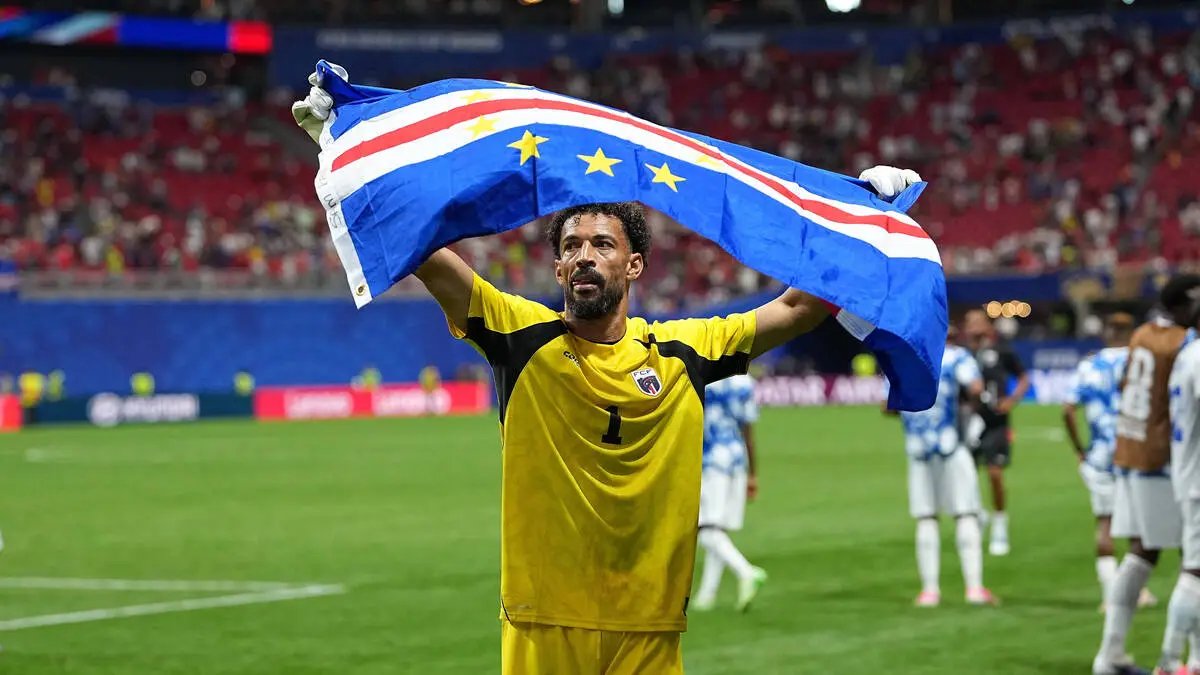
The last time there was a World Cup match day like Monday was 68 years ago, when there were four draws in a row. Quite surprisingly, former world champions Spain and outsiders Cape Verde initially drew 0-0, followed by a 1-1 draw between Belgium and Egypt, a 1-1 draw between Saudi Arabia and Uruguay and a 2-2 draw between Iran and New Zealand.
One showed how rare this is Fifa-Statistics: In the history of the tournament, such a match day had only occurred on June 15, 1958. In general, the trend towards a draw on the first match day was noticeable. Switzerland (1:1 against Qatar), Canada (1:1 against Bosnia-Herzegovina) and the Netherlands (2:2 against Japan) also did not get beyond one point despite being favorites.
The many draws could also be due to the new mode of the World Cup, which has been increased to 48 teams for the first time. The round of the best 32 not only includes the twelve group winners and the twelve runners-up, but also the eight best third parties. The cross-comparison of different groups increasingly leads to tactical games, as the European Championships in 2016, 2021 and 2024 have already demonstrated.
The big names are in form – and marked the first day of the match with their goals. Lionel Messi scored a hat-trick in Argentina’s 3-0 win against Algeria Miroslav Klose as the most successful World Cup goalscorer. Both now have 16 goals. Norway’s star striker Erling Haaland celebrated a perfect start to the World Cup, scoring twice in his first game in a 4-1 win against Iraq.

Lionel Messi takes the World Cup stage. APA
French top star Kylian Mbappé (3-1 against Senegal) and England captain Harry Kane (4-2 against Croatia) also scored braces. Brazil Vinicius Junior saved the record world champion from bankruptcy at the start with his goal in the lively 1-1 draw against secret favorites Morocco. Spain’s Lamine Yamal, who came on late after an injury, was left without a goal.
There were a few debates after the opening game about the three sendings off, but otherwise the referees’ performance in the first few days of the World Cup was at a fair to good level. But the controversial decisions increased. For example, when Mbappé didn’t receive a penalty against Senegal.
A scene from world champion Messi, who committed a serious foul against Aissa Mandi a few minutes after his first goal and got away without a warning, was also exciting. If Poland’s referee Szymon Marciniak had sent off the superstar, he would not have been able to score his second and third goals. Four years ago, Messi was very lucky to get away without a warning during the heated quarter-final against the Netherlands when he clearly took the ball with his hand. Later in the game he received a yellow card.
The expansion of the field of participants from 32 to 48 nations dilutes the sporting competition – that was one of the core arguments of those who are critical of the increase. There were a few examples of this thesis in debutants Curaçao and Tunisia (1:5 against Sweden), but most of the outsiders did impressively – or even surprised like Cape Verde, which sensationally managed a clean sheet against European champions Spain. Austria also had World Cup debutant Jordan his problems at 3-1.
Australia also unexpectedly won 2-0 against Turkey. Former World Cup hosts Qatar defied Switzerland to a draw. And Haiti also at least looked decent in the 1-0 defeat against Scotland – and didn’t stand without a chance. The Democratic Republic of Congo achieved a real coup when they fought to a 1-1 draw against co-favorites Portugal with Cristiano Ronaldo. (red/dpa)