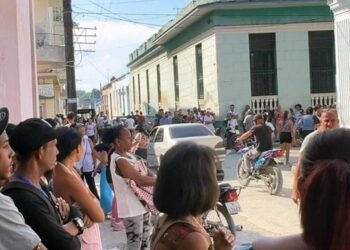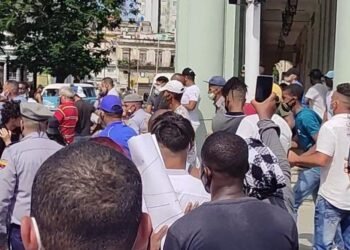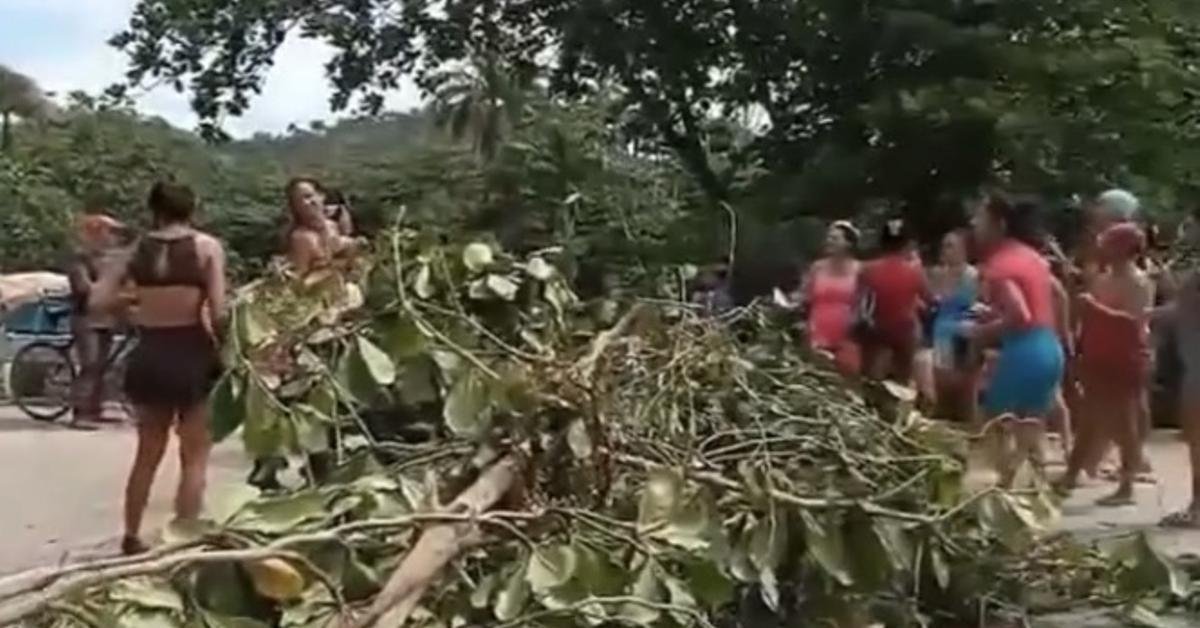
Holguin/Contrary to the regime’s most common procedure when a protest occurs, there has been no repression after the demonstration that took place last week in the town of Levisa, in the Holguín municipality of Mayarí. Quite the opposite: the day after a large group of residents, all women, interrupted traffic of the bridge over the Cabonico River with branches and playing pots while chanting “let them turn on the current, let them turn on the current”, they got what they asked for and more.
“They gave all the members of the town 14 pounds of rice per person and they spent two or three days carrying the bread double to the winery,” he tells 14ymedio a resident of Levisa. “There were groups that took about 90 pounds of rice.”
As observed in videos shared on social networks, the shouts of the demonstration were mainly calling for the return of electricity. The town had been in blackout for almost a month, according to the testimonies of the neighbors. “If for the provincial capital the situation is terrible, for the municipalities it is doubly terrible,” a resident of Holguín who has family in Mayarí tells this newspaper.

/ Capture/Inverted Tree
In the images, you can see the women who were protesting being guarded by some police officer who, however, did not act, and dozens of men around watching, while cars and trucks waited, stopped, at the ends of the bridge.
“But look, finally, people put pressure and brought them food,” he also estimates. “What it illustrates is that you have to protest. If you don’t put pressure on it, the Government won’t work.”
The case of the brave women of Levisa is exceptional, in any case, because the Government’s main reaction in similar situations is repression. For protesting the lack of electricity and water in Havana, for example, the evangelical pastor Alexis Padron Lorenzo58, was arbitrarily detained and spent three months in prison. Upon his release, he did not even know if he would continue to be subject to the criminal proceedings opened against him, as reported by the Cuban Human Rights Observatory.
Until 280 repressive events recorded in its most recent report by the legal organization Cubalex on the Island during August, a month in which however, citizen protests decreased (94 compared to the 200 registered in July), mainly due to prolonged blackouts.