Away from the noises and smells of Tokyo’s most infamous red-light district, past a garbage station and up a flight of stairs, the Shinjuku Kabukicho Noh Theater offers a different kind of atmosphere entirely.
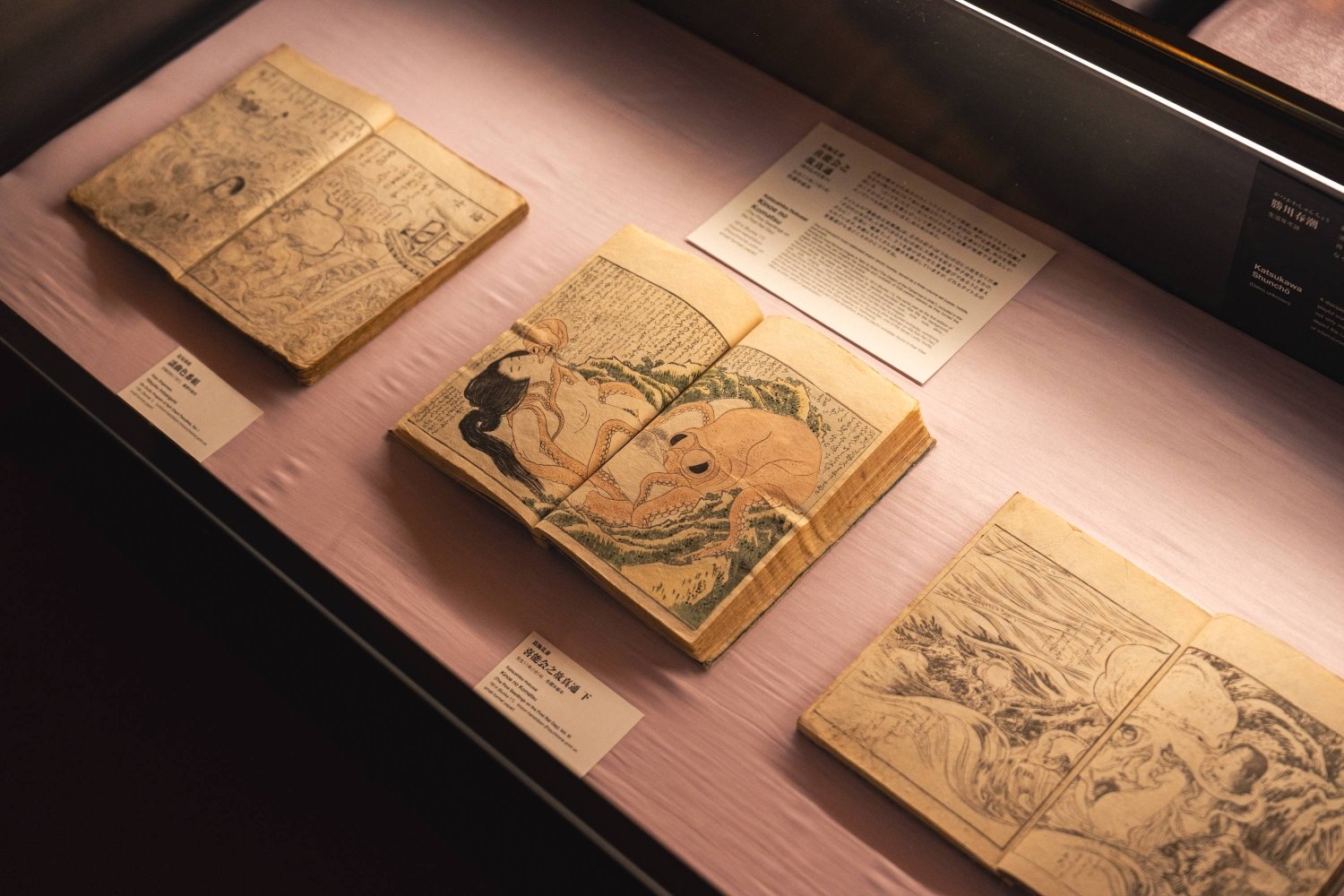
The space is dark and calm, with visitors peering at exhibits and speaking in hushed tones. They are perusing “A Contest of Allure: Katsushika Hokusai and Keisai Eisen — Kabukicho in Full Bloom,” the third edition of Smappa!Group’s shunga exhibition series, on display until May 31. The show is spread between two locations, a noh theater and a former host club.
Shunga — literally “spring pictures” — refers to erotic art mainly created during the Edo Period (1603-1867) and early Meiji Era (1868-1912), often by some of Japan’s master ukiyo-e artists, such as Hokusai and Utagawa Kuniyoshi. The prints were banned in the late Meiji as part of a wave of rapid societal changes and Westernization, but in the past couple of decades, shunga art has come to be viewed in a more favorable light.