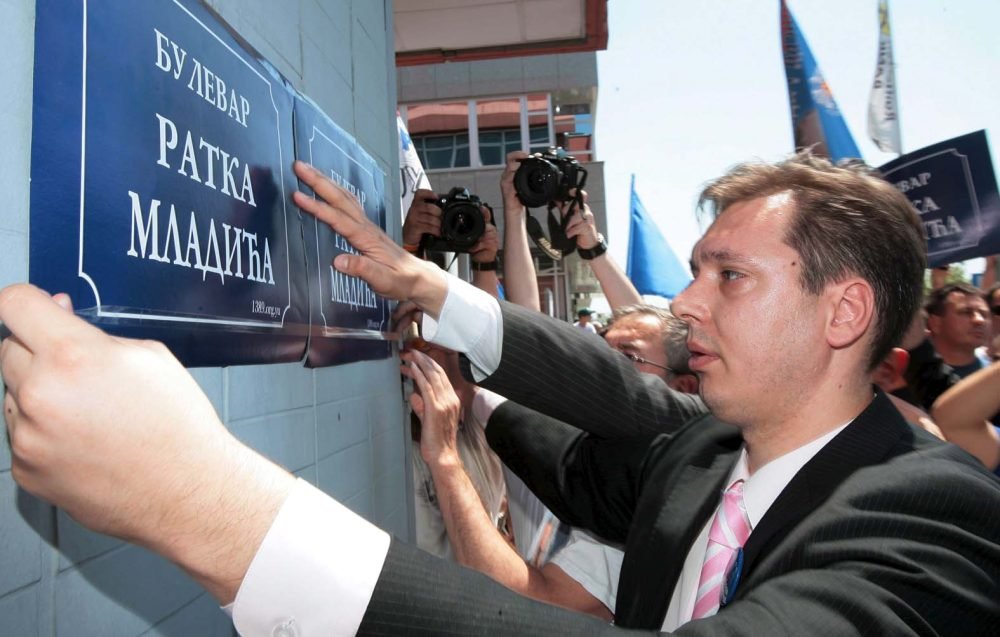
War crimes in Serbia are still being talked about selectively, the political actors who are currently in power are the same ones who held a position of power in the 1990s, when the region fell into bloody conflicts. According to the interlocutors, the attitude towards the past in Serbia is a consequence of the long-term glorification of one side, the lack of institutional will to prosecute those responsible, and media coverage that favors only one perspective of the war.
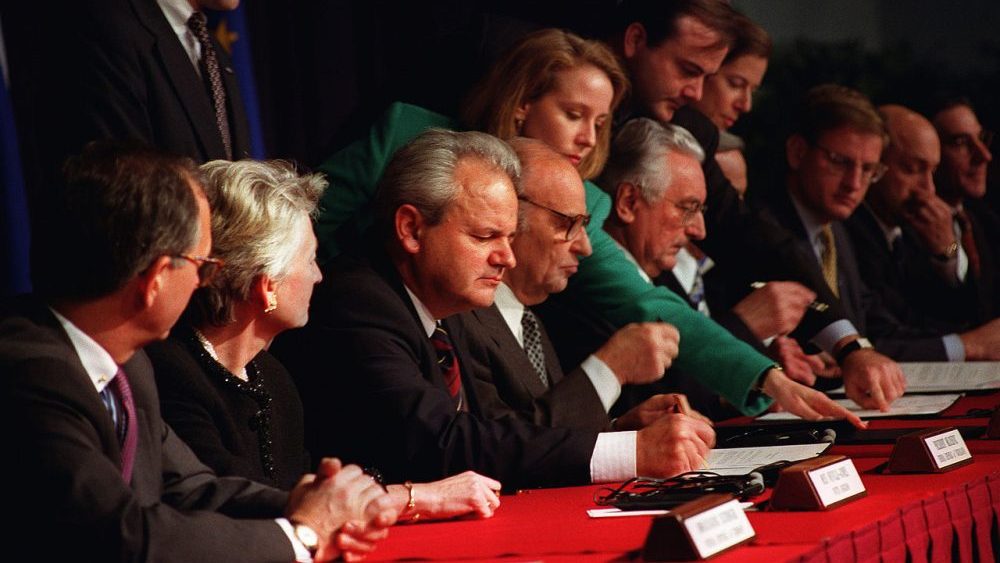
The Youth Initiative for Human Rights published a report entitled “The State of Denial – Serbia 2025: War Criminals as Deserving Citizens”, which analyzes the way in which war crimes are talked about in Serbia. The report indicates that dominant public narratives still do not include all victims equally, but attention is mainly focused on the suffering of the Serbian people, while crimes committed against other peoples are often silenced, relativized or contested.
According to the report, at least 110 examples of denial of war crimes from the 1990s by the authorities in Serbia during the year 2025 have been identified.
Director of the Youth Initiative for Human Rights, Sofija Todorović, estimates that the way in which war crimes are discussed in Serbia contributes to the deepening of war traumas and the maintenance of divisions in society. As he states, the public space is still dominated by a selective approach to victims.
“We mostly talk about one ethnic group of victims, that is, people of Serbian nationality, while others are almost never mentioned, and when they are mentioned, their suffering is relativized or denied,” she points out.
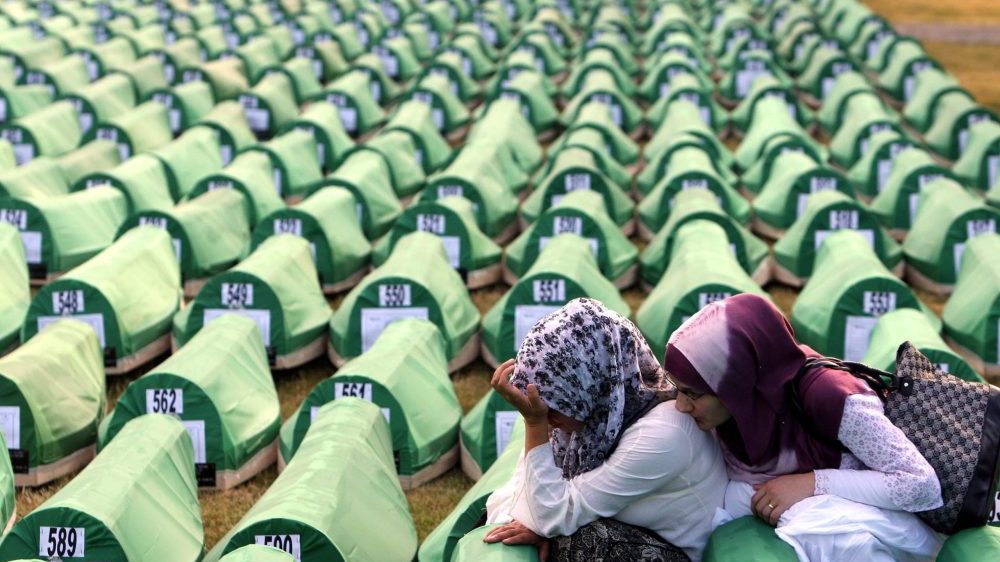
The research also states that representatives of the government connect narratives about the genocide in Srebrenica with current events, such as student protests and blockades, alluding to the fact that students and the opposition are in an anti-Serbian position. Todorović points out that the genocide in Srebrenica is very often denied in public discourse, with the lack of acceptance of its internationally established legal qualification.
“Citizens were intimidated day and night by the resolution on Srebrenica, although it was not directed against Serbia, but was dedicated to the victims and their memory. There is almost no representative of the institutions from the ruling structure who did not deny the genocide in Srebrenica,” she states.
According to her, the thesis about a “genocide nation” emerged from such a narrative, although, as she reminds, responsibility for crimes is exclusively individual.
“Although it is common knowledge that guilt is individual and that genocidal nations do not exist, this thesis is persistently repeated in the public and media,” says Todorović.
She warns that such a discourse has long-term consequences for society, especially for younger generations.
“That extended enterprise of spreading hatred shapes people’s opinions and attitudes, and it is especially dangerous when they are young people,” concludes Todorović.
Even when the authorities talk about crimes, the report shows that there are frequent practices in which the context is avoided, the facts are hushed up, while “heroism in the defense of the country” is glorified.
Co-founder of the “Women in Black” organization, anti-war activist and feminist, Staša Zajović, believes that war crimes are suppressed in Serbia, and those convicted or suspected of war crimes are glorified. As he states, such attitude towards the past is not accidental, but is the result of a long-standing lack of political will to confront the crimes of the 1990s on an institutional level.
“It turned out that the warmongering actors and war ideologues from the nineties, who killed, tortured or participated in the machinery of war and violence, have returned. They are erasing all traces of their crimes from the past at all levels,” she points out.
She warns that the patterns of violence from the 1990s did not end with wars, but were transferred to internal political relations. The fact that during the year 2025, 46 statements during the session of the National Assembly were mapped in which war criminals are denied and judicially determined facts are relativized, according to the Initiative’s research, contributes to this.
“That matrix of war, violence and nationalist aggression is now aimed at those who think differently in this country. That wheel will not stop until there is a deep awareness of the connection between the crimes of the nineties and today’s violence,” Zajović assesses.
He adds that such a situation is influenced by the broader social context in which public space has been shaped for decades.
“There is an entire moral, political and cultural climate that is poisoning the public. Since the beginning of the nineties, that elite has been justifying, celebrating and producing war crimes,” she says.
The main bearers of such narratives were representatives of the authorities and tabloid media, as stated in the Initiative’s research, and these practices vary from various statements, through guest appearances with convicted war criminals, to giving up public space for the promotion of war criminals and their “feats”.
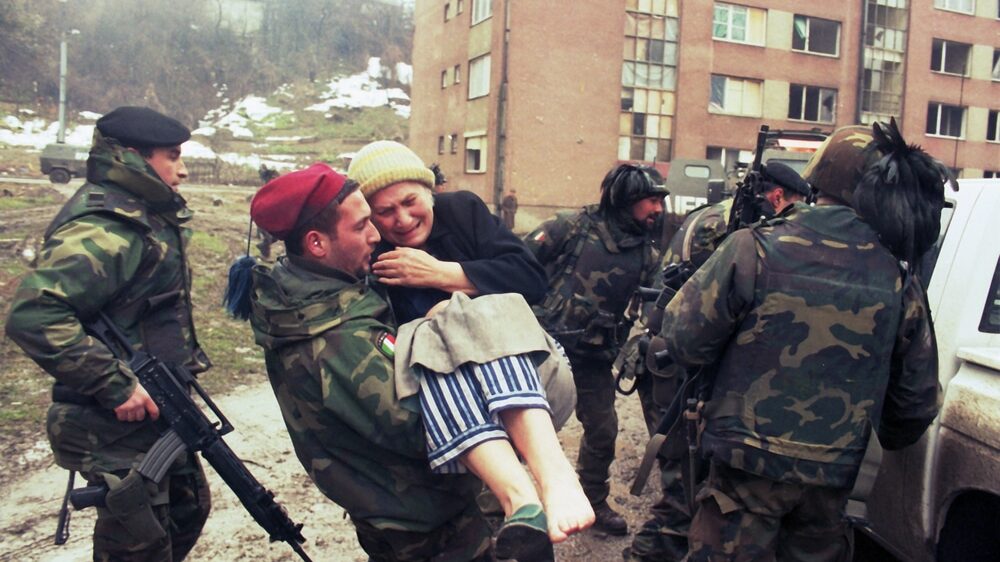
Sociologist Senka Jankov believes that society is still deeply divided when it comes to accepting responsibility for war crimes, but she estimates that the public is still better informed than ten or twenty years ago. He says that the non-governmental sector and independent media contributed the most to this, which remained almost the only ones consistent in documenting the facts and naming those responsible.
“The narrative of the official media is, of course, the complete opposite, and in it we still have attitudes about Serbia as a victim of crime. With every new information or decision, judgment from international institutions, the possibility of speaking more objectively about some events or personalities and for the public to face the actions that someone did on behalf of the citizens, without their consent, potentially increases,” Jankov points out.
Speaking about the reasons why society is having a hard time dealing with the crimes of the 1990s, the sociologist points to decades of systematically built prejudices. For years, citizens were created with a clear division into “us” and “them”, whereby political messages were reinforced by strong emotions, which is why it is very difficult to break them down today.
“That narrative was very systematically spread to the citizens, from the official media and through prominent individuals, even intellectuals, that there was a complete indoctrination. And indoctrination that is accompanied and filled with a strong emotional charge is very difficult to eradicate,” she says.
He adds that precisely because of this, any information that offered a different picture of events was often perceived as an attack on the state or the people.
“The key thing that was missing after the war conflicts in the former state is the building and support of an active civil society and a culture of remembrance, these are the only two forces that can heal the society and make it possible to put an objective point on the events of the past, the only two forces that will not allow the relativization and revision of history,” Jankov believes.
The interviewee of Danas warns that nationalistic patterns have not disappeared even today. On the contrary, in her opinion, the government and the media continue to insist on the narrative of Serbia as the biggest victim, while those convicted or suspected of war crimes are often presented as national heroes.
“The topic of war crimes in our country is still viewed primarily through emotions, not through facts. This is precisely why emotions are the easiest to manipulate, which is especially evident today in young generations who inherit the same patterns of thinking,” she says.
In September 2025, the President of Serbia informs the public that the convicted war criminal, Nebojša Pavković, will be released early due to poor health at the request of Serbia. Sociologist Jankov highlights the decision to bury General Nebojša Pavković in the Alley of Meritorious Citizens as one of the most striking examples of institutional revision of history.
“It is not just a decision about one man. It is a message from the state that it recognizes only its version of history. In this way, not only Pavković is rehabilitated, but the responsibility of all war criminals, who present themselves as heroes and protectors of the nation, is relativized,” Jankov concludes.
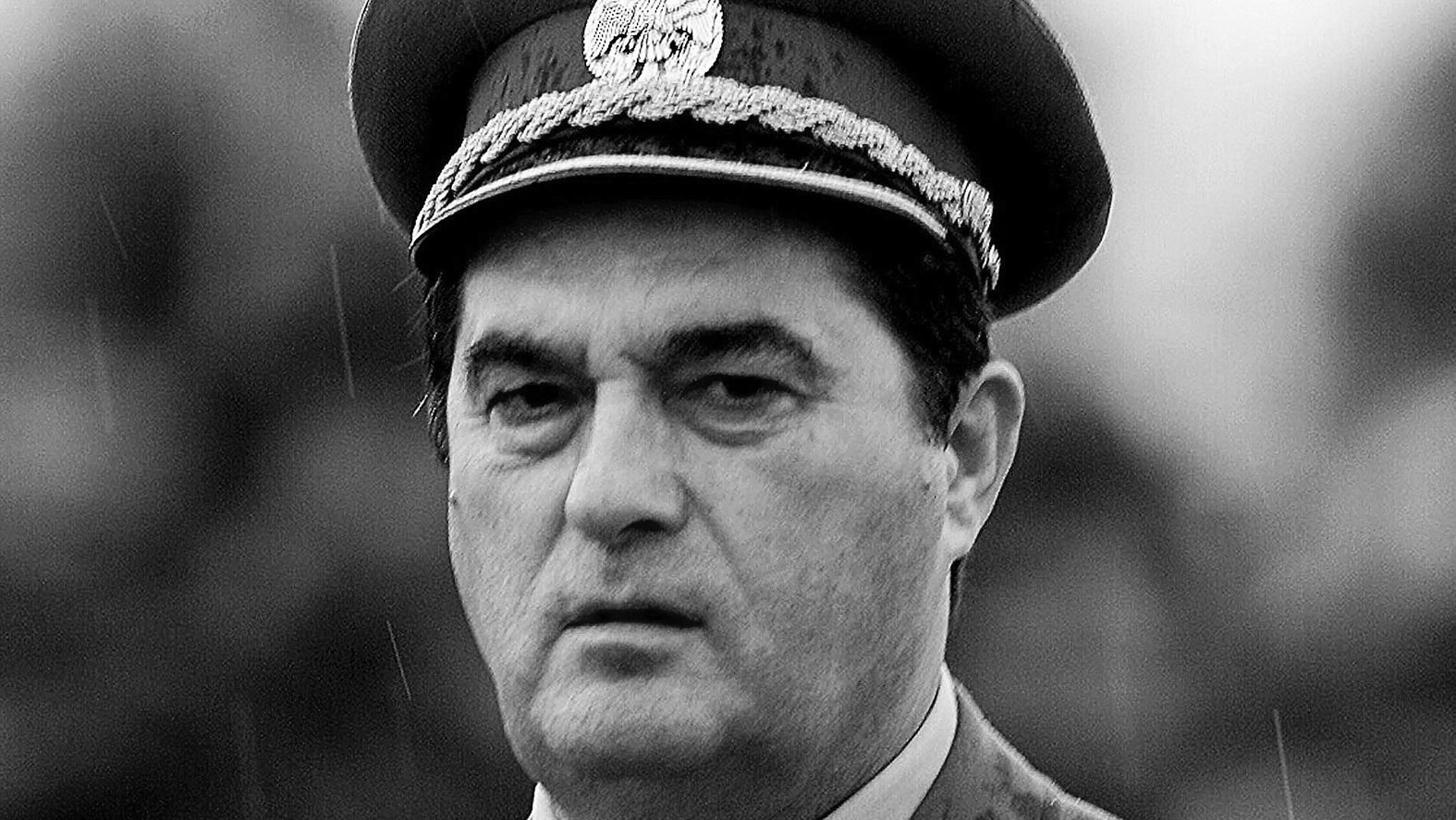
Pavković is before the International Tribunal for War Crimes in the former Yugoslavia in The Hague, convicted of crimes against humanity, deportation, forced relocation, killing and persecution, as well as violations of the laws and customs of war during the conflict in Kosovo and Metohija in 1999. Pavković was sentenced to 22 years in prison by the Hague Tribunal in February 2009.
The editor-in-chief of Vremen, Filip Švarm, believes that a distorted picture of the wars of the 1990s has been systematically created in Serbia for years.
“Today we don’t talk about war crimes in Serbia, we talk about war crimes against Serbs, but we don’t talk about war crimes committed by Serbs. If it is mentioned, it is usually relativized,” he says.
According to him, historical revisionism is not accidental, but represents a political project of the current government, whose leading people during the nineties were part of the then radical politics.
“Today’s progressives were radicals then. Then Šešelj threatened with a rusty spoon, Vučić spoke of ‘one hundred for one’. Today they are trying to make Serbia’s golden age from that period, as if the Serbs were always right and as if they had no responsibility for what happened,” Švarm concluded.
The current president of Serbia, Aleksandar Vučić, on that July 20, 1995, at the session of the Assembly, as a deputy of the Serbian Radical Party, said: “Kill one Serb, we will kill a hundred Muslims, so let’s see if the international community or anyone else is allowed to strike at Serbian positions.”
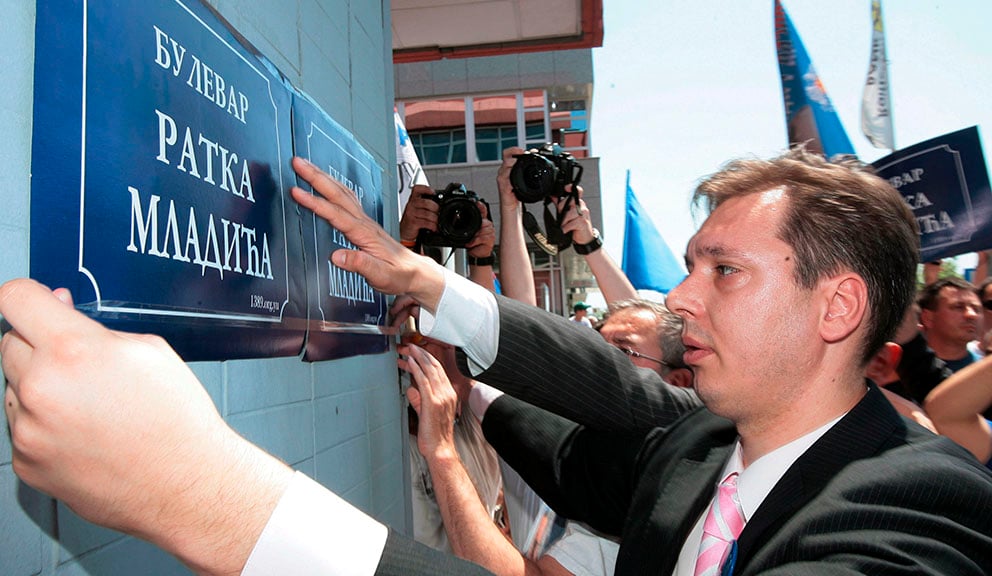
In Serbia, the past is still not viewed through facts, but through interpretations that change in accordance with political and social interests. War crimes remain in the shadow of selective memory, in which some victims are clearly visible, while others remain invisible or contested.
The Initiative’s research also states that the practice of denying war crimes from the 1990s in Serbia is also reflected in hate graffiti, murals of war criminals, hooligan iconography, broadcasts of chauvinistic slogans and songs at public meetings.
Between denial and relativization, between institutional narratives and the voices of civil society, the space for a true confrontation with the nineties is almost non-existent. Therefore, instead of a clear border with the past, it constantly returns to the present as a constant echo that shapes the way we as a society understand ourselves and the way we as a society relate to others.
Follow us on our Facebook and Instagram page, but also on X account. Subscribe to PDF edition of Danas newspaper.