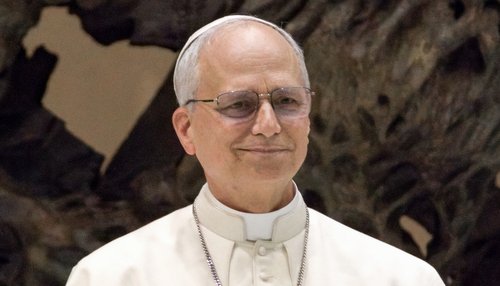
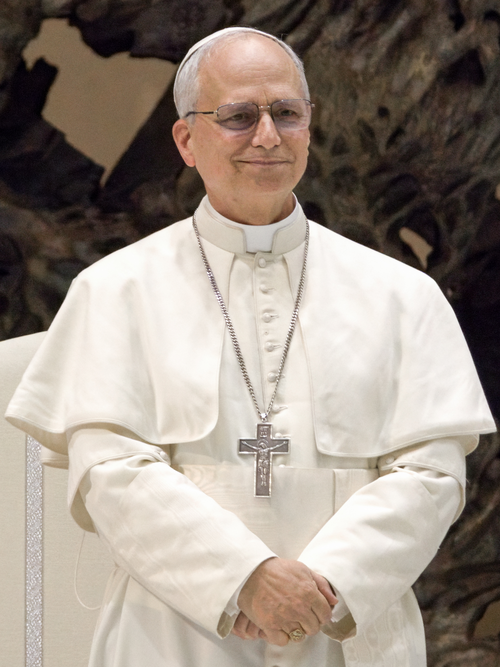
Pope Leo XIV issued what many scholars and observers describe as the most explicit papal apology to date for the Catholic Church’s historical role in legitimizing slavery and delaying its condemnation, calling for redress that he acknowledges is “centuries” overdue.
In his May 25, 2026, encyclical, titled Magnifica Humanitas (“Magnificent Humanity”), the topic of Artificial Intelligence served as an entry point to repudiate the Catholic Church’s past explicit approval of the Transatlantic Slave Trade, as ratified by the Holy See, linking it to modern forms of exploitation and colonialism emerging through the digital age.
As outlined in an Associated Press report, while the Vatican has long maintained that it upheld the dignity of all people as children of God, historians note that a series of papal directives issued in the 15th century authorized Portuguese rulers to conquer territories in Africa and the Americas and enslave non-Christians.
Among these was the 1452 papal bull Dum Diversas, issued by Pope Nicholas V, which granted Portugal the authority to “invade, conquer, fight and subjugate” non-Christian peoples and reduce them to “perpetual slavery.” Together with the 1455 bull Romanus Pontifex, it helped establish the legal and theological foundations of the Doctrine of Discovery, which was used to justify colonial land seizures and enslavement.
Jesuit priest and historian Christopher J. Kellerman noted that these policies were endorsed by several successive popes.
Pope Leo described the transatlantic slave trade as a “wound in Christian memory”.
He noted that “the apostolic See” had at times intervened to regulate and legitimize forms of subjugation, including the enslavement of “infidels.”
The AP article also notes that Pope Leo referenced his predecessor and namesake, Pope Leo XIII, who became the first pope to explicitly condemn slavery in 1888—well after many nations had already abolished the practice.
Likewise, in 1992, Pope John Paul II gave a speech on Gorée Island, Senegal, a major slave-trading port, asking for forgiveness for slavery, which he deemed the heinous acts of “baptized people” who “did not live out their faith,” refraining from the indictment of the church as a whole.
Pope Leo’s apology, in the view of several theologians and historians, is the most explicit papal acknowledgment to date of institutional Church responsibility for legitimizing slavery.
The National Catholic Reporter quotes Anna Rowlands, a Catholic thought professor at Durham University, who participated in the document’s presentation, on the matter.
“This text, I think, is Pope Leo trying to say this is a church question; this is a question for the whole church, not just individual Christians,” explained Rowlands.
Long-criticized by radical and Pan-African thinkers for its complicity, historians point out that slavery existed within Church institutions for centuries.
An NPR article touches on one of the most prominent, heavily-documented instances in the US, involving the Society of Jesus (the Jesuits).
Reportedly, 272 enslaved men, women, and children were sold by Jesuit leaders from their Maryland plantations to buyers in Louisiana in 1838, marking a pivotal moment for the church’s survival in the country.
Author Rachel Swarns explores the history in her book “The 272: The Families Who Were Enslaved and Sold to Build the American Catholic Church”.
Swarns revealed that the priests prayed for the souls of the people they owned, while enslaving their bodies.
The Church’s involvement in slavery has also drawn criticism from Caribbean intellectuals who viewed religious institutions as participants in broader colonial systems.
Guyanese historian Sir Walter Rodney, in his seminal work, “How Europe Underdeveloped Africa”, published in 1972, described the contradiction between Christian teachings and the Church’s participation in slavery as a form of institutional hypocrisy.
Rodney also contended that the harm of a deeply ingrained racist ideology buttressed by notions of Europe’s right to Africa and its resources being “God-ordained,” led to global colonial infrastructure.
Meanwhile, the apology has been welcomed by Black Catholic scholars and activists who have long called on the Vatican to confront its institutional role in slavery directly.
America Magazine said that historian and author Shannen Dee Williams of the University of Dayton described the pope’s statement as a “monumental step” toward truth-telling and reparative justice, emphasizing that generations of Black Catholics have waited for the Vatican to openly acknowledge the Church’s involvement in the transatlantic slave trade, chattel slavery, and the enduring legacy of anti-Black racism.
She asserts: “The Catholic Church has never been an innocent bystander in the history of white supremacy.”
With 200 million black Catholics worldwide, a reported 41,000 plus in Dominica, Pope Leo’s apology is expected to fuel continued discussions on accountability against the backdrop of a global reparative justice movement.