by Audry Wajwakana
PARAMARIBO ― “It was expected that sooner or later this would happen. If you know what the procedures and guidelines are that apply to world heritage sites, then you also know what the consequences are if you do not comply with them.” Stephen Fokké, site manager of the Built Heritage Foundation Suriname, responds with these words the True Time on the intention to place the historic city center of Paramaribo on the UNESCO list of World Heritage in Danger. That scenario had been in the air for quite some time.
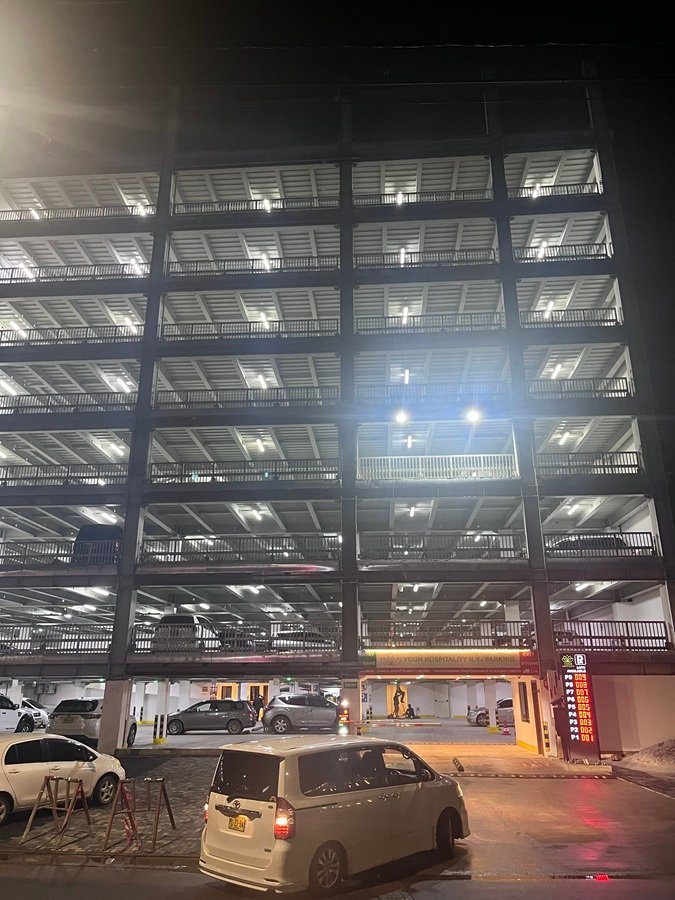
The historic city center has been on the World Heritage List since 2002. With the publication of a so-called draft decision by the World Heritage Committee, placement on the UNESCO danger list seems very likely. The document, which is on the UNESCO website, proposes placing the Surinamese world heritage on the list due to the damage to the exceptional universal value of the area. Reference is made, among other things, to the construction projects of the National Assembly (DNA) and the Yogh parking tower.
“It is about recognition of Surinamese heritage that has been elevated to world heritage, i.e. of exceptional universal value that must be preserved for humanity”
Stephen Fokke
Warnings ignored
According to Fokké, the current situation is the result of years of ignored warnings and recommendations. “Certain politicians considered their egos more important than the national interest. There was still an opportunity to change the design when construction on the DNA project was stopped for the first time and only the work floor of the foundation had been poured. All recommendations, both from the technical reviews and those of the combined UNESCO/Icomos mission, were ignored. And that is now taking its revenge,” says the heritage expert.
Fokké points out that there are more problems than just the controversial construction projects. For example, UNESCO and Icomos have been waiting for years for the expansion of buffer zones around the protected area. In addition, no new Building Committee has been appointed at the Ministry of Public Works, Spatial Planning and the Environment (OWRO) for months. This committee must assess construction plans within the UNESCO site and the buffer zones on the basis of regulations for, among other things, height, scale and design. Fokké emphasizes that the final decision is not taken by UNESCO as an organization alone, but by the 21 member countries of the World Heritage Convention, all of which are part of the World Heritage Committee.
(read more below the photo)

Exceptional universal value
World Heritage status is recognized internationally as recognition that a location is of outstanding universal value and deserves protection for future generations. In addition, the status can contribute to tourism, international visibility and opportunities for financing conservation projects. “It is about recognition of Surinamese heritage that has been elevated to world heritage, that is, of exceptional universal value that must be preserved for humanity,” says Fokké. “It is a kind of certification of your heritage, similar to the ISO certification that companies strive for to continually improve and raise their quality and safety standards.”
The discussion surrounding the preservation of the world heritage status may take on a new dimension due to plans for a second tower block by Yogh on the Jodenbreestraat, just behind the monumental Haenen building. When asked whether such a project could ultimately lead to Paramaribo being completely removed from the World Heritage List, Fokké answers in the affirmative. “That is quite possible. Icomos has also spoken out about the design and made recommendations. It is up to OWRO to do something with it.”
Although placement on the list of endangered world heritage is often seen as a severe sanction, according to heritage experts this does not automatically mean that a location loses its world heritage status. That list is intended as a warning and as a means to encourage countries to take measures to protect the exceptional universal value of an area.
Government geïinformed
According to Fokké, it is clear what Suriname must do to prevent further steps: take the recommendations of UNESCO and Icomos seriously and implement them. “Adhere to the recommendations that have been made previously and that will now be taken in the upcoming decision,” he said.
The exact measures required will become apparent from the final decision of the World Heritage Committee in mid-July at its 48th session in Busan, South Korea. However, experience shows that in most cases draft decisions are adopted, although there remains room for Member States to propose changes during the meeting.
The government was officially informed of the intention at the beginning of June through its chargé d’affaires in Paris, Seema Baldewsingh. She was given the opportunity until June 15 to submit any comments or objections. It is not yet clear whether this has been used.
Minister Dirk Currie of Education, Science and Culture is done the True Time asked for a response. He had not responded until the newspaper went to press.