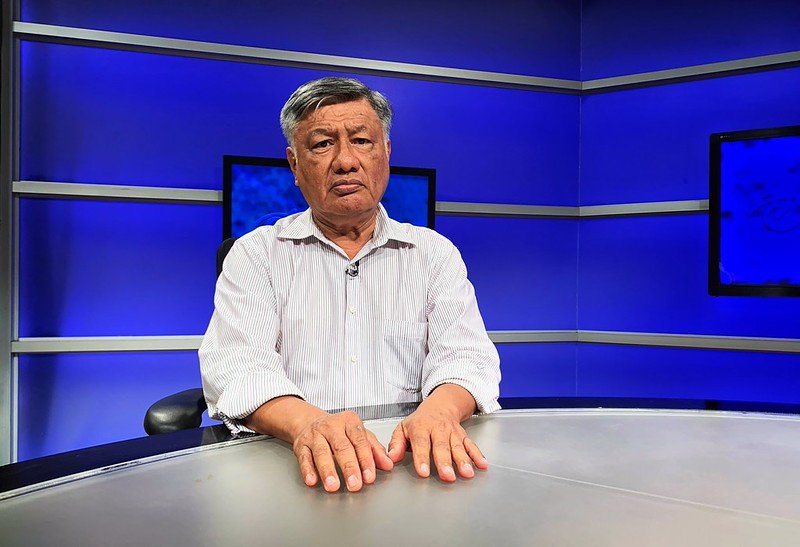
Ten months after his capture, the family of political prisoner Carlos Brenes is still unable to see him or officially know his physical condition. The “incommunication” imposed by the regime of Daniel Ortega and Rosario Murillo keeps his family in “uncertainty” and in “a lot of fear” due to the retired colonel’s medical history and the allegations that his health had deteriorated in state custody.
“We have received unofficial information that his health has deteriorated (…) Keeping an adult person with chronic illnesses and the complex state of health that he has, is a form of torture and cruel and inhuman treatment that violates health rights and his right to life,” said Thelma Brenes, daughter of the political prisoner in an interview with CONFIDENTIAL.
Brenes, 71, was arbitrarily detained on August 14, 2025 along with his wife, Salvadora del Socorro Martínez68 years old, during a police operation carried out on his farm between Jinotepe and Masatepe. Both remain in missing condition.
“The lack of official information and the isolation in which the regime has him does not allow us to know his current state of health and keeps us uncertain,” said the daughter of the political prisoner.
The former colonel’s health “was already fragile”
The retired colonel, sentenced to 15 years in prison by the Ortega-Murillo regime, suffers from chronic diabetes and before his arrest “his state of health was already fragile.” During the former military man’s first detention, which occurred between 2018 and 2019, his family reported multiple obstacles to guaranteeing his medical treatment.
“We know that even when the family delivered the complete medications for the month, the State and the Penitentiary System did not deliver (…) We have a lot of uncertainty and a lot of fear as family members,” Brenes stressed.
The daughter of the political prisoner assures that they do not have any “official information” about the deterioration of his health.
The Mechanism for the Recognition of Political Prisoners explained in its report May 2026 that the “progressive deterioration” of the health of people detained for dissenting with the regime “has had extreme consequences” and the diagnoses are based on “accounts obtained”, due to “limitations in accessing complete clinical evaluations or verifiable medical documentation.”
“The only thing we as families know is that his health has deteriorated, but we don’t have details,” added Brenes’ daughter.
Fear that they will leave prison lifeless
The disappearance of Miskito indigenous leader Brooklyn Riveraand subsequent death in state custody on May 30, 2026—according to the Mechanism—evidence the risk of “keeping a person in prolonged forced disappearance.” The situation “has increased fear” among the retired colonel’s family.
“If before Brooklyn we were already afraid and since his arrest ten months ago, now more so, because Brooklyn’s death shows that the regime has no respect for the lives of political prisoners and the State should guarantee the lives of political prisoners and not be a slow death sentence,” Brenes insisted.
“Every day that passes without knowing how my father is or how Salvadora is doing,” he added, “we are afraid that their names will go on the list of people who walked into the penitentiary systems and who were detained in their homes, but who leave the prisons dead.”
In the case of Salvadora Martínezhis father’s wife, affirms that his detention is “unjust and demonstrates the cruelty of the regime against political prisoners and their families, because it criminalizes relatives.”
Since his father’s first arrest, Martínez played an important role. “She never abandoned my father and visited him in prison, she brought him medication, she made family visits and she was the one who made public complaints at that time,” he recalled.
A “proof of life” without propaganda
Amid international complaints and pressure to find out where they are, the regime has relented in publicly displaying some political prisoners, with photographs or videos that they broadcast through their official channels. On June 14, 2026, the dictatorship released photographs of the Miskito leader and political prisoner Steadman Fagot Müller, of whom there was no information since his illegal arrest on September 14, 2024.
“For me, knowing about them is a right and it is not a favor that the regime does to us, neither to me nor to the other families of the political prisoners. We have been wanting to know where they are and how they are in health and psychologically for ten months,” Brenes commented.
Forced disappearance, considered a serious violation of human rights and a crime against humanity, has become one of the most “cruel” forms used by the Ortega dictatorship.
“For me and for the rest of the relatives of political prisoners, that is not proof of life, but rather official propaganda from the regime. I demand verifiable and independent proof of life from both of them: Carlos Brenes and Salvadora Martínez. A true proof of life with immediate access to a diplomatic mission, the Red Cross, or relatives close to them. That is, without photo or video restrictions, reading official text or with relatives who work for the government,” Brenes reiterated.
European Parliament evaluates cases of political prisoners
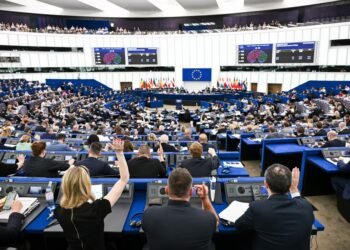
MEPs will vote on June 18, 2026 on a resolution on the situation of political prisoners in Nicaragua. The debate will focus on the cases of Carlos Brenes and his wife, Salvadora Martínez, and Brooklyn Rivera, who died after being missing for more than 970 days.
For the former military man’s daughter, it is a sign that the situation continues to be observed by the international community.
“It means that despite the regime’s efforts to silence us, to silence our families and to normalize the horror that we Nicaraguans experience, the world has not forgotten Nicaragua (…) It is a validation of our struggle and a reminder that the international community remains vigilant and continues to document the human rights violations of the Ortega Murillo regime,” he pointed out.
The emergency resolution is framed in article 144 of the Rules of Procedure of the European Parliament, designed to denounce flagrant violations of fundamental rights and force an immediate diplomatic reaction.