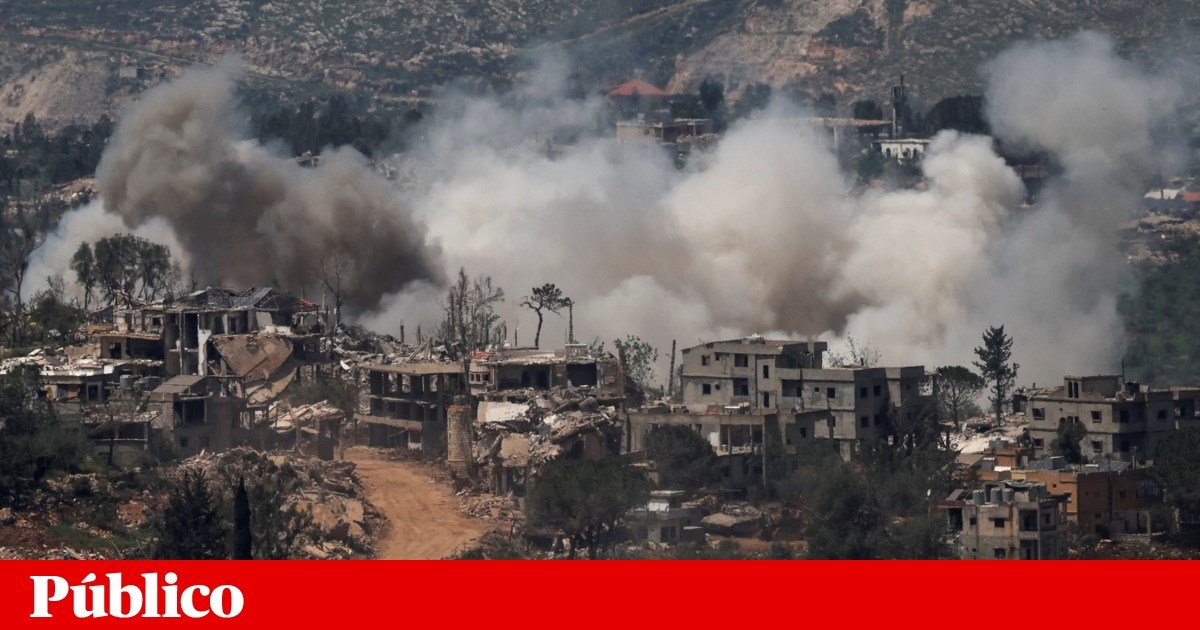
THE ceasefire in Lebanon, where the death toll continues to rise, it is still a mirage. Despite the truce announced on April 16 (and extended for another three weeks on Sunday), clashes between Israel and Hezbollah in the south of the country continue to occur daily and, this Monday, Israeli forces also returned to bombing the Beqaa Valley, near the border with Syria.
According to the Lebanese Ministry of Health, on Sunday the Israeli attacks killed 14 people (bringing the total number of deaths in the war to 2,521, according to a balance released today), including two children and two women, and injured 37 others. On the opposite side, the Israelis announced the death of a 19-year-old soldier and said that six others were injured in an attack with a drone.
The pro-Iran Shiite movement, which continues to reject direct negotiations between Israel and the Lebanonguarantees that he will not hand over his weapons and threatens the mobilization of “large groups of suicide attackers” to fight the Israeli forces, who announced the creation of a yellow line security system that serves as a buffer along Israel’s northern border, where they defend their right to exterminate any threat.
“We will use tactics from the 1980s and mobilize suicide attackers to prevent the enemy from establishing itself (in Lebanese territory),” a Hezbollah commander told Al Jazeera on Monday.
The exchange of accusations between this movement sponsored by Iran and the official authorities in Lebanon (who want peace, but who do not control the Shiite group) has increased again in recent hours, at the same time as pressure from the Israeli Government on the Lebanese executive increases.
Hezbollah leader Naim Qassem once again accused Nawaf Salam’s government of “working side by side with the Israeli enemy against its own people” by accepting direct negotiations that “plunge Lebanon into instability”.
Lebanese President Joseph Aoun rejected the criticism and responded that “treason is committed by those who drag their country into war to serve external interests” — thus referring to Hezbollah’s attacks on Israel at the beginning of the war, in response to the surprise offensive that killed supreme leader Ali Khamenei and several other figures of the Iranian regime, which triggered the Israeli offensive.
In a statement cited by the Lebanese newspaper L’Orient – Le JourJoseph Aoun also assured that Lebanon will not accept any “humiliating” agreement with Israel.
Israeli criticism
Israeli Defense Minister Israel Katz also reacted this Monday to Hezbollah’s opposition to the direct negotiations being promoted by the White House, stating that Naim Qassem “is playing with fire” and will lead Lebanon to disgrace. But he also did not spare the Lebanese authorities.
“If the Lebanese government continues to take refuge under the wing of the terrorist organization Hezbollah, a fire will break out and burn the cedars of Lebanon,” Katz told the UN envoy for Lebanon, Jeanine Hennis-Plasschaert, at a meeting in Jerusalem, according to a statement released by his office.
At X, Israeli Foreign Minister Gideon Sa’ar accused Hezbollah of taking advantage of the United Nations peacekeeping mission in Lebanon (UNIFIL) to attack Israel.
“We are observing an increasingly dangerous pattern: Hezbollah systematically positions its fighters and assets near UNIFIL positions, taking advantage of the presence of this force to carry out hostile actions,” said the Israeli minister.
Many of the “about ten thousand rocketsmissiles and drones” with which the Shiite movement attacked Israel since March 2 were “launched close to UNIFIL positions”, guaranteed Gideon Sa’ar, who says that “Hezbollah uses these positions to monitor Israeli forces and deploys its fighters in vehicles identical” to those of the blue helmets.
Since the start of the war in Lebanon, on March 2, four UNIFIL soldiers have died, three Indonesians and one Frenchman.
Sa’ar also said that the Government of Lebanon “must act decisively against Hezbollah and its fighters, including through financial measures targeting its sources of funding”.