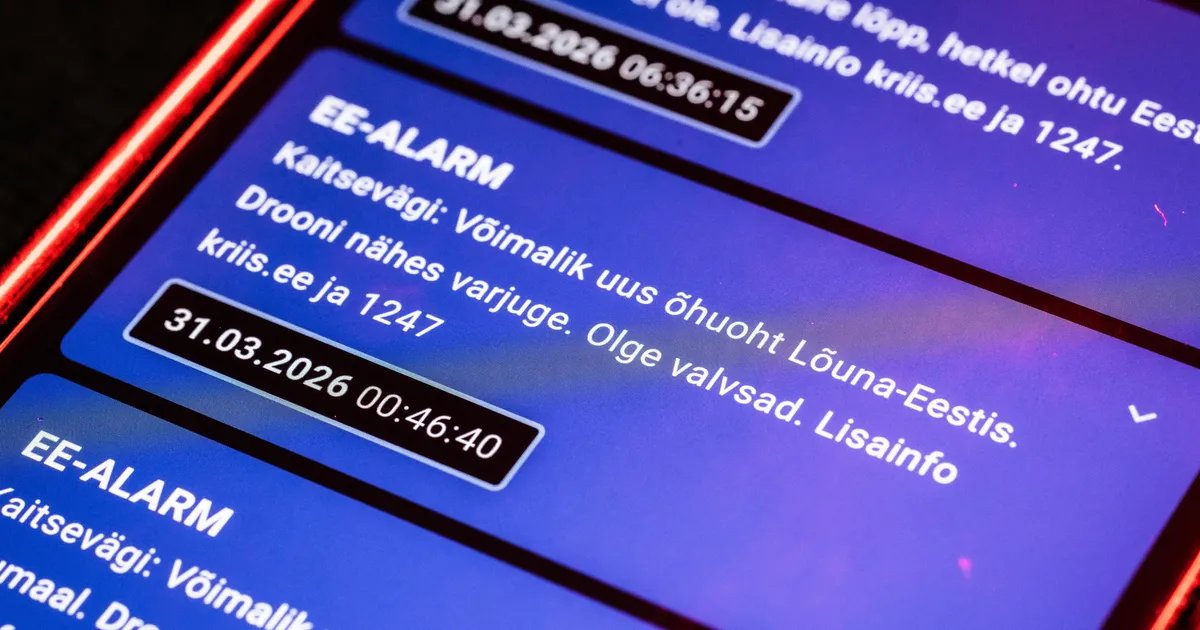
Whether and how such a solution succeeds depends, in addition to the various development stages, on the major technology giants.
And none of this is a matter of weeks, but of months, because besides the usual development steps, such a solution also requires changes at the operating system level. These in turn depend on Apple’s and Google’s development cycles, testing, and finally the updates reaching users’ phones.
Just as important as speed is clarity. The message must be understandable and logical to everyone – regardless of whether their home language is Estonian, Russian or English. And it must be communicated just as clearly when the danger is over. At the Ministry of the Interior, we are committed to ensuring that threat-alert messages are understandable to everyone. When people’s lives and health are at stake, the information must be unambiguous.
The direction is towards greater crisis-readiness
It is important to understand that the threat‑alert system is never static; it evolves in step with technology, experience and real-world use. We develop, test, learn from every incident, and improve the system continuously – as quickly and as well as current possibilities allow.
At the same time, it must be said honestly: in a completely new situation it is not realistic to expect instant perfection. This is especially true when one must simultaneously manage an unfolding crisis in real time, use different technologies and coordinate multiple actors. Hindsight is necessary, but it can be applied constructively and in a way that moves us forward.
Both civil protection and threat alerts evolve over time. Just as the state is making its systems more reliable and smarter, people’s own readiness is also crucial. Living next to an aggressive neighbor inevitably means more surprises.
The best thing each of us can do is to increase our crisis awareness and preparedness already today – by downloading the Eesti app, visiting the website olevalmis.ee, or seeking advice from the state information helpline 1247.