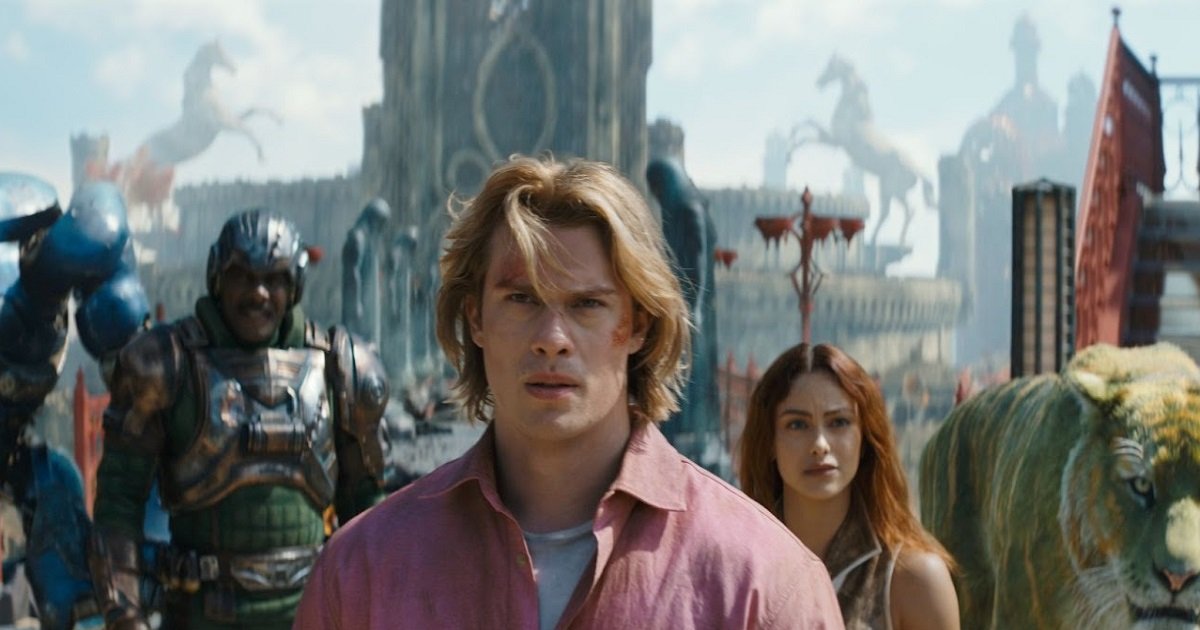
The new film “Masters of the Universe” (Serb. “Masters of the Universe”) arrived in cinemas almost four decades after the feature film from 1987 and the original animated series that marked the childhood of many viewers in the eighties.
Although the return of He-Man is often interpreted as another attempt by the studio to cash in on nostalgia, this franchise was intended from the beginning to be much more than just a cartoon or a toy line.
Mattel presented the first “Masters of the Universe” toys in 1982, and already in 1983, an animated series followed, which further expanded the world of Eternia and increased sales of accompanying products.
A similar model was used in the 1980s by franchises such as “Transformers”, “Smurfs”, “Care Bears” and “Rainbow Brite”, in which the characters simultaneously served as the heroes of the stories and the basis for toys, clothes, books and other products.
Children’s television as a showcase for toys
The turning point for this business model came after the success of “Star Wars”, when it became clear that the revenue from the accompanying merchandise could be as important as the film itself.
In the USA, at the beginning of the eighties, the rules that restricted children’s programs based on toy advertising were relaxed, so cartoons increasingly functioned as large television catalogs.
“He-Man and the Masters of the Universe” has become one of the most famous examples of so-called transmedia storytelling, in which the same characters and stories are used across television, film, toys, comics, video games and licensed products, states “Conversation“. Mattel gave its partners clear rules about the appearance and history of the characters, so that He-Man, Skeletor and other heroes would be recognizable in every form.
A model that continues today
Although the US Children’s Television Act of 1990 later tightened the rules on advertising to children, the business model developed in the 1980s did not disappear.
Today’s media giants, including Disney, Universal, Mattel and Hasbro, continue to build entire ecosystems around recognizable characters, connecting movies, series, streaming, games and consumer products.
The new “Masters of the Universe,” signed by Amazon MGM Studios and Mattel Films, is a continuation of that strategy, with Nikolas Galicin in the role of He-Man and Jared Leto as Skeletor. For the audience that grew up with these heroes, the return to Eternia is a nostalgic trip, but for companies it is also proof that childhood can be turned into a long-term and very profitable brand.