In August 2025, for the fourteenth time, the New York State Justice closed the cell door on Mark David Chapman again. He was then 70 years old and had appeared before the parole board a few days earlier. The decision was blunt: his release would “undermine respect for the law” and minimize the global impact of his crime. John Lennon’s murderer will be able to request his release from prison again in 2027.
In that last hearing, Chapman repeated – with a mixture of regret and crudeness – what he has been saying for years: “My crime was completely selfish” and was linked to the fame of his victim.
It wasn’t the only time he admitted it. In previous appearances he had gone even further: “I knew he was evil, but I wanted fame so much that I was willing to take a human life.”
That confession – the desperate search for notoriety – over time became the interpretive key to one of the most shocking murders of the 20th century, which occurred on the night of December 8, 1980 at the doors of the Dakota building, where the former Beatle lived with Yoko Ono, in front of New York’s Central Park.
Lennon was returning home after a day of work in the recording studio Record Plant. There he had been working on songs with his wife, in the midst of his return to music after several years of relative retirement. When he got out of the car in front of the Dakota, around 10:50 p.m., Mark David Chapman was waiting for him. And minutes later, he shot him at the entrance of the building where other figures such as Judy Garland, Bono, Sting and Boris Karloff have lived.
Chapman was 25 years old when he shot Lennon five times in the back. Hours before, he had asked for an autograph. Afterwards, he did not flee. He sat on the sidewalk and began to read a novel: The Catcher in the Rye (The catcher in the ryeby JD Salinger, who became world famous after this event).
That book was not a minor detail. For Chapman, his protagonist – Holden Caulfield – represented a kind of distorted moral compass. The murderer himself would later say that “most” of him was that character, a young man who despises the hypocrisy of the adult world.
The obsession had grown for years. Lennon – a global icon and a person loved by millions of people – represented, for Chapman, a living contradiction: he preached ideals such as equality or life without possessions, but he inhabited a world of wealth and fame.
That night, the crime was immediate but not impulsive. There was planning, waiting, choosing.
Born in 1955 in Texas, Chapman grew up in a troubled family environment, marked by tensions and episodes of violence. During his adolescence he developed intense fantasies and a tendency toward isolation.
In his youth, however, he tried to get his life back on track: he worked as a youth counselor and had a strong approach to the Christian religion. But stability was fragile. Travel, unstable jobs, and growing identity confusion shaped his profile.
In Hawaii, where he lived before the crime, he began to become obsessed with Lennon. That fascination mutated into resentment. Admiration turned into moral judgment, and then into a plan.
Over the decades, Chapman refined – or simplified – his explanation. Although in the early years there was talk of psychiatric disorders, over time he himself discarded excuses of that type.
“This was for me and me alone,” he declared last year. In previous hearings, he was even more direct: he said he wanted fame, “to be someone.” He even admitted to considering other celebrities as possible victims before settling on Lennon.
That motivation, repeated over and over again, is what authorities find especially disturbing: there was no momentary impulse or extreme emotional reaction, but rather the conscious desire to gain notoriety through violence.
The crime, in its own narrative, was a deliberate act of identity construction.
Since 1981, Chapman has been serving a sentence of between 20 years and life in New York State prisons.
Over time, his stable behavior allowed for some flexibility, but he never stopped being an observed figure. He has described himself as someone who found in faith a structure to sustain himself, participating in religious groups and dedicating a good part of his days to reading and writing. That ordered life contrasts with the mental chaos that he himself has recognized in his youth.
In prison he studies the Bible, participates in activities and maintains contact with his wife, whom he married before the murder and who has remained by his side for more than 40 years.
However, his behavior has not been enough to convince the authorities.
Every two years since 2000, his request for parole has been rejected. The argument repeats itself: the magnitude of the crime – and its global impact – exceeds any individual assessment of conduct or remorse.
Chapman apologizes. He has been doing it for years, especially aimed at Yoko Ono and the musician’s followers. But even that regret has been questioned.
Parole boards have noted that his statements do not always reflect genuine empathy with victims. In a way, his case became caught in a paradox: any attempt to explain the crime inevitably returns to the same motivation – fame – which weakens the moral value of his apology.
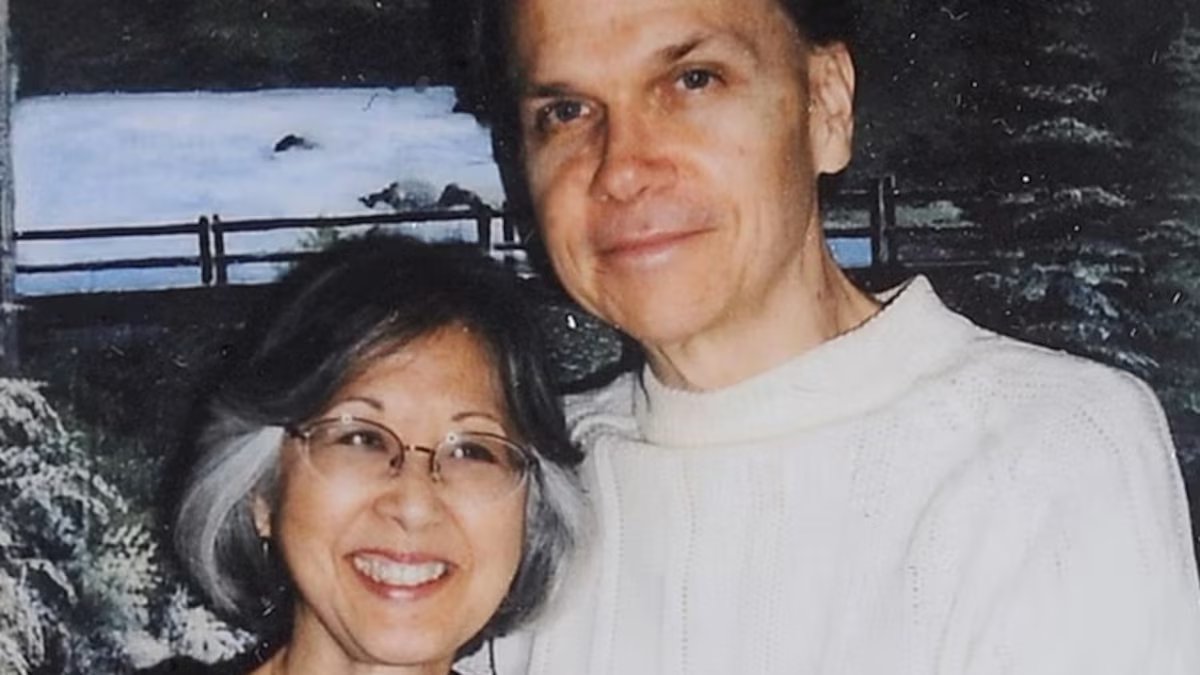
Mark David Chapman’s wife is Gloria Hiroko, a Japanese-American woman who has maintained an extremely low public profile for decades.
The couple met in Hawaii in 1978, when she was working as a travel agent, and married in June 1979, just a year before the crime that shocked the world. Over the years, Gloria Hiroko Chapman has made very few public statements, but some of them were especially relevant: in certain testimonies, she revealed that her husband had confessed to her months before his intention to kill Lennon. According to his own account, he even intervened during that period, getting rid of a weapon and helping Chapman temporarily give up on a first attempt.
Despite the seriousness of the crime and the life sentence that Chapman is serving in New York, the relationship between the two was not broken. More than four decades later, they remain legally married and maintain contact.
by Andrés López Reilly, for El País