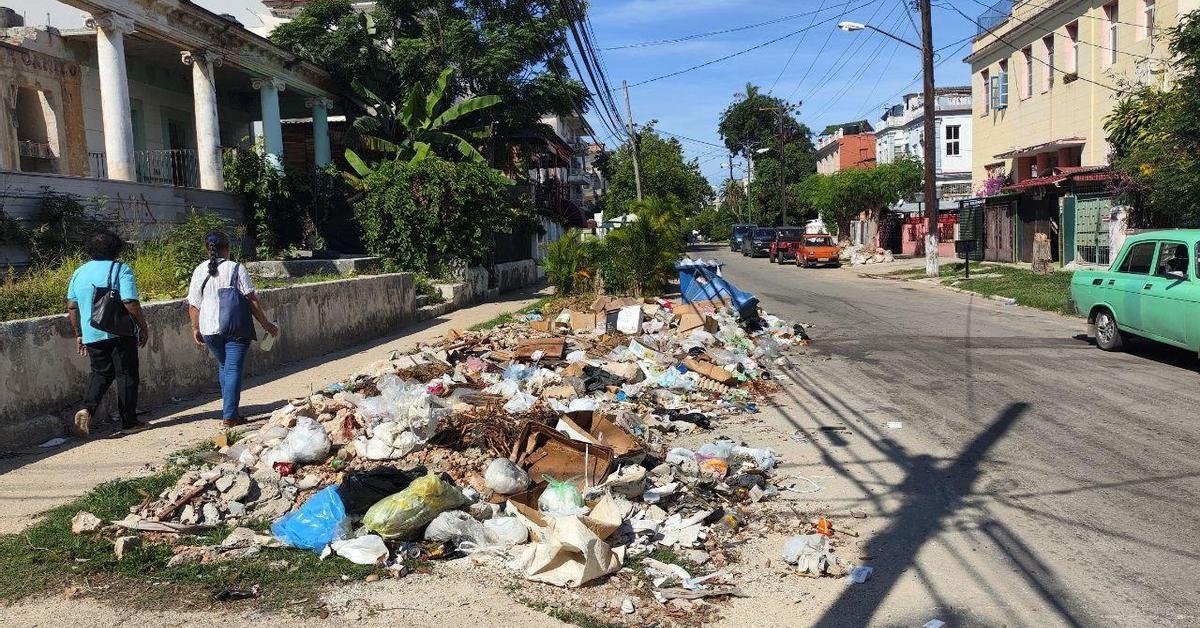
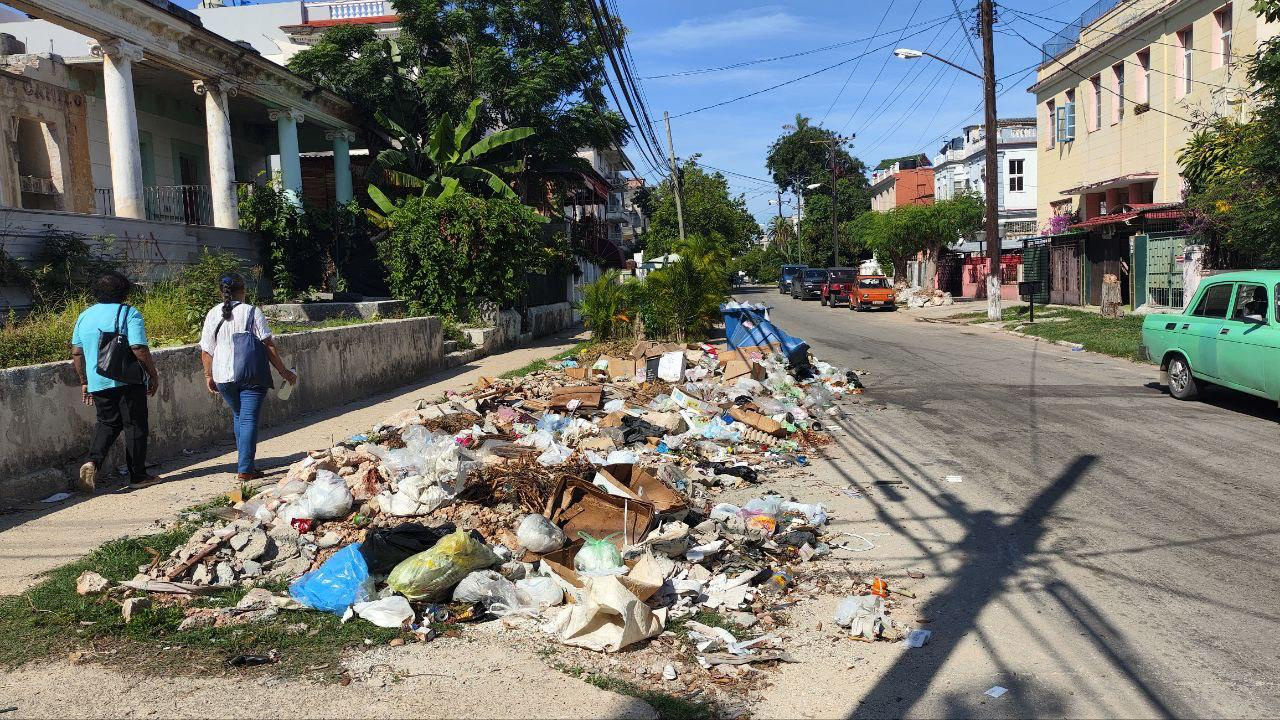
Madrid/The incombustible Pedro Garcés does not stand still. President of the Rampa Popular Council, organizer of the El Vedado service centers, coordinator of the social group Gente de Barrio and, now, at the head of El Rampeño, a local development project for the much-needed garbage collection with solar energy that will begin its journey in Havana this Wednesday. The initiative relies on public money, although residents who want to benefit from the promised service will have to contribute 100 pesos as a starting point.
“A building is being built here. solinera that is going to assume, based on the intention of the Party and the central Government, the allocation of 30 electric tricycles for the collection of solid waste in the Rampa Popular Council, as well as for the recovery of raw materials,” the official enthusiastically tells Cubadebatewhich this Tuesday publishes a very partisan report on the project.
El Rampeño is on the corner of 23rd and J streets, a nerve center of the Cuban capital where El Quijote Park is located, one block from Coppelia and the gigantic K Tower. It is about improving “not only the hygiene of the neighborhood, but the quality of life of those who pass through this central area of the city.” There are not many tourists at the moment, but if the project works, they will be among the most benefited by the removal of the current mountains of garbage that darken the panorama.
There are not many tourists at the moment, but if the project works, they will be among the most benefited by the removal of the current mountains of garbage that darken the panorama.
Cubadebate points out the urgency of solving this problem, aggravated by the fuel shortage since the US oil blockade began to be applied at the end of January of this year. However, he admits: “hygiene in Havana is not a recent problem.”
The solinerainspired by those already operating in Santa Clara –and similar to the private one in Holguín–, will feed solar energy to the electric tricycles that will collect garbage, but also to private vehicles and devices, in addition to contributing to the National Electric System. The project will begin as a pilot experience in Rampa with the idea of extending to the rest of the municipality. According to the report, to date there are five of the thirty tricycles that should make up the fleet and it is planned to start the service with two pick-up times, 7 in the morning and 8 at night, which could be longer depending on the needs.
“We have socialized through our digital networks, Facebook, WhatsApp, Telegram, and the Gente de Barrio group, and the response has been tremendous. People have contributed ideas that have enriched and perfected what we initially devised,” says Garcés, who instructs on how neighbors should act.
“It is not necessary for you to be with your bag waiting for the car – he clarifies, but urges you to be punctual -. You put your bag there and they pick it up. What we ask is that it be on time, so that the waste does not last long on the street.” In addition, he adds that it is not necessary to buy one, you can lower the bin or wherever the garbage is emptied, leave the contents and leave: the usual procedure.
In addition to the Government contribution, consisting of tricycles, there is the territorial contribution – the famous 1% – a tax that taxes the gross income of public and private companies that goes directly to the municipal budget and is used to finance these projects. Cubadebate Remember precisely that private parties have contributed the tax since 2024 and that their participation has turned 1% into “a significant source of financing.” In the case of El Rampeño, those funds have gone to the work and the panels.
The other leg to support the project is the monthly fees of 100 pesos per home, from which vulnerable families are exempt. According to the official version, the beneficiaries of the free service will be those who identify the “delegates and factors of each constituency”, which a priori leaves the selection in the hands of the party and without public and transparent criteria.
In any case, the media emphasizes, the most important income will come from charging companies – state and private –, which will pay more for the collection of waste and raw materials. There will also be different rates for those who request a night collection and large customers will be charged more than a small business. Finally, El Rampeño will also make profits from the sale of recyclable materials.
The most important income will come from charging companies, which will pay more for the collection of waste and raw materials. There will also be different rates for those who request a night pickup and large customers will be charged more than a small business.
According to the information, the project should generate about 70 direct jobs for which residents of the area will have priority. The salaries sound promising, especially considering what is earned in Comunales. The Rampeño promises an average of 15,000 pesos, although it will depend on the function. In a report made by 14ymedio Last December, street sweepers in the capital told this newspaper that their salary was around $10. Although the volatility of the currency is currently very high in Cuba, at the price of the currency for this Tuesday in the informal market, a worker from El Rampeño would earn more than twice as much as working for Comunales.
The note suddenly talks about fines, although it does not offer data in this regard. Of course, Garcés warns that if there is recidivism – exactly what is not specified – “there may even be a criminal investigation for the crime of disobedience or the spread of an epidemic.” The official, who dedicates the final paragraphs to talking about education and raising awareness of the population, starting with children, believes that the project is defined by the word triumph, although he then admits that it is, rather, an aspiration. “We are obliged to succeed in this project because the population demands it.”
While waiting for the initiative to begin, questions like those posed by entrepreneur Yulieta Hernández are on the table: “Vedodo, tall buildings, blackouts, aging population…? Will neighbors go down stairs in the middle of a blackout to comply with garbage collection schedules?”