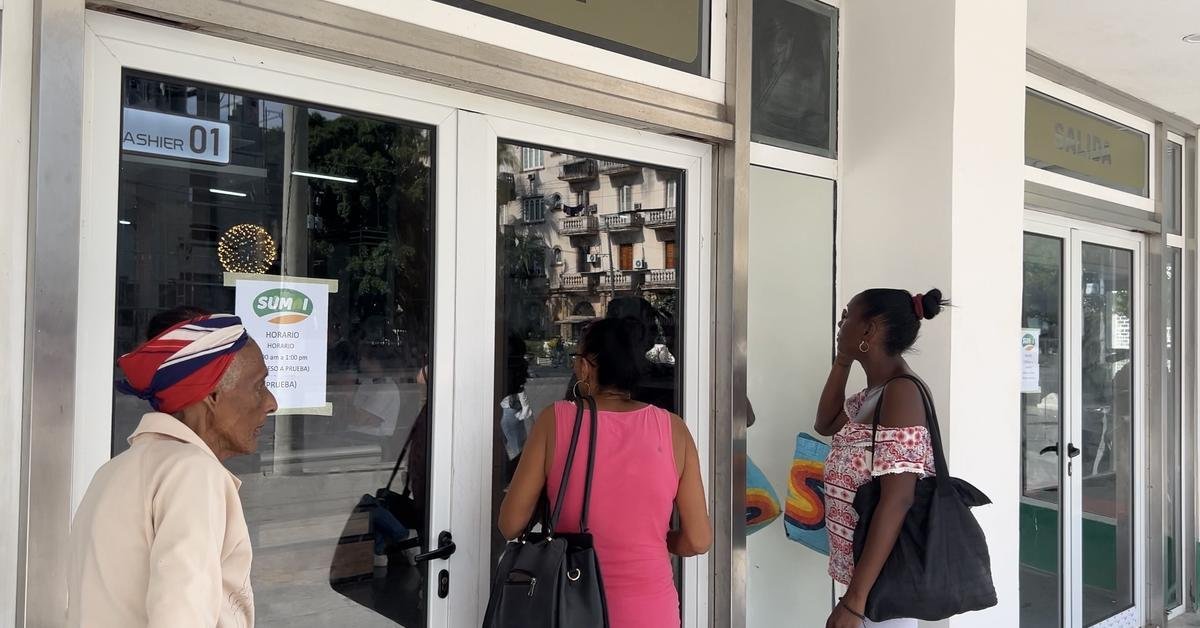
Havana/The green Sumai sign stands out on the facade of the old Ten Cent on 23 and 10, in El Vedado. The building, which for decades was a reference for Havana commerce, has recovered part of its exterior brilliance. But this Wednesday, just 24 hours after the inauguration of the new Chinese-run market, customers found themselves with a surprise: the store was closed “due to inventory.”
Behind the glass doors you can see cash registers, decorative lamps and some shelves. Outside, curious onlookers take turns pressing their faces to the glass and finding out what’s inside. A man protects himself from the sun’s reflection with one hand while trying to peer inside. The scene seems more typical of an exhibition than a commercial establishment.
“Is the same thing going to happen to the other Chinese store that was closed a few days after its opening?” asks a woman who arrived from Central Havana. Your concern is not free. The experience of other businesses opened with high expectations and subsequently paralyzed fuels consumer distrust.
In August 2024, China Import, popularly known as the “Chinese Costco”, closed its doors in Manglar and Oquendoin the Cerro neighborhood, when it was just beginning to become famous for its competitive prices. The business, installed in old industrial warehouses linked to the Sabatés soap factory, was subjected to an audit. Buyers who arrived then found a closing sign “until further notice” and less than reassuring explanations. There was no new notice.
The new Ten Cent, managed by the Cuban-Chinese joint company Sumai SA, opened this Tuesday with a long line. At ten in the morning those interested began to enter, ten by ten. But the illusion did not last long. A client who was among the first warned that there was no food or toiletries, precisely two of the goods that Cuban families need most.
On Wednesday, however, there was no line. Visitors came, asked questions, looked in the windows and ended up leaving. On one of the doors, a paper stuck with adhesive tape announced a schedule from 10:00 in the morning to 1:00 in the afternoon, accompanied by the expression “trial process.” The provisional nature of the notice contrasted with the remodeling of the building, painted an intense green that is impossible to ignore.
Through the glass, shelves with merchandise, shiny counters and several spherical lamps could be seen, giving the interior the air of a modern store. There were also quite clear spaces, with large shiny floor surfaces and a distribution that still seemed far from taking advantage of the full capacity of the property.

/ 14ymedio
Among the products sold include electric motorcycles and cars from little-known brands. One of the cars, black and shiny, was displayed with the trunk open, as if waiting for someone to decide to load the purchases. The image had something extravagant in a city where getting a package of detergent can be much more urgent than getting a new vehicle.
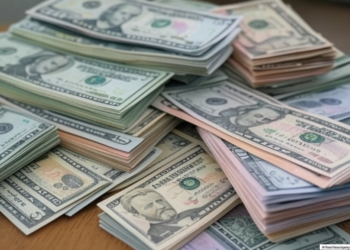
But the biggest surprise was in the payment conditions. The establishment does not accept the Classic card, used in other dollarized businesses on the Island. Purchases must be paid exclusively in US dollars in cash. A requirement that considerably reduces the universe of possible buyers, especially among those who receive salaries and pensions in Cuban pesos.
The commercial promise was ambitious. Sumai had announced since July an offering that would cover food, appliances, hardware, construction materials and equipment related to renewable energy, as well as retail and wholesale operations. The reopening of such a well-known property therefore raised expectations that went far beyond curiosity to see a new store.
On the sidewalk, meanwhile, life continued its course this Wednesday. A homeless man was resting sitting against the green wall, next to the exit door of the premises, covered by blue and red striped curtains. Further on, other passersby stopped for a few minutes in front of the windows. The old commercial corner had regained its ability to attract attention, but it still could not convert them into purchases.
/ 14ymedio
For several generations of Havana residents, the Ten Cent on 23 and 10 represents a memory of showcases, merchandise and family tours through El Vedado. The popular establishments belonged to the American chain FW Woolworth Company, which arrived on the Island in 1924 and opened establishments in Havana and other cities. Famous for their variety of merchandise and affordable prices, they were nationalized by Fidel Castro in October 1960, although their name has survived for decades in popular memory.
So the reopening of this central store, after so much waiting, had all the ingredients to become good news. However, between the absence of essential products, the demand for dollars in cash and the closure “for inventory” just one day after the inauguration, the initial enthusiasm is beginning to cool.
For now, the Chinese market has achieved something that seemed difficult: making Havana residents stop again in front of the doors of the old Ten Cent. What it has not yet achieved is giving them enough reasons to cross the threshold.