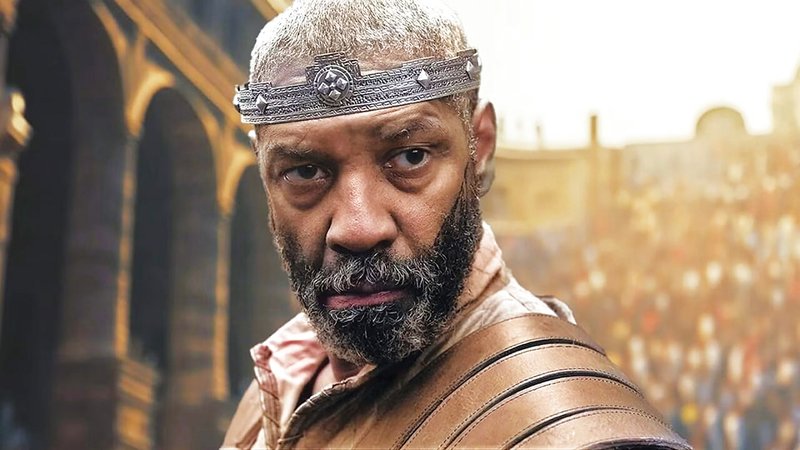
Before the cameras turned, and before the army of Carthage crossed the Alps on the screen, the movie “Hannibal,” which was being developed by the Netflix platform, found itself in the heart of a different kind of battle, a battle revolving around history, identity, cultural representation, politics, and money, turning one of the most famous military figures in ancient history into the focus of a global discussion that goes beyond the confines of cinema.
The project that brings together American star Denzel Washington and director Antoine Fuqua is not seen as just a new historical film, but rather as a sensitive test of how Hollywood deals with major historical figures in an era in which questions of identity and representation have become more present than ever before. The controversy recently increased after it was reported that the pre-production phase had been temporarily halted, due to budgetary concerns, adding a new dimension to a story that had already been burdened with discussions since its announcement.
Who is Hannibal?
Hannibal Barca is considered one of the greatest military leaders in ancient history. He was famous for leading a Carthaginian army across the Alps, accompanied by war elephants, to confront the Roman Republic, in a military campaign that is still studied today as one of the most daring military operations in history. The idea of the film is based on reviewing the life of Hannibal, his military campaigns, and his conflict with Rome.
But the importance of the character goes beyond the military aspect. Hannibal is not an ordinary historical hero. Rather, he is considered a national and cultural symbol for many Tunisians, as he is the most prominent figure to emerge from the ancient city of Carthage, located in present-day Tunisia. For this reason, any attempt to re-present him cinematically has turned into an issue related to national identity and historical memory.
The first spark
From the moment Netflix announced the choice of Denzel Washington to embody Hannibal, a wide wave of discussions began. While many saw Washington as one of the greatest actors of his generation, and that his presence gives the project exceptional artistic weight, critics considered that the choice raises complex questions about the character’s ethnic and historical background.
In Tunisia specifically, the decision sparked widespread political and media reactions, and some critics considered that presenting Hannibal in a way different from their historical perceptions represents a distortion of the Carthaginian heritage, while others saw that the controversy itself reveals the difficulty of projecting modern racial concepts onto figures who lived more than 2,000 years ago.
Identity battle
Here lies the most complex aspect of the issue. Historians agree that Hannibal was a Carthaginian, but they differ on how to characterize his identity according to contemporary classifications. Carthage was a multi-ethnic, multi-cultural Mediterranean civilization that combined various Phoenician, African, and Mediterranean influences. Therefore, a number of researchers believe that trying to place Hannibal within modern racial classifications may be an oversimplification of a historical figure belonging to a completely different world.
However, this academic proposal did not prevent the issue from turning into an arena for cultural debate between different parties, as some commentators saw that Washington’s choice gave a wider space for the presence of African characters in historical cinema, while others considered that this came at the expense of historical accuracy.
Age is a problem
The controversy did not stop at identity, as Washington is more than 70 years old today, while Hannibal’s most famous military achievements were linked to his early youth, so questions arose about how the film will address this large age difference, and whether the work will focus on the later stages of the Carthaginian leader’s life or will rely on visual solutions and digital technologies to approximate the historical picture.
A time of difficult calculations
If identity preoccupies critics, then budget preoccupies Netflix. The film was designed from the beginning as a huge historical epic that required rebuilding an entire ancient world, filming large-scale battles, and producing scenes of crossing the Alps, as well as dealing with the most famous element in the Hannibal story: war elephants, and for this reason it is expected to be among the largest historical projects that Netflix has attempted to produce. Despite the controversy, Netflix has strong reasons to stick with the film. The project brings together two of the most reliable names in Hollywood: Denzel Washington and Antoine Fuqua. It is also based on a global historical figure who has not yet received an epic cinematic treatment of the magnitude of its historical impact. In addition, stories of ancient empires and wars have proven their ability to attract a wide global audience when presented with huge production and contemporary narration.
More than one movie
In essence, “Hannibal” is no longer just a cinematic project about an old military leader. It has turned into a mirror that reflects contemporary questions about who has the right to tell history, and how cinema can balance historical accuracy and creative freedom, and between market demands and identity sensitivities. For this reason, it seems that the real battle for the film has already begun, even before filming begins. Between historical controversy, cultural debates, and huge financial bets, the “Hannibal” project stands today as one of the most anticipated and controversial films in Hollywood, and perhaps one of the most… Projects that reveal how the film industry itself has become an arena for conflicts that go beyond the big screen.