TRAINING
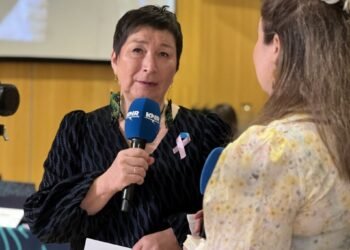
Research must not only take place behind academic walls. For Majken Djurhuus Poulsen, it is at least as important that knowledge is shared with the local population.
Then Majken Djurhuus Poulsen growing up in Nanortalik, she collected stones.
She put the stones in a small glass cabinet, and at an early age she became quite good at recognizing and naming the different stones. Much later, she found out that the interest could turn into an education and a career path.
– I am very determined once I have decided on something. So when I found out after high school that I could study geology, I took supplementary courses in Sisimiut so that I could start the geology education in Aarhus in 2003, says Majken Djurhuus Poulsen, who hopes she can inspire more young people to choose geology or other natural science subjects.
– It’s not an easy road, but it can be done if you want it.
Geology education in Denmark
Majken Djurhuus Poulsen finds that there is an interest in rocks and nature among many children in Greenland, but that there can be practical and financial barriers associated with taking one education outside Greenland. The Geology degree can only be studied in Aarhus and Copenhagen for the time being.
She graduated in 2013, and subsequently got a job at the National Geological Surveys for Denmark and Greenland (GEUS). For 12 years she worked from the office in Nuuk, and along the way she wrote a PhD. about the formation environment for corundum (pink sapphire) in Southeast Greenland. In 2025, she moved back to Copenhagen, to take on a new role in 2026 with special responsibility for research dissemination in Greenland.
In the coming time, she will, among other things, travel around Greenland, disseminate geoscience and create more dialogue between citizens and research environments.
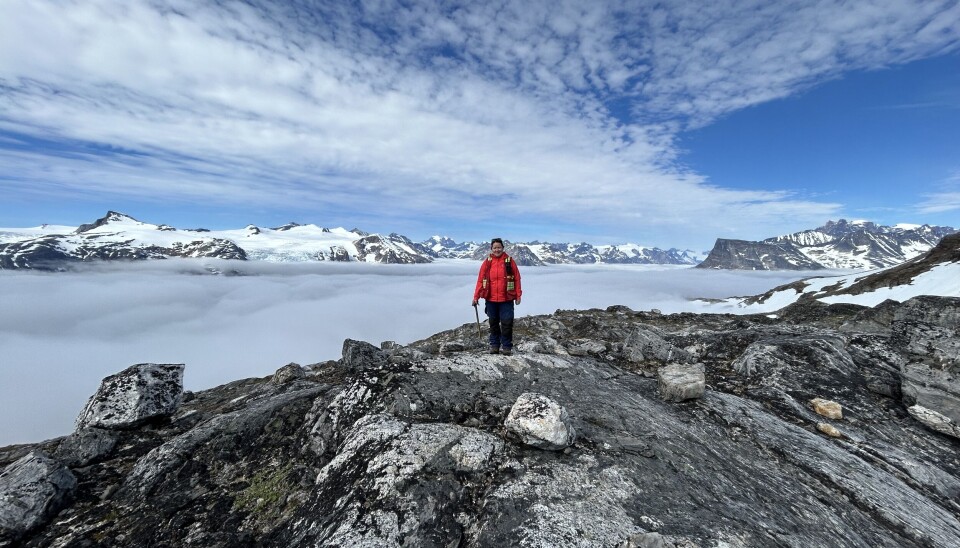
Workshops and activities
Majken Djurhuus Poulsen believes that research communication must be more and more than traditional lectures.
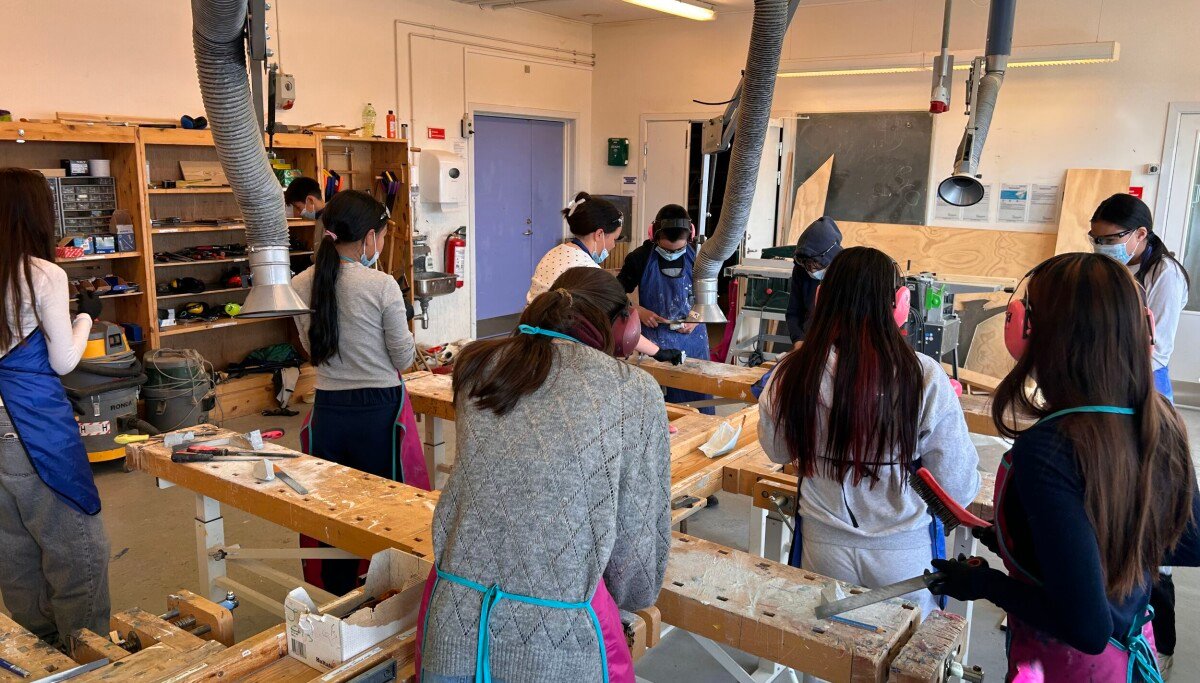
– I would very much like to find different ways of conveying geology – and – where possible, include the local population actively. The can be through lectures, school visits, workshops or activities where children and adults can examine rocks themselves and learn more about the geology in their local area, says Majken Djurhuus Poulsen.
For a geologist, Greenland is a very special place to work. The country is huge, and the geology varies enormously from area to area. At the same time, Greenland contains rock types and landscapes that tell about a large part of the Earth’s history.
– Almost the entire history of the Earth is represented in Greenland, says Majken Djurhuus Poulsen.
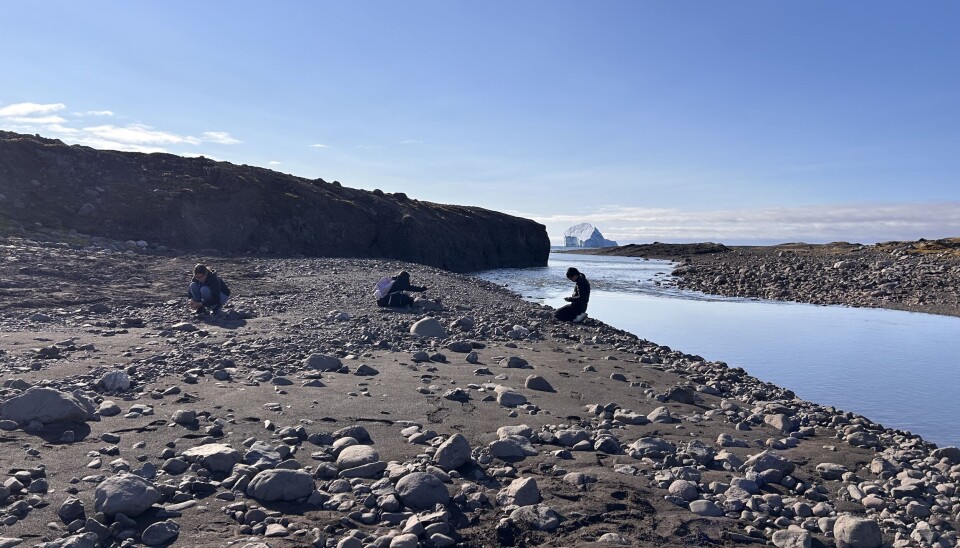
Each place has its own geology
Precisely for this reason, she also believes that the research must be disseminated locally. A lecture that makes sense in one place does not necessarily fit in another. At the same time, she points out that there is a lot going on exciting research in Greenland, which holds a great potential for communication with the local population.
– There is so much going on interesting research in Greenland, and I think it is important that we also find good ways to share that knowledge with the population, says Majken Djurhuus Poulsen.
Therefore, she sees the dissemination of research as a way of creating greater understanding and security around the researchers’ work – but also as an opportunity to get the local population to contribute knowledge, for example about specific observations.
– The local population plays an important role in research. Much information about, for example, hot springs and special occurrences of stone is not necessarily documented. Therefore, we depend on the locals sharing their observations so that we can build up more knowledge.
This article is from the education newspaper, which can be read for free via the link here