
In a business context marked by climate urgency and pressure from increasingly conscious consumers, sustainability ceased to be a reputational discourse and became a profitable business model. Today, companies of different sizes and sectors are finding in “green” not only a way to mitigate environmental impacts, but also a concrete way to generate income, reduce costs and differentiate themselves in highly competitive markets.
READ ALSO
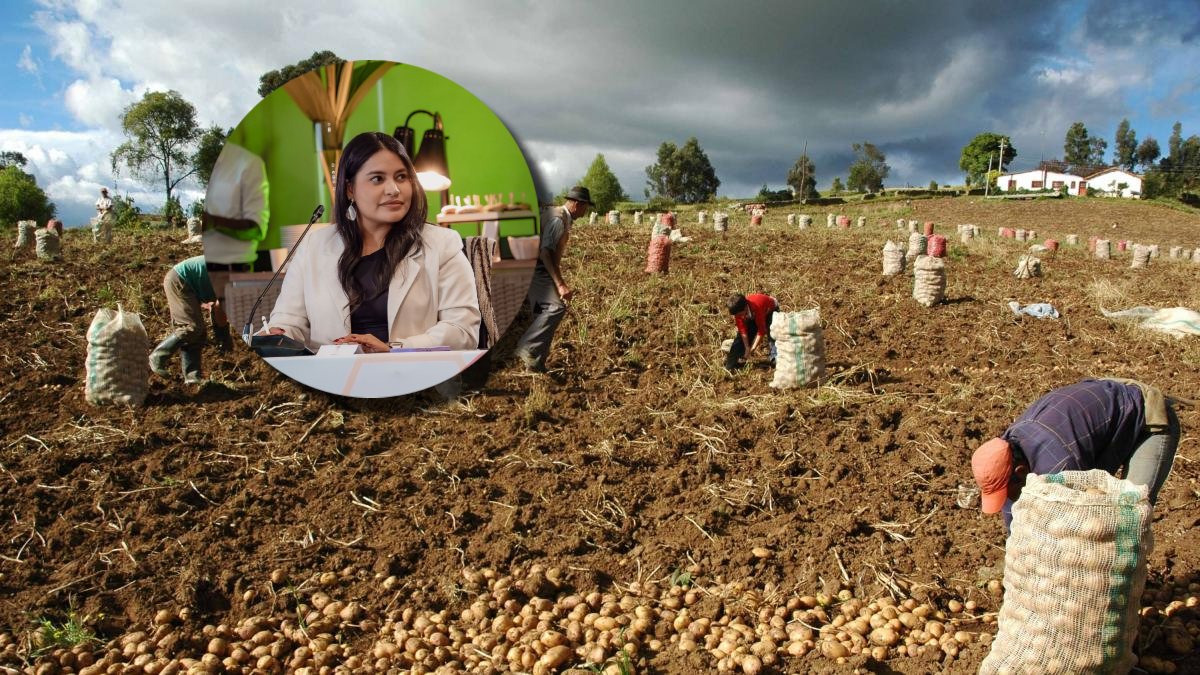
This is stated by Vanessa Prieto Sandoval, coordinator of the Master’s Degree in Sustainability Management at the Javeriana University, who maintains that “investments in sustainable practices have become a source of competitive advantage, differentiation in global markets and profitability.” But not all companies are capturing that value in the same way.
There are four key models that enable companies to convert sustainability into revenue. Photo:iStock
According to Prieto, the turning point is in the ability of organizations to abandon traditional linear models – based on “extract, use and dispose” – and migrate towards circular schemes. In the latter, waste is converted into inputs, products are redesigned to last longer and services are expanded to capture value throughout the life cycle.
This transit is already showing results. Large companies such as Corona, Essentia or Alpina, and even academic institutions such as Javeriana, are leading processes that not only reduce their environmental footprint, but also open new lines of business. The key has been, according to the expert, to integrate recovered materials into their production processes or to create economic incentives associated with recycling.
In some sectors, the benefits are tangible. According to data cited by Prieto, in industries such as health and beauty, brands that incorporate natural ingredients and reusable packaging are growing up to 9% more than their conventional competitors. This differential reveals that sustainability not only responds to an ethical demand, but also to a market logic.
READ ALSO
Four ways to make money with sustainability
A report from the International Institute for Management Development (IMD), a prestigious independent business school based in Lausanne, Switzerland, offers complementary reading: there is no single way to monetize sustainability, but rather multiple value creation models that can be adapted to different types of companies.
The first is that of value chains, focused on the economics of the product. Here, companies generate revenue by transforming inputs into goods that consumers are willing to pay for. Sustainability comes into play when materials, processes and supply chains are redesigned to reduce waste and emissions. This approach not only responds to regulatory and social pressures, but also opens opportunities to innovate more efficient, recyclable or repairable products.
The second model is that of “value shops” or knowledge economies. These are companies that create value by solving complex problems for their clients, such as consulting firms, legal firms or design agencies. In this field, sustainability becomes a strategic asset: specialized knowledge in environmental, social and regulatory issues is increasingly in demand. These companies monetize their experience by helping others adapt to more demanding standards and identify opportunities in the green transition.
Beyond the environmental discourse, sustainability is consolidated as a business strategy. Photo:EPM
The third model is that of access to value, linked to the collaborative economy. Here, companies generate revenue by managing shared assets—from infrastructure to services—that allow multiple users to access resources without needing to own them. This approach reduces costs and also the environmental footprint, by optimizing the use of resources. Exchange platforms, energy services or leasing models are examples of how sustainability can translate into economic efficiency.
READ ALSO
Finally, there are value networks, where companies act as nodes that connect people, resources and systems. Your ability to generate income depends on the scale and quality of those connections. In terms of sustainability, these companies have a key role: they can influence multiple actors and redesign flows of information, materials or energy to drive systemic changes.
The IMD report insists that sustainability should not be understood only as a strategy to mitigate negative impacts, but as an opportunity to increase value. “There is a growing demand for more efficient and circular products, as well as for knowledge and platforms that facilitate the transition,” the authors point out.
Sectors where green does pay
Although sustainability cuts across all sectors, some show a greater ability to capture value in the short term. Prieto identifies at least four.
The first is fashion and textiles, traditionally questioned for its environmental impact, but today in full transformation. The rise of the second-hand market, the reuse of materials and alliances to share infrastructure are redefining the business. Initiatives such as La Cortesana or the Taller del Reuso illustrate how it is possible to generate income from circular models.
The energy sector is another of the great beneficiaries. Transitioning to renewable sources such as solar and wind allows companies to reduce up to 30% of their long-term operating costs. In addition, companies like Celsia are developing solutions adapted to small and medium-sized businesses, expanding access to this type of technology.
Companies in Colombia and the world are finding sustainability a real source of income. Photo:IStock
In construction and food, sustainability has been directly integrated into the value proposition. Companies like Corona or Juan Valdez are responding to consumers who prioritize health and environmental impact, incorporating circular economy practices into their operations.
Tourism, for its part, is experiencing a boom driven by the demand for nature and low-impact experiences. The Colombian Association of Travel and Tourism Agencies (Anato) projects 2.1 million visitors in the first half of the year, a figure that shows the economic potential of this segment.
READ ALSO

New actors, new rules
One of the most significant changes is the appearance of new roles in the market. Prieto highlights the figure of the “prosumer”, an actor who is both a producer and a consumer. This model, driven by digital platforms and collaborative economies, allows people to generate income while optimizing the use of their own resources, from energy to spaces or skills.
This phenomenon fits with the value access model described by the IMD, where sharing resources not only reduces costs, but also creates new sources of income. Sustainability, in this sense, ceases to be an exclusive responsibility of companies and becomes a dynamic distributed among multiple actors.
The challenge: moving from intention to profitability
Despite the opportunities, the path is not without challenges. The IMD report identifies two main obstacles: moving from awareness to action and making sustainable initiatives truly profitable.
To overcome them, experts propose a roadmap that includes identifying the dominant business model, understanding the business drivers of sustainability and seeking strategic alliances. Collaboration, they insist, is essential to develop solutions to complex problems.
In Colombia, the potential is high. The country’s biodiversity and its regulatory framework, such as the National Circular Economy Strategy, offer fertile ground for innovation. However, Prieto warns that it is necessary to accelerate its implementation.
READ ALSO

Among the most specific opportunities are the use of organic waste to produce energy or bioproducts, innovation in biodegradable materials and the adoption of certifications that facilitate access to international markets.
In the end, the conclusion is clear: sustainability is not just an ethical or regulatory obligation, but a business strategy. Companies that manage to integrate this approach into their value creation model will not only be better positioned to face environmental challenges, but will also be the ones that capture the greatest profits in the economy of the future.
EDWIN CAICEDO
Environment and Health Journalist
@CaicedoUcros