New York serial killer Rex Heuermann is a huge man. He tortured small women. Then he strangled those small women. Some of them he cut up in pieces, like chicken. He scattered the pieces in a long, long island named Long Island.
These small women found out that living inside a big apple was hard like nails. It was a grind making ends meet. Some on drugs. Some on drink. Like Rosita and Clementina, they worked their bodies hard for Yankee dollars. That is how this big man caught them like fish. He baited them with plenty money. He used them and then killed them, just like fish.
One of those women was not like the others. Sandra Costilla had papers but she was not from America. She was from Foster Road, Sangre Grande.

Sandra Rajkumar, 17, and her brother Manny, 14, just before they left Trinidad for the US.

Sandra’s father, Ramkissoon Rajkumar, aka Ramki.
Her younger brother called her Popo. Her friends called her Sandy. Costilla was her married name. She went to America in 1982 when she was 17. She married a man named Benjamin Costilla. He was a soldier in Hawaii—a place with islands and weather like Trinidad and Tobago. She married him to get her papers. Her true love was a boy from Arima.
This small Sangre Grande woman’s original name is Sandra Rajkumar. The people over there wrote down her name wrong; they changed her to a Rajcoomar.

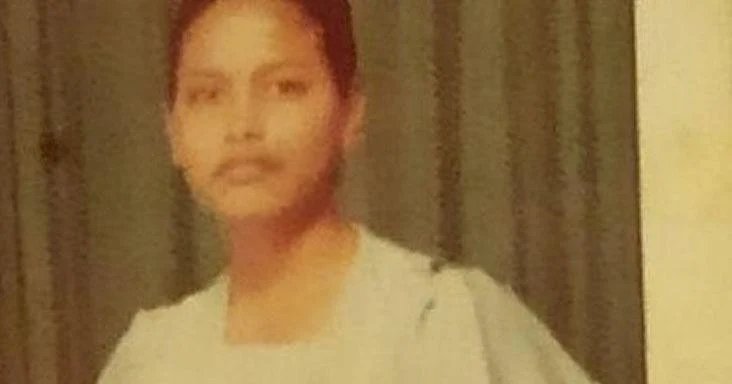
Sandra when she returned to Trinidad for her boyfriend in 1986.
Her mother was Milly Rattansingh. That too the Americans got wrong; they wrote her name as Molly. Milly was from Quesnel Street, Arima. She was first married to a Mr Timal and they had two children, Anthony and Ruth. People say Milly, back in the 1960s and 1970s, was well known as an abortionist. A policeman who retired as a senior superintendent says he knew Milly to be an abortionist because some in his family used her services. People joked she had a hospital room in her house, he said. She was an accomplished seamstress, too.
After Milly and Mr Timal finished their relationship, Mr Timal took Anthony and Ruth to America. Anthony joined the US Army. It was he who linked Sandra to the soldier whom she married to get her papers and the Costilla name. All that happened in Schofield Barracks, Hawaii.
Everybody says Milly was small, just like Sandra, and very beautiful. The police superintendent says, “She was very, very attractive. Brown-skinned. Very beautiful.” A lady living two streets from Foster Road says Milly was “dark, small and pretty”.
Sandra’s father was Ramkissoon Rajkumar, a handsome policeman. People called him Ramki. He owned a car. In the 1960s and 1970s owning a car and being a policeman was big thing. The superintendent remembers Ramki even better than he remembers Milly. He said Ramki’s regimental number was 6189.
‘He shot my mother’
In May 1969, the Black Power Movement was in full swing. Trade unionists called a bus strike. The superintendent’s father was a senior bus inspector with the Public Transport Service Corporation (PTSC).
The day of the strike, May 13, all bus drivers were to stay away from work. To force the superintendent’s father to stay home too, activists threw an explosive into his home. It didn’t hurt anybody but, after that, police officers were sent to bus inspectors’ homes for protection. The first officer to keep watch over the superintendent’s home was Ramki. So he knew him good.
Back then, the superintendent loved fishing. He was returning home from fishing with his family one day in 1975. They stopped by a gas station. An attendant said, “Ramki shoot heself! All yuh hear?” Half a century has come and gone and that day is still stuck in the superintendent’s head.
Ramki had left his post at the Toco Police Station with a service revolver. He went to his Foster Street home to confront his small, beautiful wife about infidelity. Sandra was almost 11 years old. She and her younger brother, Gidharry Rajkumar, whose pet name was Manoj or Manny, were pupils at the Sangre Grande Hindu School. They were at home with their mother, Milly, on that June day their father arrived with his service revolver. Manny was seven, already showing the good looks of his daddy. He was in the bedroom.
“The bedroom door opened out into the living room area. I was standing there watching. I pi… myself,” he related. “They had to move me off that spot. I was frozen there. I saw everything.”
Manny left Trinidad with Sandra but is back now, in trouble with the police here, as he was in trouble with the police in America before he was deported. When I interviewed him in Arima in late 2024, he was awaiting a court date to answer a robbery charge. His life from that day in 1975 to now has been itinerant, a dibble and dabble with fast cars, guns, drugs and gangs, a life on the edge, unsettled and unhappy.
“They were in the living room. He shot my mother. Sandra ran towards him and grabbed the gun. It went off and a bullet went through her right palm. It went straight through. He went to my mother and checked to see if she was dead. He looked over at us. Then he put the gun to the side of his head and pulled the trigger.”
Bang! The little boy and small girl lost mother and father. They would thereafter be bound together by blood and trauma. Drugs and guns would seduce Manny. They jailed him three times in America. But even when overtaken by his own darkness, he stood by his sister. He was the impotent protector who could save his Popo neither from their father’s madness then nor the big man’s insanity 18 years later.
Sandra would long for the family that exploded that June day. She tried until her death to construct her own. Instead, she spiralled into the hands of the big man who would torture her before he killed her and threw her away like a piece of meat on a long, long island.
That was in November 1993. More than 30 years have gone and Manny still fantasises his revenge. “Her death destroyed me. It changed everything. She died from blunt force trauma. I would like to blunt force trauma him! I want to stand over him and…”