
As Emancipation Day celebrations are observed across Caribbean nations from August 1 to August 3, the region’s growing campaign for reparatory justice comes into focus.
Emancipation Day, observed in Dominica as August Monday on the first Monday of August, commemorates the abolition of slavery in 1834, highlighting the resistance embodied in historic freedom fighters such as “Neg Mawon” Chief Jacko and Balla.
Beyond the cultural celebrations, this year’s observance comes at a time when several major developments have strengthened the Caribbean’s push for reparations.
At the 51st Regular Meeting of the Conference of CARICOM Heads of Government, held in Saint Lucia from July 5 to 8, regional leaders approved the Revised CARICOM Ten Point Plan for Reparatory Justice: A Manifesto for the Coming Enlightenment.
Developed by the CARICOM Reparations Commission (CRC), the revised plan seeks reparatory justice from European nations for the transatlantic slave trade and the genocide of Indigenous peoples.
Speaking after the meeting in Gros Islet, CARICOM Chairman and Saint Lucia’s Prime Minister, Philip J. Pierre, said the discussions were centered on improving the lives of Caribbean people. “The discussions were guided by a central idea: to improve the lives of the people of the Caribbean Community.”
The timing of the CARICOM meeting also coincided with another historic anniversary.
On July 8, the Caribbean remembered the 1801 Constitution of Saint-Domingue, signed by Toussaint Louverture, which formally abolished enslavement and affirmed racial equality. The move prompted Napoleon Bonaparte to send French troops to the colony to squash the progress and re-enslave the population, triggering the Haitian War of Independence.
Momentum continued later in July when the CARICOM Reparations Commission, led by its chairman, Professor Sir Hilary Beckles, travelled to the United Kingdom from July 13 to 16 to further the region’s advocacy for reparatory justice.
The campaign has also gained wider international support this year. In March 2026, the United Nations General Assembly adopted a landmark Ghana-led resolution declaring the transatlantic trafficking of enslaved Africans and chattel enslavement to be the “gravest crime against humanity.”
That was followed in June by the High-Level Consultative Conference on Reparations in Accra, Ghana, where governments, scholars and advocates discussed advancing the global reparations movement.
Following the conference, the Government of Ghana invited Dr. Ralph E. Gonsalves, former Prime Minister of St. Vincent and the Grenadines and Senior Advisor of the Repair Campaign, to serve on its Global Advisory Council on Reparatory Justice.
The movement is expected to remain in the spotlight over the coming weeks.
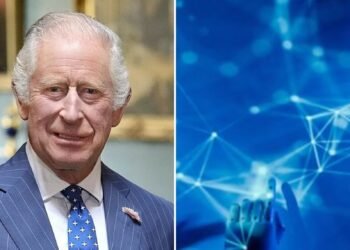
Jamaica has announced that it will formally petition King Charles III for reparations on September 6, with the petition referencing, among other historical atrocities, the 1781 massacre, during which approximately 140 enslaved Africans were thrown overboard the ship Zong en route to Jamaica, so the owners could claim insurance before the vessel eventually arrived in Black River, St. Elizabeth, on December 21, 1781.
Meanwhile, later today, The University of the West Indies (The UWI), in collaboration with Jamaica’s Office of the Prime Minister, will host a high-level dialogue on reparatory justice featuring Ghanaian President John Dramani Mahama and Professor Sir Hilary Beckles.
The discussion is expected to examine the future of the reparations movement and the role of governments and institutions in advancing justice for descendants of enslaved Africans.