More than two decades after having been one of the partners of The Poolthe establishment that marked an era in the tolerance zone of the Santa Fe neighborhood, Omar Guzmán decided to tell his side of the story. He did it in Fuego en la noche, a book in which he reconstructs how the business was born, who frequented it, the anecdotes that marked its years of operation and the way in which, according to him, He operated one of the best-known brothels that Bogotá has ever had.
In an interview with the Presunta Pola podcast, Guzmán assured that he never imagined he would end up managing an establishment of this type. He explained that, at that time, he was dedicated to the entertainment business and live shows, until found the opportunity to acquire, together with other partners, the former Hotel Mediterráneo, located on 22nd Street and Caracas Avenue.
According to him, the inspiration arose during a trip to the Dominican Republic, where he met a hotel that combined lodging with adult shows. The idea was to adapt that model to Bogotá. The old hotel, which was going through a difficult commercial situation, was transformed into an establishment that mixed live shows, artistic presentations, rooms and sex workers.
“We wanted to do something elegant, different from what existed at that time”recalled Guzmán, who assured that the commitment consisted of offering permanent shows with artists and a production similar to an international magazine, beyond the sexual service that characterized this type of establishments.
As the months passed, La Piscina became one of the most recognized places in the Santa Fe neighborhood. and, according to his former partner, also one of the most exclusive. He stated that the high cost of the services meant that the clientele was mainly made up of people with high purchasing power.
Among those who, according to his story, frequented the place there were businessmen, ranchers, emerald workers, actors, footballers and politicians. He also assured that members of illegal armed groups passed through the establishment, who, he says, came exclusively to have fun.
“Everyone who had power got there”said Guzmán, who explained that the business had special booths to protect the identity of high-profile clients. According to your version, These spaces allowed public figures to remain for hours without being seen by other attendees.
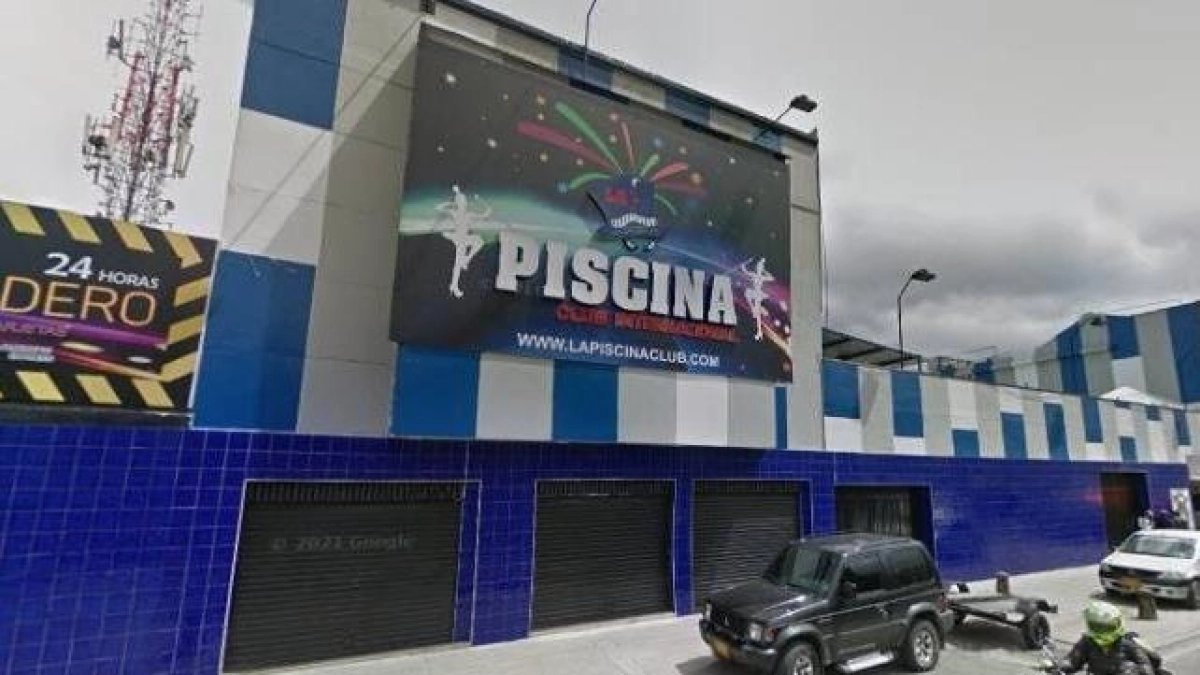
La Piscina nightclub. Photo:Private file.
Confidentiality, he maintained, was one of the establishment’s main rules. After the first visit, The administrators identified the regular clients and assigned them private spaces where they were accompanied by the women they chose.away from common areas.
The former businessman also recalled that many of those visitors returned frequently. During the four years in which he was linked to the business, he assures that He observed how a good part of the clients became regular customers.
Another aspect that he describes in his book is the strict security that, according to him, existed within the establishment. He explained that All people were searched before entering and weapons were not allowed.regardless of the position or influence of the visitor.
That policy, he said, sought avoid acts of violence in an establishment that daily received people with high levels of economic and political power. However, he acknowledged that there were episodes that escaped the control of security personnel.
One of them occurred when gunmen shot a client considered high profile. Guzmán recalled that The attackers broke one of the windows of the establishment and fired several shots. Two people were injured in the legs and the man at whom the attack was allegedly directed managed to protect himself by jumping into the pool.
According to what he said, after the attack The establishment was quickly evacuated and the client left the place escorted by his security detail. Hours later, he said, he returned as if nothing had happened.
The Pool. Photo:Private file
Guzmán also defended the internal organization of the business. He explained that income came mainly from four sources: lfor liquor sales, room rentals, restaurant service, and so-called “fines,” a charge that was made when a client hired a sex worker to leave the establishment for several hours or even several days.
Women, he assured, directly set the value of sexual services, although there was a minimum rate established by the administration. Besides, They received commissions for encouraging the consumption of high-end drinks such as whiskey, cognac or champagne.
Regarding drug consumption, Guzmán maintained that The partners decided from the beginning to keep the business away from microtrafficking. However, he recognized that combating this practice was a complex task due to the permanent presence of vendors in nightlife environments.
The former businessman also regretted the deterioration that, in his opinion, the Santa Fe neighborhood has had since the closure of La Piscina. Consider thatThe area lost the order that existed during those years and today faces greater problems related to micro-trafficking and crime.
All those stories, he assures, were recorded in Fuego en la noche, the book with which he seeks to leave a record of a stage that, for better or worse, was part of the history of Bogotá nightlife.
BOGOTÁ EDITORIAL
Write to us at carmal@eltiempo.com