Monday, July 20, 2026
    The GeoStrategic Consensus
    No Result
    View All Result
    • Login
    • HOME
    • AMERICAS
      • Argentina
      • Brazil
      • Canada
      • Chile
      • Colombia
      • Costa Rica
      • Cuba
      • Dominican Republic
      • Ecuador
      • El Salvador
      • Greenland
      • Guatemala
      • Honduras
      • Mexico
      • Nicaragua
      • Panama
      • Paraguay
      • Peru
      • United States
      • Uruguay
      • Venezuela
    • ASIA-PACIFIC
      • Australia
      • Brunei Darussalam
      • Cambodia
      • China
      • Federated States of Micronesia
      • Fiji
      • Indonesia
      • Japan
      • Kiribati
      • Laos
      • Malaysia
      • Marshall Islands
      • Mongolia
      • Myanmar
      • Nauru
      • New Zealand
      • North Korea
      • Palau
      • Papua New Guinea
      • Philippines
      • Samoa
      • Singapore
      • Solomon Islands
      • South Korea
      • Taiwan
      • Thailand
      • Timor-Leste
      • Tonga
      • Tuvalu
      • Vanuatu
      • Vietnam
    • CARICOM
      • CARICOM – Non-English
        • Haiti
        • Suriname
      • CARICOM Associates
        • Anguilla
        • Bermuda
        • British-Virgin-Islands
        • Cayman-Islands
        • Curacao
        • Turks-and-Caicos
      • CARICOM English
        • Antigua and Barbuda
        • Barbados
        • Belize
        • Dominica
        • Grenada
        • Guyana
        • Jamaica
        • Montserrat
        • Saint Kitts and Nevis
        • Saint Lucia
        • Saint Vincent and the Grenadines
        • The Bahamas
        • Trinidad and Tobago
    • EURASIA
      • Armenia
      • Azerbaijan
      • Balarus
      • Georgia
      • Kazakhstan
      • Kyrgyzstan
      • Moldova
      • Russia
      • Tajikistan
      • Turkmenistan
      • Ukraine
      • Uzbekistan
    • EUROPE
      • Albania
      • Andorra
      • Austria
      • Bosnia and Herzegovina
      • Bulgaria
      • Croatia
      • Cyprus
      • Czech Republic
      • Denmark
      • Estonia
      • Finland
      • France
      • Germany
      • Greece
      • Holy See
      • Hungary
      • Iceland
      • Ireland
      • Italy
      • Kosovo
      • Latvia
      • Liechtenstein
      • Lithuania
      • Luxembourg
      • Malta
      • Monaco
      • Montenegro
      • Netherlands
      • North Macedonia
      • Norway
      • Poland
      • Portugal
      • Romania
      • San Marino
      • Serbia
      • Slovakia
      • Slovenia
      • Spain
      • Sweden
      • Switzerland
      • United Kingdom
    • MIDDLE EAST AND NORTH AFRICA
      • Algeria
      • Bahrain
      • Egypt
      • Iran
      • Iraq
      • Israel
      • Jordan
      • Kuwait
      • Lebanon
      • Lybia
      • Morocco
      • Oman
      • Palestinian Territories
      • Qatar
      • Saudi Arabia
      • Syria
      • Tunisia
      • Turkey
      • United Arab Emirates
      • Western Sahara
      • Yemen
    • SOUTH ASIA
      • Afghanistan
      • Bangladesh
      • Bhutan
      • India
      • Maldives
      • Nepal
      • Pakistan
      • Sri Lanka
    • SUB-SAHARAN AFRICA
      • Angola
      • Benin
      • Botswana
      • Burkina Faso
      • Burundi
      • Cabo Verde
      • Cameroon
      • Central African Republic
      • Chad
      • Comoros
      • Cote d’Ivoire
      • Democratic Republic of the Congo
      • Djibouti
      • Equatorial Guinea
      • Eritrea
      • Eswatini
      • Ethiopia
      • Gabon
      • Gambia
      • Ghana
      • Guinea
      • Guinea Bissau
      • Kenya
      • Lesotho
      • Liberia
      • Madagascar
      • Malawi
      • Mali
      • Mauritania
      • Mauritius
      • Mozambique
      • Namibia
      • Niger
      • Nigeria
      • Republic of the Congo
      • Rwanda
      • Sao Tome and Principe
      • Senegal
      • Seychelles
      • Sierra Leone
      • Somalia
      • South Africa
      • South Sudan
      • Sudan
      • Tanzania
      • Togo
      • Uganda
      • Zambia
      • Zimbabwe
    • HOME
    • AMERICAS
      • Argentina
      • Brazil
      • Canada
      • Chile
      • Colombia
      • Costa Rica
      • Cuba
      • Dominican Republic
      • Ecuador
      • El Salvador
      • Greenland
      • Guatemala
      • Honduras
      • Mexico
      • Nicaragua
      • Panama
      • Paraguay
      • Peru
      • United States
      • Uruguay
      • Venezuela
    • ASIA-PACIFIC
      • Australia
      • Brunei Darussalam
      • Cambodia
      • China
      • Federated States of Micronesia
      • Fiji
      • Indonesia
      • Japan
      • Kiribati
      • Laos
      • Malaysia
      • Marshall Islands
      • Mongolia
      • Myanmar
      • Nauru
      • New Zealand
      • North Korea
      • Palau
      • Papua New Guinea
      • Philippines
      • Samoa
      • Singapore
      • Solomon Islands
      • South Korea
      • Taiwan
      • Thailand
      • Timor-Leste
      • Tonga
      • Tuvalu
      • Vanuatu
      • Vietnam
    • CARICOM
      • CARICOM – Non-English
        • Haiti
        • Suriname
      • CARICOM Associates
        • Anguilla
        • Bermuda
        • British-Virgin-Islands
        • Cayman-Islands
        • Curacao
        • Turks-and-Caicos
      • CARICOM English
        • Antigua and Barbuda
        • Barbados
        • Belize
        • Dominica
        • Grenada
        • Guyana
        • Jamaica
        • Montserrat
        • Saint Kitts and Nevis
        • Saint Lucia
        • Saint Vincent and the Grenadines
        • The Bahamas
        • Trinidad and Tobago
    • EURASIA
      • Armenia
      • Azerbaijan
      • Balarus
      • Georgia
      • Kazakhstan
      • Kyrgyzstan
      • Moldova
      • Russia
      • Tajikistan
      • Turkmenistan
      • Ukraine
      • Uzbekistan
    • EUROPE
      • Albania
      • Andorra
      • Austria
      • Bosnia and Herzegovina
      • Bulgaria
      • Croatia
      • Cyprus
      • Czech Republic
      • Denmark
      • Estonia
      • Finland
      • France
      • Germany
      • Greece
      • Holy See
      • Hungary
      • Iceland
      • Ireland
      • Italy
      • Kosovo
      • Latvia
      • Liechtenstein
      • Lithuania
      • Luxembourg
      • Malta
      • Monaco
      • Montenegro
      • Netherlands
      • North Macedonia
      • Norway
      • Poland
      • Portugal
      • Romania
      • San Marino
      • Serbia
      • Slovakia
      • Slovenia
      • Spain
      • Sweden
      • Switzerland
      • United Kingdom
    • MIDDLE EAST AND NORTH AFRICA
      • Algeria
      • Bahrain
      • Egypt
      • Iran
      • Iraq
      • Israel
      • Jordan
      • Kuwait
      • Lebanon
      • Lybia
      • Morocco
      • Oman
      • Palestinian Territories
      • Qatar
      • Saudi Arabia
      • Syria
      • Tunisia
      • Turkey
      • United Arab Emirates
      • Western Sahara
      • Yemen
    • SOUTH ASIA
      • Afghanistan
      • Bangladesh
      • Bhutan
      • India
      • Maldives
      • Nepal
      • Pakistan
      • Sri Lanka
    • SUB-SAHARAN AFRICA
      • Angola
      • Benin
      • Botswana
      • Burkina Faso
      • Burundi
      • Cabo Verde
      • Cameroon
      • Central African Republic
      • Chad
      • Comoros
      • Cote d’Ivoire
      • Democratic Republic of the Congo
      • Djibouti
      • Equatorial Guinea
      • Eritrea
      • Eswatini
      • Ethiopia
      • Gabon
      • Gambia
      • Ghana
      • Guinea
      • Guinea Bissau
      • Kenya
      • Lesotho
      • Liberia
      • Madagascar
      • Malawi
      • Mali
      • Mauritania
      • Mauritius
      • Mozambique
      • Namibia
      • Niger
      • Nigeria
      • Republic of the Congo
      • Rwanda
      • Sao Tome and Principe
      • Senegal
      • Seychelles
      • Sierra Leone
      • Somalia
      • South Africa
      • South Sudan
      • Sudan
      • Tanzania
      • Togo
      • Uganda
      • Zambia
      • Zimbabwe
    No Result
    View All Result
    Agentially
    No Result
    View All Result
    Home SOUTH ASIA India

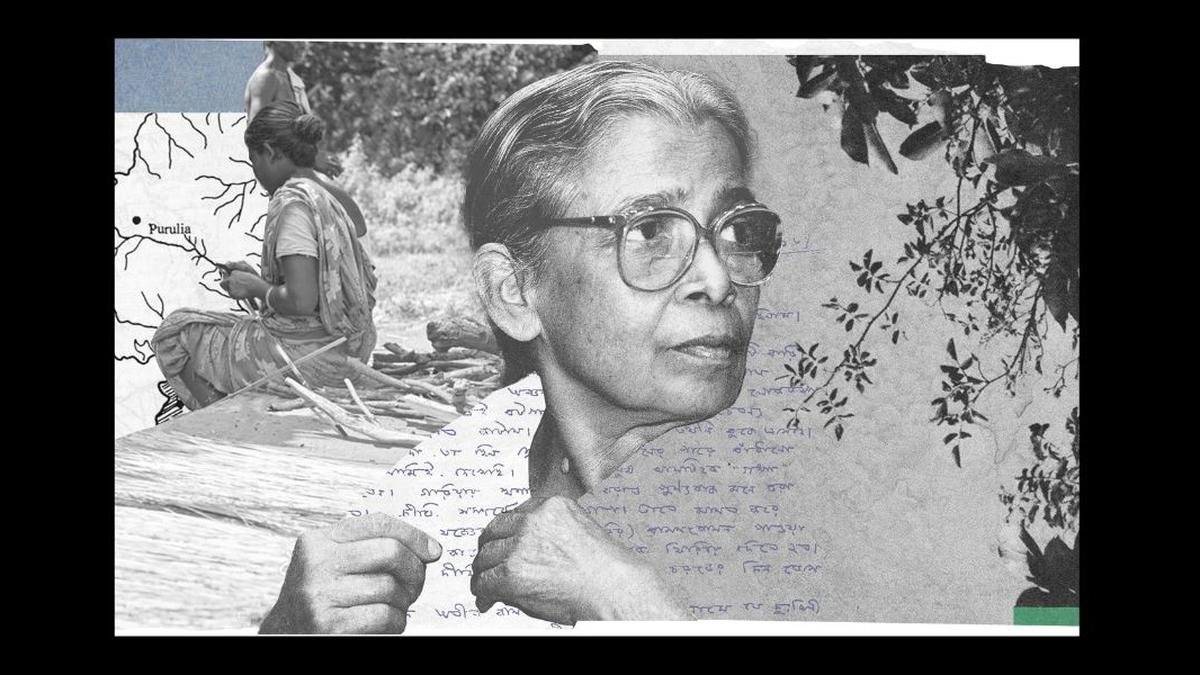
    Mahasweta Devi at 100: Why her greatest legacy lies in the Adivasi movements she helped build

    The Analyst by The Analyst
    July 19, 2026
    in India
    Mahasweta Devi at 100: Why her greatest legacy lies in the Adivasi movements she helped build


    If not for a chance encounter during his years as a rickshaw-puller, the world may never have discovered one of Bengal’s most celebrated Dalit writers. At this year’s The Hindu Lit for Life, former refugee-turned-Naxalite-turned- writer-turned-politician Manoranjan Byapari recalled giving a rickshaw ride to a bespectacled, elderly professor in a sari and jhola from Kolkata’s Vijaygarh Jyotish Ray College. His inquiry into the meaning of the word jijivisha (enduring will to live) piqued the professor’s interest. She urged him to write for Bortika, the working-class magazine she edited. Before alighting, she scribbled her address on a slip of paper and signed it: Mahasweta Devi.

    “Just like Goddess Saraswati emerged in front of Kalidasa, Mahasweta appeared in front of this rickshaw-wallah,” Byapari said. “She recognised that a writer was hiding within me.”

    Dalit writer and politician Manoranjan Byapari.

    Dalit writer and politician Manoranjan Byapari.
    | Photo Credit:
    Getty Images

    Over six decades, one of the foremost voices of modern Bengal’s literary conscience did not simply write about the marginalised, she encouraged them to tell their own stories. This year marks Mahasweta Devi’s birth centenary (January 14, 1926). A decade after her death (July 28, 2016), she remains a towering figure of Bengali literature, having written more than 100 books, around 350 short stories, and hundreds of essays, columns and reports.

    Yet her greatest legacy lies beyond literature; in the grassroots movements she helped build.

    The Dhaka-born, Santiniketan-bred Mahasweta Devi spent her life writing about the lives of Adivasis and women, refusing to let history reduce them to statistics and anecdotes. Her writing was naked; she never sugar-coated the brutality of life to suit the bhadralok (urban elite). She shifted the centre of her gravity to the forests, prisons, tribal settlements, and student movements. She travelled everywhere with a notepad, taking running notes of life as it unfolded. For Mahasweta, writing was never the end of engagement; it was one part of a larger political practice. Nowhere is that legacy more visible than among the Kheria Sabars of Bengal’s forested Purulia.

    A community remembers

    The traditionally landless, nomadic hunter-gatherers still remember how their Maa (mother) worked tirelessly for their dignity and fought bureaucracies as fiercely as she wrote about injustice. The Kheria Sabars are one of India’s denotified tribes, branded “born criminals” under the British colonial Criminal Tribes Act of 1871.

    In Rajnowagarh area, a two-room mud house called ‘Mahasweta Bhawan’ preserves her bed, her books, and her photographs on the walls. Her close confidant Prasanta Rakshit, 66, has lived here over four decades.

    Prasanta Rakshit, director of Paschim Banga Kheria Sabar Kalyan Samity, Purulia.

    Prasanta Rakshit, director of Paschim Banga Kheria Sabar Kalyan Samity, Purulia.
    | Photo Credit:
    Shrabana Chatterjee

    On November 10, 1983, Rakshit accompanied Mahasweta to a Sabar mela (fair) in Maldih village. There, they met Paschim Banga Kheria Sabar Kalyan Samity founder Gopiballav Singdeo. The community-based Samity works for the welfare of the Sabars of Purulia and Bankura districts.

    Rakshit never left. As the director of the Samity next door, he continues Didi’s (elder sister) work: assists families with land records, legal cases, government paperwork, runs a girls’ hostel, etc.

    Prasanta Rakshit has been Mahasweta Devi’s close confidant who carries forward her work for the Kheria Sabars.

    Prasanta Rakshit has been Mahasweta Devi’s close confidant who carries forward her work for the Kheria Sabars.
    | Photo Credit:
    Special arrangement

    Recalling how Didi’s writings redefined life for thousands, Rakshit says, “We just wanted her pen.” Singdeo invited Mahasweta to write about the community’s trials. The Adivasis, too, wanted the power of her pen.

    Beyond the pages

    For the Sabars, Mahasweta’s writing was never confined to books.

    “She never asked anyone for a single favour for herself. That’s why she never had any problem asking for the rights of others. She did not shy away from questioning officers or the authority when she saw wrongs unfolding,” Rakshit says.

    Mahasweta Devi with then fellow activist Gayatri Chakravorty Spivak (second from left) in Purulia.

    Mahasweta Devi with then fellow activist Gayatri Chakravorty Spivak (second from left) in Purulia.
    | Photo Credit:
    Special arrangement

    That resolve was tested after the custodial torture and death of Budhan Sabar, a person with disability in Purulia, in 1998. It was declared a death by suicide. An outraged Mahasweta wrote to the Chief Justice of Calcutta High Court seeking a second post-mortem. By then, many journalists got wind of the suspicious death and came looking for answers. After the Central Bureau of Investigation took over the trial, charges were framed against the police.

    For Jaladhar Sabar, 65, the case reflects a familiar pattern. “Even my father was taken away by the police on suspicion of theft. Whenever there was a theft nearby, we were the easy targets. We were beaten because people believed we were ‘born criminals’,” Jaladhar says. Rakshit still responds with the same question: “If someone is truly a born criminal, why are they living under broken roofs instead of in mansions?”

    Budhan’s death became a turning point in the struggle for the rights of denotified tribes. Along with linguist Ganesh Devy, Mahasweta helped establish Budhan Theatre in Ahmedabad in 1998, where members of Gujarat’s Chhara denotified tribe staged plays based on Budhan’s life and custodial torture. His story became a symbol of the discrimination the denotified communities faced.

    Justice, however, came slowly. Budhan’s widow, Shyamoli, and Rakshit pursued the case for more than two decades before a Purulia court convicted the accused in 2023. Mahasweta did not live to see the verdict.

    She also wasn’t alive when the shackles were removed from tribal leader and freedom fighter Birsa Munda’s sculpture in Ranchi’s Birsa Chowk. She’d raised the issue at a meeting in early ’80s, remembers Achintya Ganguly, a senior journalist from Jharkhand.

    Achintya Ganguly, senior journalist from Jharkhand.

    Achintya Ganguly, senior journalist from Jharkhand.
    | Photo Credit:
    Special arrangement

    Yet, in the villages where she once walked, people insist her work never really ended.

    Voices from the ground

    Jaladhar, who lives in the Kuda hamlet, far away from the rest of the habitation, is an example of how deeply Mahasweta shaped lives on the ground.

    Jaladhar Sabar, secretary of Paschim Banga Kheria Sabar Kalyan Samity, Purulia.

    Jaladhar Sabar, secretary of Paschim Banga Kheria Sabar Kalyan Samity, Purulia.
    | Photo Credit:
    Shrabana Chatterjee

    In 1968, it was in his courtyard, where the Sabars from Bengal, Jharkhand, and Odisha gathered for the first time, organising against the atrocities they faced. This is where the Samity was born.

    Young Kheria Sabar learners at the community centre, where the Samity  was founded.

    Young Kheria Sabar learners at the community centre, where the Samity was founded.
    | Photo Credit:
    Shrabana Chatterjee

    Jaladhar, whose father failed to send him for his class X exams for the lack of ₹50 and five kilograms of rice, what constituted fees in those days, instead held Mahasweta’s hand since 1983 to work for his community. Today, as the Samity’s secretary, Jaladhar redefines how society sees the young people of his tribe.

    From once shunned as “thieves” and untouchables, and not allowed to wear clothes (besides a small loin cloth), Sabars are now graduates, school teachers and artists, preserving their indigenous knowledge and craft. However, change remains incomplete. Many are first-generation learners and are struggling to find stable livelihoods, often relying on minor odd jobs.

    Mahadev Toppo, a writer from the Oraon community.

    Mahadev Toppo, a writer from the Oraon community.
    | Photo Credit:
    Shrabana Chatterjee

    That belief in self- representation defined Mahasweta’s politics as much as her writing. Like Byapari, Ranchi-based Oraon writer Mahadev Toppo credits her with urging him to write. She’d often tell him, “No matter how big or small, Toppo, write about whatever aches your heart, one day your small idea will also become big. You must write about your community.”

    Bortika, a working-class magazine that was edited and published by Mahasweta Devi until 2015, when it wrapped up.

    Bortika, a working-class magazine that was edited and published by Mahasweta Devi until 2015, when it wrapped up.
    | Photo Credit:
    Shrabana Chatterjee

    She offered the same encouragement to Sabar writers through Bortika, her now-out-of-print quarterly Bengali magazine that was once helmed by her radical poet-writer father Manish Ghatak. She let their stories go unedited, much like how she never “let newspapers in Kolkata edit her stories”, Rakshit adds.

    Living her characters

    Mahasweta’s immersion in the lives she wrote about was neither performative nor at a remove. She lived among, and kept returning to, the community.

    Rakshit recalls once criticising a 37-page manuscript she’d written in the local dialect of Purulia, which was not her native tongue. “When asked for feedback, I told her it felt synthetic,” he says. Mahasweta quietly tore it all up and threw it in the dustbin. “I was concerned that I may have overstepped. But she wasn’t bitter. She rewrote the entire piece in the Bengali she spoke,” he adds. That willingness to listen shaped her literature as much as her activism.

    In novels like Aranyer Adhikar (Right to the Forest, 1977) and Chotti Munda Ebong Tar Teer (Chotti Munda and His Arrow, 1979), and short story Draupadi (1981), she chronicled dispossession, state violence, caste oppression, and Adivasi resistance with a realism that was unusual in Indian literature. “Many have written about Adivasis while sitting in cities,” says Ranendra, Ranchi-based former director of the Tribal Research Institute in Jharkhand. “Mahasweta wrote from the ground.” He points to Draupadi, where Dopdi Mejhen’s refusal to clothe herself after custodial rape transforms her violated body into an act of resistance. “From the pages of the book, it became a revolution on the ground… This was Mahasweta’s achievement,” Ranendra says.

    Ranendra, Ranchi-based former director of the Tribal Research Institute in Jharkhand. 

    Ranendra, Ranchi-based former director of the Tribal Research Institute in Jharkhand. 
    | Photo Credit:
    Special arrangement

    She also turned her gaze towards urban Bengal. Set against the backdrop of the ’70s Naxalite movement, her 1974 novella Hajar Churashir Maa (Mother of 1084) — which Govind Nihalani adapted into a film starring Jaya Bachchan and Anupam Kher in 1998 — examined political violence, motherhood and the moral failures of Bengali bhadralok (upper- and middle-classes).

    Echoes of an enduring life

    Bengal, however, shied away from giving her State literary awards, even as it had awarded her estranged, radical writer-son Nabarun Bhattacharya years ago. Mahasweta won several national and international honours, including the Jnanpith Award (1996), Ramon Magsaysay Award (1997), Sahitya Akademi Award (1979), Padma Shri (1986), and Padma Vibhushan (2006), among others. But awards didn’t define her. Rakshit says, the prize money found its way back to the work on the ground through the Samity.

    Her commitment also made her politically inconvenient. The lifelong Marxist questioned governments of every persuasion, from the Left party to Trinamool Congress (TMC), after supporting the TMC-led movement against land acquisition in Singur and Nandigram in the late 2000s. She challenged bureaucrats and publicly intervened whenever the State failed the dispossessed. “The Left party that they grew up with refused to introspect, and she felt the change… But going forward, she was also disappointed with the Mamata regime and eventually distanced herself from them,” says her friend and publisher Naveen Kishore.

    Retired Delhi University professor Nandita Basu.

    Retired Delhi University professor Nandita Basu.
    | Photo Credit:
    Special arrangement

    Retired Delhi University professor Nandita Basu, now based in the U.S., who met Mahasweta in the ’80s, remembers her as saying: “It is not an easy task for a woman writer to take on the authority of the State on multiple occasions.” Prof. Basu adds, “Before her, many others had written about tribal suffering. Mahasweta also wrote about resistance from within the community; that is inspiring.”

    So relentless was her intervention that admirers jokingly called it the “Mahasweta government” — not an institution but a woman with a pen, a stack of letterheads and an unwavering refusal to let bureaucratic indifference go unchallenged. Hundreds of Adivasis who came to Kolkata seeking help, knew they could knock on the door of her Ballygunge home. She ensured they never left her house hungry.

    READ ALSO

    Is OnePlus exiting India? Explained

    Beyond weight loss: how GLP-1s can affect your skin, hair and nails

    Today, as Adivasis in Madhya Pradesh affected by the Ken-Betwa river-linking project stage a ‘Chita Andolan’ (funeral pyre protest), Mahasweta’s words speak louder than ever. Her work echoes in Bengal and Jharkhand’s villages, where people remember her not just as a literary icon but as their Didi or Maa, who stood beside them when few others did.

    And, “they only wanted her pen”.

    Disquiet at home

    Mahasweta Devi, to borrow Spivak’s words, “comes from the so-called Bengal Renaissance”. And yet, her own life was far removed from literary romanticism. Born in Dhaka, in a prominent Bengali literary family (social worker-writer mother, poet-writer father, and arthouse filmmaker-uncle Ritwik Ghatak), she recalled, on a Doordarshan TV interview, about marrying into “poverty and struggle”. “That was my first-hand experience with the other side of the society,” she said. During those difficult years, she worked as a teacher, sold soap and tea leaves, and even had a failed attempt at supplying research monkeys to the U.S.

    Her “real inspiration to writing”, she recalled in the interview, came in 1950s Bombay, where her then husband, playwright-actor and Indian People’s Theatre Association (IPTA) founder member Bijon Bhattacharya, was writing the screenplay for the Vyjayanthimala-starrer Nagin (1954). [Decades later, her own short story Rudali (1979) would inspire Gulzar and Kalpana Lajmi to write the eponymous 1993 Dimple Kapadia-starrer film.]

    In Bombay, she read V.D. Savarkar’s 1909 book, The Indian War of Independence of 1857. The section on Rani of Jhansi sparked what she later called “a mad desire” to write the queen’s biography. She learnt Marathi, consulted the queen’s nephew, travelled extensively in Madhya Pradesh, and combined archival research with oral histories of ordinary soldiers, women, Dalit communities, etc. Her debut, Jhansir Rani (1956), birthed a writer who challenged elite nationalism.

    Her complicated relationship with her son [Nabarun Bhattacharya aka Bappa, estranged since her divorce], however, pricked her for a lifetime. Mahasweta regretted it, but in the bigger scheme of things, she had so many priorities that fights and turbulence of relationships were not something she harboured in her heart for long. By the end of her life, dementia had set in, and it was all a fog, says Kishore.
    Source link

    Related Posts

    Is OnePlus exiting India? Explained
    India

    Is OnePlus exiting India? Explained

    July 20, 2026
    Beyond weight loss: how GLP-1s can affect your skin, hair and nails
    India

    Beyond weight loss: how GLP-1s can affect your skin, hair and nails

    July 20, 2026
    India’s first privately developed orbital-class rocket Vikram-1 set for July 18 lift-off
    India

    India’s first privately developed orbital-class rocket Vikram-1 set for July 18 lift-off

    July 20, 2026
    Knowledge work in the age of agentic AI
    India

    Knowledge work in the age of agentic AI

    July 20, 2026
    Thousands brave torrential rain to witness iconic Aanayoottu ritual at temple in Kerala’s Thrissur
    India

    Thousands brave torrential rain to witness iconic Aanayoottu ritual at temple in Kerala’s Thrissur

    July 19, 2026
    Anurag Kumar is new Delhi Police Commissioner: Who is he?
    India

    Anurag Kumar is new Delhi Police Commissioner: Who is he?

    July 19, 2026
    Next Post
    It was emphasized to provide uniform financing services in the country

    It was emphasized to provide uniform financing services in the country

    POPULAR NEWS

    Accommodations filling up as wildfires spur more evacuations in northwestern Ontario

    Accommodations filling up as wildfires spur more evacuations in northwestern Ontario

    July 14, 2026
    Opinion | Parental Consent in the Smartphone Age

    Opinion | Parental Consent in the Smartphone Age

    July 6, 2026
    Hungary…the best team in history – Al-Shorouk Online

    Hungary…the best team in history – Al-Shorouk Online

    July 6, 2026
    Sports: Of the 12 Cuban canoeists who traveled to Canada, nine do not return to the Island

    Sports: Of the 12 Cuban canoeists who traveled to Canada, nine do not return to the Island

    July 16, 2026
    Ex-girlfriend of Graham Platner says he removed condoms without consent

    Ex-girlfriend of Graham Platner says he removed condoms without consent

    July 7, 2026

    EDITOR'S PICK

    Marc Martinho and Alan Mitjana will fight for the gold

    Marc Martinho and Alan Mitjana will fight for the gold

    July 15, 2026
    Shelter head repeats call for emergency powers to protect homeless

    Shelter head repeats call for emergency powers to protect homeless

    July 9, 2026
    India lose another series as T20 crisis deepens

    India lose another series as T20 crisis deepens

    July 9, 2026
    Vodafone and One “rip off” Albanians, communication fees, 7.6% higher than the EU average – Shqip.com

    Vodafone and One “rip off” Albanians, communication fees, 7.6% higher than the EU average – Shqip.com

    July 10, 2026

    Recent Posts

    • Volcano disrupts flights
    • MN Holdings secures SC approval for Main Market transfer
    • Development activities inspected in Shan (South), Kayah states
    • opinion This resignation tastes very bland A column by Nikolaus Blome

      © 2026 Agentially - Navigating shifting sovereignties and global risk .

      Welcome Back!

      Login to your account below

      Forgotten Password?

      Retrieve your password

      Please enter your username or email address to reset your password.

      Log In
      No Result
      View All Result
      • HOME
      • AMERICAS
        • Argentina
        • Brazil
        • Canada
        • Chile
        • Colombia
        • Costa Rica
        • Cuba
        • Dominican Republic
        • Ecuador
        • El Salvador
        • Greenland
        • Guatemala
        • Honduras
        • Mexico
        • Nicaragua
        • Panama
        • Paraguay
        • Peru
        • United States
        • Uruguay
        • Venezuela
      • ASIA-PACIFIC
        • Australia
        • Brunei Darussalam
        • Cambodia
        • China
        • Federated States of Micronesia
        • Fiji
        • Indonesia
        • Japan
        • Kiribati
        • Laos
        • Malaysia
        • Marshall Islands
        • Mongolia
        • Myanmar
        • Nauru
        • New Zealand
        • North Korea
        • Palau
        • Papua New Guinea
        • Philippines
        • Samoa
        • Singapore
        • Solomon Islands
        • South Korea
        • Taiwan
        • Thailand
        • Timor-Leste
        • Tonga
        • Tuvalu
        • Vanuatu
        • Vietnam
      • CARICOM
        • CARICOM – Non-English
          • Haiti
          • Suriname
        • CARICOM Associates
          • Anguilla
          • Bermuda
          • British-Virgin-Islands
          • Cayman-Islands
          • Curacao
          • Turks-and-Caicos
        • CARICOM English
          • Antigua and Barbuda
          • Barbados
          • Belize
          • Dominica
          • Grenada
          • Guyana
          • Jamaica
          • Montserrat
          • Saint Kitts and Nevis
          • Saint Lucia
          • Saint Vincent and the Grenadines
          • The Bahamas
          • Trinidad and Tobago
      • EURASIA
        • Armenia
        • Azerbaijan
        • Balarus
        • Georgia
        • Kazakhstan
        • Kyrgyzstan
        • Moldova
        • Russia
        • Tajikistan
        • Turkmenistan
        • Ukraine
        • Uzbekistan
      • EUROPE
        • Albania
        • Andorra
        • Austria
        • Bosnia and Herzegovina
        • Bulgaria
        • Croatia
        • Cyprus
        • Czech Republic
        • Denmark
        • Estonia
        • Finland
        • France
        • Germany
        • Greece
        • Holy See
        • Hungary
        • Iceland
        • Ireland
        • Italy
        • Kosovo
        • Latvia
        • Liechtenstein
        • Lithuania
        • Luxembourg
        • Malta
        • Monaco
        • Montenegro
        • Netherlands
        • North Macedonia
        • Norway
        • Poland
        • Portugal
        • Romania
        • San Marino
        • Serbia
        • Slovakia
        • Slovenia
        • Spain
        • Sweden
        • Switzerland
        • United Kingdom
      • MIDDLE EAST AND NORTH AFRICA
        • Algeria
        • Bahrain
        • Egypt
        • Iran
        • Iraq
        • Israel
        • Jordan
        • Kuwait
        • Lebanon
        • Lybia
        • Morocco
        • Oman
        • Palestinian Territories
        • Qatar
        • Saudi Arabia
        • Syria
        • Tunisia
        • Turkey
        • United Arab Emirates
        • Western Sahara
        • Yemen
      • SOUTH ASIA
        • Afghanistan
        • Bangladesh
        • Bhutan
        • India
        • Maldives
        • Nepal
        • Pakistan
        • Sri Lanka
      • SUB-SAHARAN AFRICA
        • Angola
        • Benin
        • Botswana
        • Burkina Faso
        • Burundi
        • Cabo Verde
        • Cameroon
        • Central African Republic
        • Chad
        • Comoros
        • Cote d’Ivoire
        • Democratic Republic of the Congo
        • Djibouti
        • Equatorial Guinea
        • Eritrea
        • Eswatini
        • Ethiopia
        • Gabon
        • Gambia
        • Ghana
        • Guinea
        • Guinea Bissau
        • Kenya
        • Lesotho
        • Liberia
        • Madagascar
        • Malawi
        • Mali
        • Mauritania
        • Mauritius
        • Mozambique
        • Namibia
        • Niger
        • Nigeria
        • Republic of the Congo
        • Rwanda
        • Sao Tome and Principe
        • Senegal
        • Seychelles
        • Sierra Leone
        • Somalia
        • South Africa
        • South Sudan
        • Sudan
        • Tanzania
        • Togo
        • Uganda
        • Zambia
        • Zimbabwe

      © 2026 Agentially - Navigating shifting sovereignties and global risk .

      This website uses cookies. By continuing to use this website you are giving consent to cookies being used. Visit our Privacy and Cookie Policy.