The senator and pre-candidate for President Flavio Bolsonaro (PL-RJ) sent to the government of United States a document in which it offers commercial advantages to Americans, such as the elimination of tariffs for the ethanol and reducing the tax burden on credit card companies.
In the dossier sent to the USTR (Office of the US Trade Representative) by the senator’s office, Flávio defends Pix as one of the milestones of the Bolsonaro administration and disputes the allegations of conflict of interest made by the Trump administration, pointing out that the Fed, the American central bank, also operates a payment tool called FedNow.
Despite this, it proposes a “legislative commitment” that Pix will not be connected to “non-Western” cross-border settlement arrangements — in reference to China. Today the instant payments system does not make international transfers, and the document does not make clear what this veto of foreign systems would be like.
The PL senator proposes the “aggressive pursuit” of trade agreements that increase trade and investment between the two nations. In this sense, he proposes that Brazil “free itself from the bonds” of Mercosur — the trade bloc restricts bilateral negotiations — as Argentine president, Javier Milei, did.
When criticizing Mercosur, Flávio repeats the rhetoric of the beginning of his father’s government, former president Jair Bolsonaro (PL), who pursued an agenda contrary to the bloc.
As shown by Sheet, the same document argues that the application of a new 25% tariff based on USTR investigations is a political error that will help President Lula (PT)Flávio’s likely opponent in this year’s elections.
The senator also proposes reducing the regulatory and tax burden on credit cards — a market dominated by American companies Visa and Mastercard.
“Private payment instruments today carry a regulatory and tax burden that suppresses competition instead of promoting it”, says the text from Flávio’s office. “Reducing this burden (…) would expand consumer choice, reduce the cost of voluntary exchanges and support economic growth.”
The alleged damage caused to American firms by Pix was one of the arguments that supported the USTR investigation against Brazil.
The document also proposes a “zero-to-zero agreement” on the issue of ethanol, virtually eliminating Brazilian tariffs on American alcohol. “A good faith negotiation between the two nations should be able to allow both parties to work towards a reciprocal zero-for-zero agreement on ethanol and sugar.”
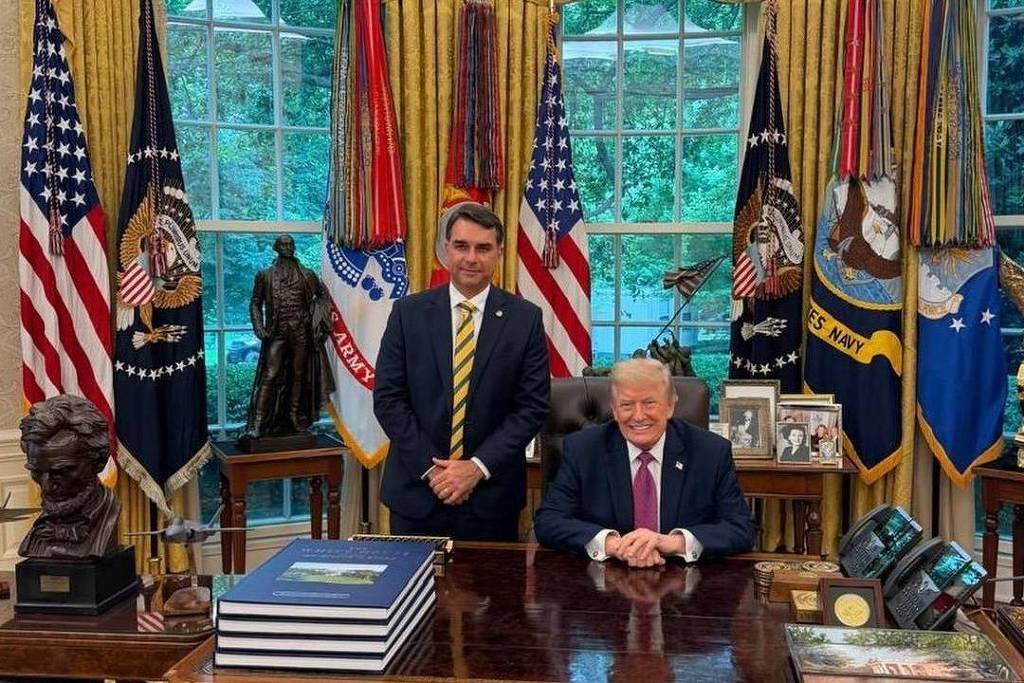
The document sent by Flávio to the USA highlights that he is a senator of the Republic, a prominent opposition figure and pre-candidate for the Presidency. He also remembers that the senator met with Trumpwith Vice JD Vance and Secretary of State, Marco Rubio.
The text suggests that the United States suspend, at least until the election, the process of applying the 25% tariffs proposed by the USTR and open a negotiation table on the six items mentioned in the trade investigation: digital trade, preferential tariff treatment, corruption, intellectual property, ethanol and deforestation.