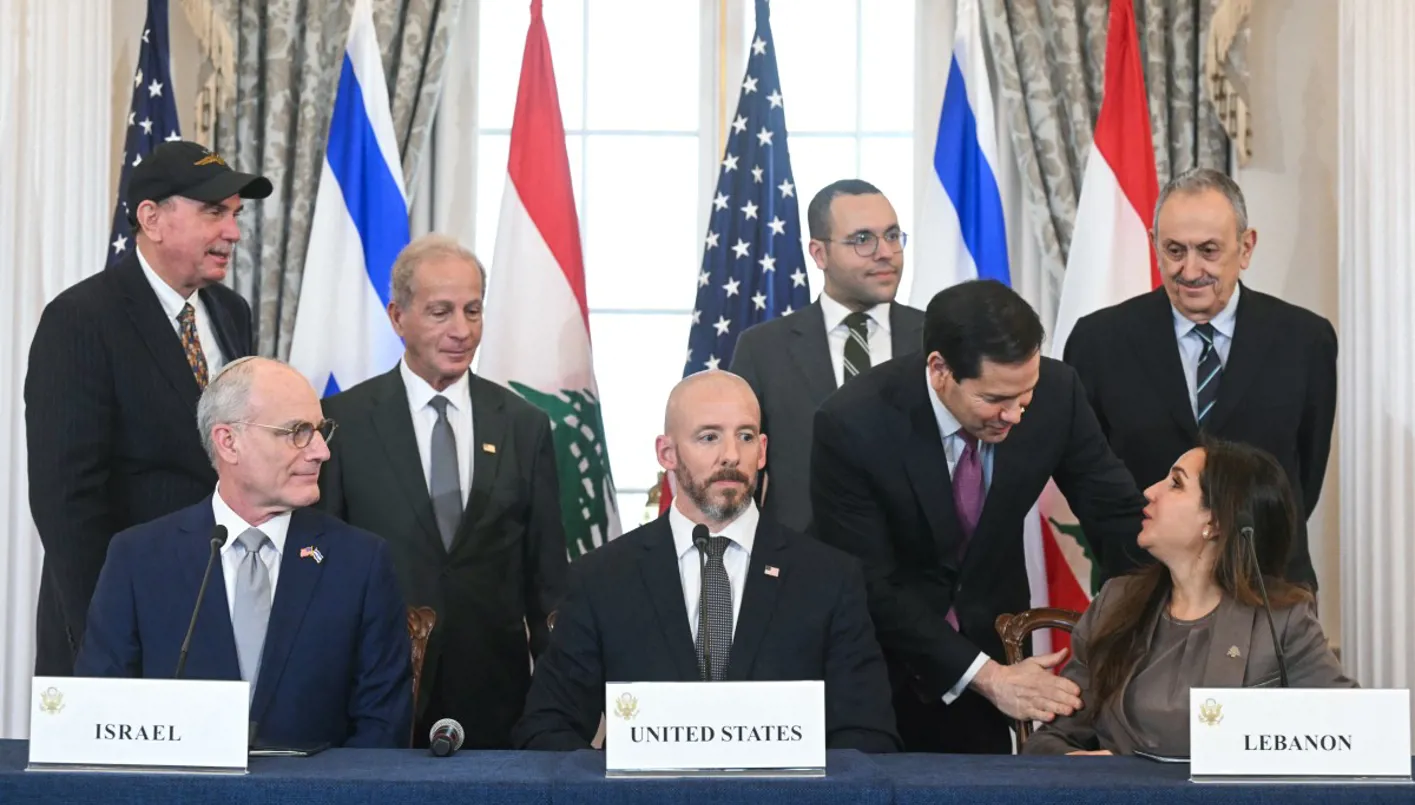
Raised the framework agreement signed between Lebanon andIsraelWhich includes 14 items and a secret security annex under supervision USThere was widespread interaction in Israel, where positions ranged between considering it a political and security achievement that might open the door to ending WarWarning that its success will remain dependent on the implementation phase, in light of doubts about the Lebanese state’s ability to implement its obligations, and rejecting Iran and”Hezbollah“Agreement.
Political achievement or new concession?
Presented by the Israeli Prime Minister Benjamin Netanyahu He described the agreement as a “political achievement,” considering that its most notable achievement was “Lebanon’s recognition of Israel’s right to establish a buffer zone and remain there as long as the security threat persists.” He also saw that it constituted a blow to Iran and Hezbollah, after their attempts failed, as he put it, to impose a complete Israeli withdrawal from… South Lebanon.
Energy Minister Eli Cohen went in the same direction, describing the agreement as a “historic achievement” and “a very harsh blow to Iran and Hezbollah,” considering that it establishes a partnership between Lebanon and Israel to dismantle the party’s weapons. But at the same time, he acknowledged that disarmament would not be achieved quickly, saying that he did not expect this to happen “tomorrow or the day after.”
On the other hand, opposition leader Yair Lapid criticized the agreement, considering that Netanyahu “again agreed to withdraw from Lebanese territory without receiving any compensation, and without achieving a separation between the Iranian and Lebanese arenas.”
American pressure and the scenes of negotiations
Away from the political debate, the Israeli media focused on the circumstances surrounding the birth of the agreement, before moving on to evaluate the chances of its success and the obstacles it may face.
Israeli Channel 12 revealed that the agreement was not the result of easy understandings, but rather came after “intensive negotiations and political pressure exerted by the American administration through three parallel tracks that included the framework agreement, the security annex, and the withdrawal agreement, and were divided between two security and political tracks.”
She added, “The differences widened after Netanyahu and the Lebanese president adhered Joseph Aoun With their positions regarding the borders and areas of withdrawal, what prompted Washington To extend the negotiations after it was not possible to narrow the gaps between the two sides.
According to the channel, the US Secretary of State conducted… Marco Rubio Eight calls with Netanyahu and the Lebanese leadership, stressing that completing the agreement is a priority for the US President Donald TrumpWhile the Americans informed the Lebanese and Israeli delegations that postponing the signing was no longer an option.
The report also talked about a call described as “critical” between the Israeli ambassador to Washington, Yechiel Leiter, Netanyahu and a number of senior Israeli officials, which witnessed tension after Leiter rejected Netanyahu’s reservations and demanded that he approve the agreement.
Regarding the security annex, the Israeli channel i24 News reported that “the Israeli army is allowed to return to the areas from which it withdraws if security conditions require it,” a clause that Israeli media considers to be one of the most prominent guarantees it insisted on. Tel Aviv To be included in the agreement.
Implementation tests
For his part, political analyst in the newspaper “Israel Today” Yoav Limor said that the history of Israeli-Lebanese relations is “full of agreements that did not achieve significant results,” so it remains unclear how the new agreement will be implemented. He considered that its success depends largely on the Trump administration, adding that “the agreement seems good in theory, but the path to its implementation is long and arduous, while previous experiences indicate that its chances of success are limited.”
Limor identified three main challenges facing the agreement. The first is the possibility of a claim Israeli army By quickly withdrawing from South LebanonThis may allow Hezbollah to rebuild its presence in the areas that the army will vacate.
The second challenge, according to Limor, is related to “ability Lebanese Army “It must implement its commitments,” as Israel fears, based on previous experiences, that it will accomplish “only part of the mission,” allowing the party to gradually return to the region.
The third challenge is the issue of separating the Lebanese arena from Iran, as the agreement stipulates that Lebanon refuses any state or non-state entity to use force on its behalf, which Limor sees as an acknowledgment that Iranian influence harms Lebanese interests.
But Limor believes that the real test begins after the agreement enters into force, noting that the Israeli army is currently stationed in the north Beaufort Castle In the vicinity of the town of Kafr Tibnit, where Hezbollah has established, according to its assessment, a central infrastructure for command and control with significant Iranian investments, while the agreement prevents Israel from moving unilaterally against these sites.
He added that Iran will most likely seek to “preserve and support Hezbollah,” also benefiting from its negotiations with the United States in an attempt to influence the agreement, while the American challenge, according to his vision, remains based on separating the Lebanese and Iranian tracks.
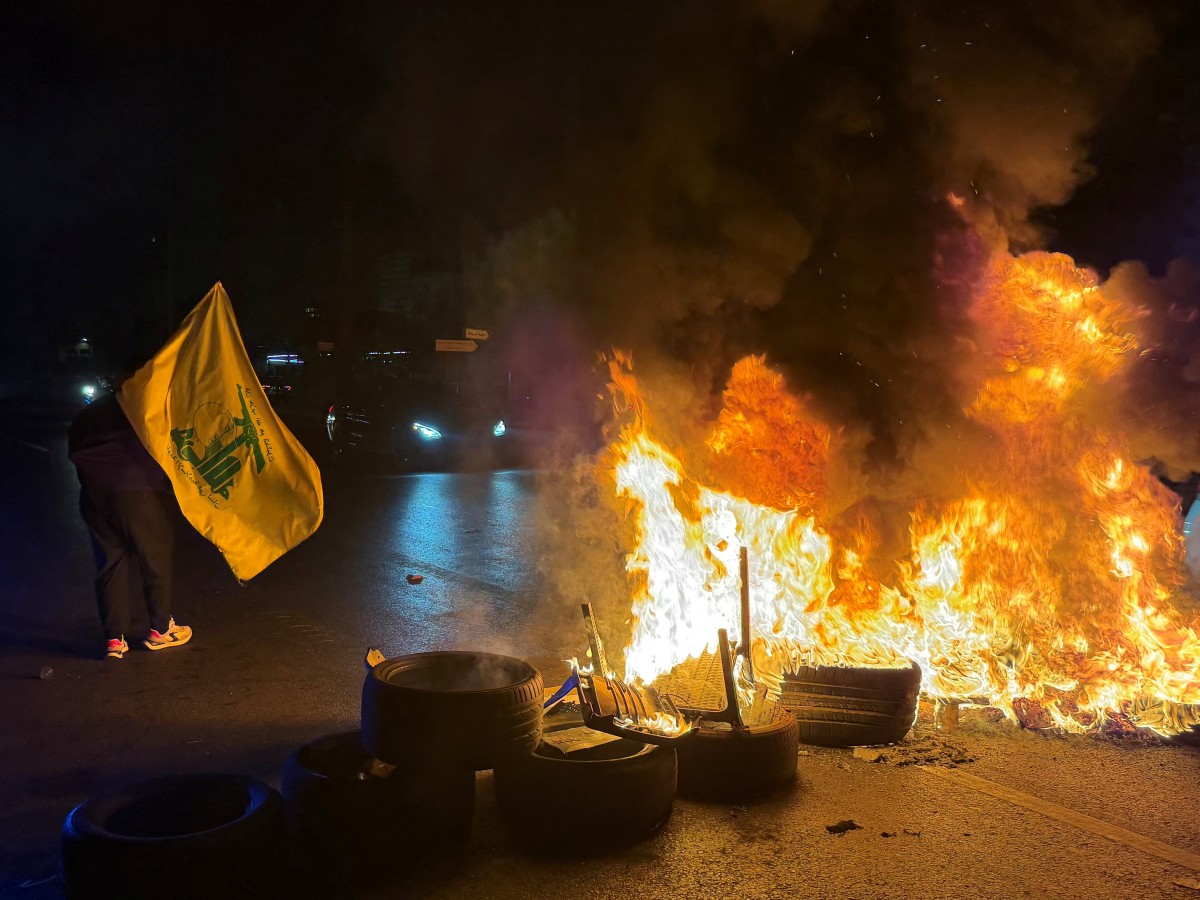
Supporters
Gaps reduce the chances of success
In turn, Yedioth Ahronoth security analyst Ronen Bergman believed that the agreement lacks essential elements that “may limit its chances of success,” most notably “the absence of a clear timetable for implementation, and the failure to specify an explicit mechanism to monitor the ceasefire, in addition to its dependence on the Lebanese government’s ability to implement its commitments,” despite previous experiences that showed its limited ability to disarm Hezbollah.
He also pointed out that “the party is not a party to the agreement, but rather announced its rejection of it, which increases doubts about the possibility of implementing its provisions.”
Bergman linked the agreement to a broader approach followed by the current Israeli government, considering that “what happened in Lebanon is similar to what happened in Gaza, where the understandings were limited to interim arrangements without dismantling the Hamas movement or establishing an alternative authority, and the same with Iran, after talk about completely removing the nuclear threat moved to negotiations extending for 60 days without addressing the issues of ballistic missiles and regional influence.”
He concluded that the Israeli government has practically moved from the slogan of “absolute victory” to “a policy of managing the conflict through interim agreements, based on a ceasefire, gradual withdrawal, mechanisms for monitoring and implementation, and future promises to disarm, without guaranteeing their fulfillment on the ground.”
Bet on execution
Political analyst in the Maariv newspaper, Anna Barsky, believed that the agreement “represents a diplomatic achievement for Netanyahu, and gives Israel legitimacy to remain in southern Lebanon.” However, she considered that the document might turn into “a new framework for managing tension” as long as Hezbollah did not surrender its weapons.
She added that the question that has accompanied Lebanon since the Taif Agreement, through Resolution 1701, and reaching the ceasefire in 2024, still remains, which is, “Who will disarm Hezbollah?”
Most Israeli readings converge on one conclusion, which is that the agreement may achieve political and security gains on paper, but its success will remain linked to the extent of the Lebanese state’s ability to implement its obligations, and to how Iran and Hezbollah deal with the next stage.