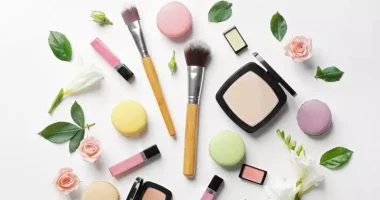
Confirm Dr. Ali Fakhr, Fatwa Secretary at the Egyptian Fatwa HouseIslamic law does not prevent women from adornment within the limits of legal controls, explaining that there is nothing wrong with using cosmetics in moderation and for the purpose of concealing some visible defects, as long as it does not turn into a means of adornment or attracting attention.
During his talk on the “People’s Fatwas” program, Fakhr explained that the origin of adornment is that it should be within its legitimate framework, pointing out that Islam calls for beautifying oneself with a good appearance without excess or exaggeration that conflicts with the values of modesty and dignity.
Legal controls for the use of cosmetics
The Fatwa Secretary pointed out that wearing makeup is not considered forbidden in itself, but the ruling depends on the method of using it and its purpose, explaining that light adornment that aims to hide some defects such as dark circles or traces of pimples and the like falls within the scope of what is permissible according to Sharia law.
He added that the basic criterion is that the makeup should not be exaggerated or eye-catching in a way that goes beyond the limits of moderation, stressing that Sharia distinguishes between acceptable adornment and grooming that is intended to attract attention and highlight charms.
Modesty is the basis of legitimate appearance
Dr. Ali Fakhr stressed that adherence to the hijab and modest dress does not conflict with taking care of one’s appearance or using a small amount of cosmetics, as long as the matter remains within the framework of moderate adornment that does not arouse strife or contradict the purposes of Sharia law.
He explained that Islam calls for balance in various matters of life, including personal appearance, away from excess or negligence, indicating that moderation remains the ruling rule in such matters.
A call to simplicity and solemnity
The Fatwa Secretary at the Egyptian Fatwa House concluded his speech by emphasizing the importance of girls being dignified and modest in appearance and behaviour, explaining that legitimate adornment is that which reflects a good appearance without affectation or exaggeration.
He added that what falls within the scope of light and unobtrusive adornment remains within the scope of legal permissibility, while modesty and moderation remain the main controls that should be observed when using cosmetics.