It is said that it is a war without winners. However, a good part of the international press declared one defeated: Donald Trump. This is because the Iranian regime emerges with a certain control of the scene. At least until now, it survives the war with its structure of domination intact, control of the Strait of Hormuz and retains its nuclear material. In fact, barely hours passed between the threat of “destruction of Iranian civilization” and the various truces and subsequent zigzags.
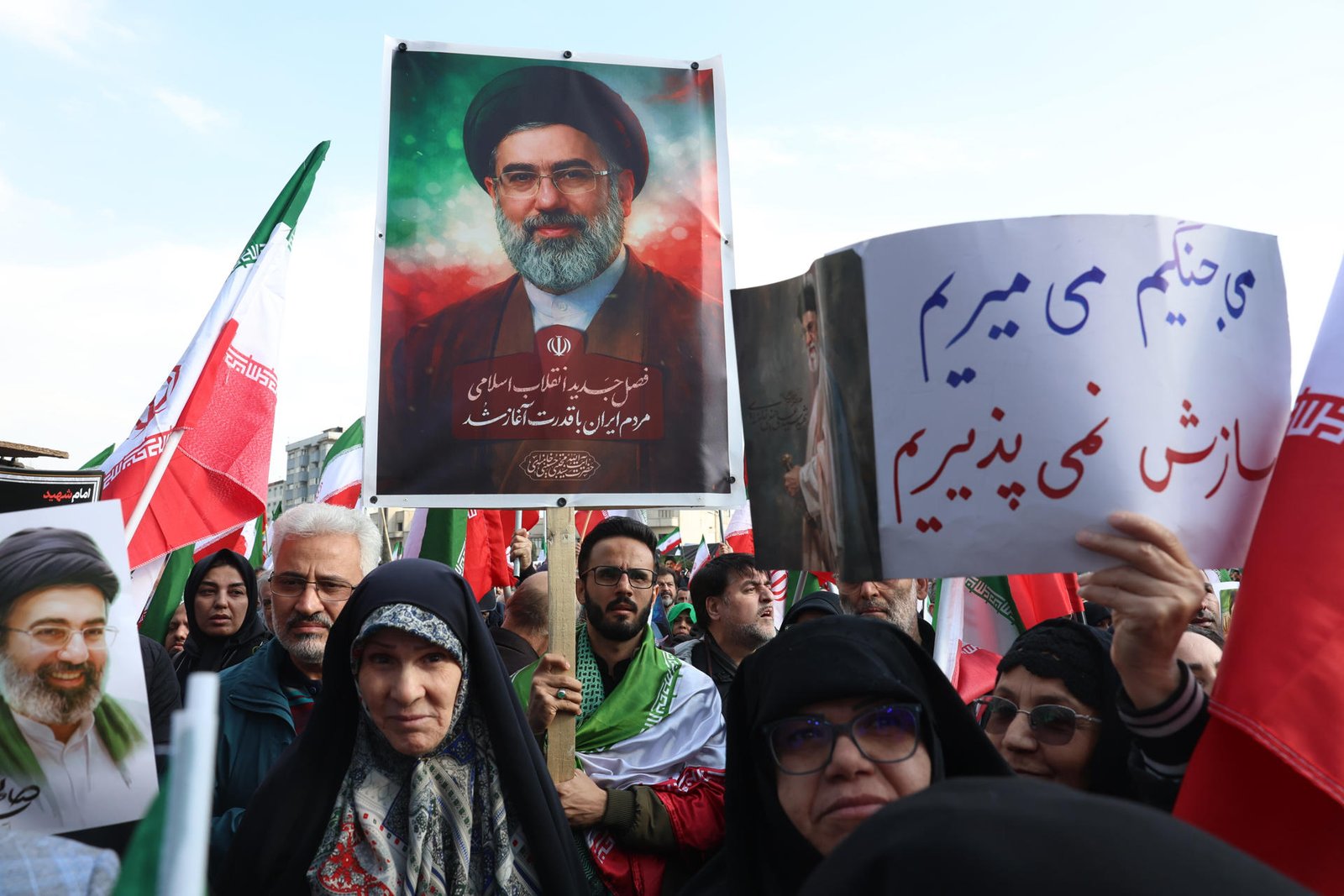
The unlimited capacity to absorb suffering that the Iranian theocracy has, whether assimilated into the State apparatus or distributed throughout society, never ceases to surprise. In fact, its political elite today is divided, its defense infrastructure diminished and its intelligence decimated, but its main enemy is at home: the unarmed civilian population. This is how it resists from the very beginning of the revolution. The war with Iraq between 1980 and 1988 illustrates the point; a war of attrition that also had no winners. However, Iran paid the highest price: one million lives and four million injuries. Iraq proposed an agreement in 1982, but the mullahs preferred to continue the war. This did not affect the solidity of the regime; On the contrary, he buckled it, justifying his warmongering and strengthening the cult of immolation.
The above is complemented by relentless violence, its structural propensity to inflict harm. Last January the world witnessed bloody repression in the streets of many cities in the country. Note that in 2025 the regime executed more than 1,600 people and 657 in the first quarter of 2026 alone. This has been common practice since the first days of the revolution. Thousands of people were executed then; prostitutes, homosexuals, adulterers and officials of the shah. The State needed to be “purified,” Khomeini said. Iran is one of the countries with the most executions in the world.
Absorbing suffering and promoting violence explain the strategic place assigned to the nuclear program. These factors constitute the conceptual core of its foreign policy, which it conducts from the State and which it subcontracts with a network of equally violent non-state organizations, its ‘proxies’. This network includes Hezbollah in Lebanon and Syria, Hamas in Gaza, Kataib Hezbollah in Iraq, Al Ashtar in Bahrain and the Houthis (Ansar Allah) in Yemen. Tehran calls it the “axis of resistance.” Read, “axis of global terrorism.”
Hezbollah’s record speaks for itself since 1982. Whether it was shooting down commercial planes in Athens or Kuwait, attacking restaurants in Madrid, assassinating the former Lebanese prime minister in Beirut and diplomats in Turkey or Bangkok, carrying out suicide attacks in Bulgaria, attacking Israeli, Saudi or American embassies and diplomats, among other terrorist acts. And also in Latin America, where there are the attacks against the Israeli embassy and the AMIA in Buenos Aires, the murder of the prosecutor in the case, the attack against the Alas Chiricanas flight in Panama, and the failed attacks against synagogues and community centers in São Paulo.
In relation to Latin America, a DEA investigation initiated in 2008 – the ‘Project Cassandra’ – demonstrated the organic link between drug trafficking and jihadist terrorism. Large sums of money were laundered in the Americas and then ended up in Lebanon. However, during the preparation of the nuclear deal with Iran, signed in 2015, the Obama administration slowed down Cassandra so as not to hinder negotiations. With this, Hezbollah expanded its financial and operational capacity, and Tehran deepened its political and military influence in the hemisphere; for example, in Chávez’s Venezuela, Evo Morales’s Bolivia and Cristina Kirchner’s Argentina. This sheds light on another dimension of the Iranian regime’s global strategy in a region that has no economic relevance – its trade with Latin America does not reach 5 percent of the total – nor does it represent any threat to its security. It happens to be close to the United States.
The nuclear deal, JCPOA, exhibited weaknesses. It was not a permanent ban on proliferation, just a temporary pause. It included sunset clauses allowing Iran to restart uranium enrichment in the near future, which continued even under the JCPOA. It did not impose any restrictions on its ballistic missile program, which was accelerated with resources from the lifting of sanctions stipulated by the same agreement. Today we know that Iran’s ballistic missiles can reach Europe. It would be the obvious transport of a nuclear bomb.
The agreement also did not specify anything about Iran’s criminal and terrorist activities. And although the JCPOA required adherence to the ‘Additional Protocol to the Nuclear Non-Proliferation Treaty’, Iran consistently evaded compliance and never acted transparently and in good faith with International Atomic Energy Agency inspections. These were the reasons invoked by the first Trump Administration in May 2018 to withdraw from the agreement.
The JCPOA simply pushed the problem forward, leaving an onerous security mortgage on the shoulders of future governments, whether from the rival party or its own. In fact, in the 2020 campaign, Biden promised to rejoin the agreement, “renewing commitment to diplomacy and working with our allies to strengthen and extend it.” Well, it wasn’t possible. His own Secretary of State, Anthony Blinken, assured in January 2021 that “Iran could be weeks away from having enough material to develop a nuclear weapon.” Iran never completely interrupted the uranium enrichment process and accelerated the ballistic missile program under the JCPOA itself.
That is the violent Iranian theocracy, with an apocalyptic vision for which no appeasement strategy has worked. Persia, an ancient civilization with a history of excellence in poetry, mathematics and medicine, among other arts and sciences, today is subjugated by an obscurantist and totalitarian sect whose foreign policy exports terror. The international community does not seem to have become truly aware of what a nuclear weapon would mean in the hands of that criminal regime. That is the fundamental discussion about this war, not Netanyahu’s alleged extortions and Trump’s contradictions that we read about every day.
*This article was originally published in ABC.