Trinidad Express Newspapers Ltd has emerged victorious in an appeal filed by the Office of the Attorney General, the Trinidad and Tobago Police Service (TTPS) and police Supt Wendell Lucas after the Court of Appeal ruled that a search carried out at the newspaper’s offices breached its constitutional right to press freedom.
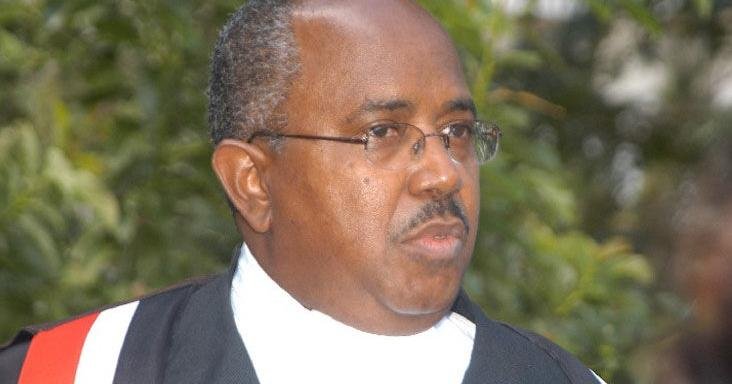
In a judgment delivered on Wednesday, Justices of Appeal Nolan Bereaux and Peter Rajkumar formed the majority, while Justice James Aboud delivered a dissenting opinion.
The case stemmed from a 2020 investigative report written by journalist Denyse Renne and published by the newspaper which detailed suspicious financial activity involving a senior police officer.
Following the publication, the police, led by Lucas, launched an investigation into a possible “tipping off” offence and obtained search warrants to access material at the newspaper’s Port of Spain offices in an effort to identify the journalist’s source.
Officers executed the second of two warrants on March 11, 2020, entering Express House and seizing four flash drives from the office of then-editor-in-chief Omatie Lyder.
The media entities—One Caribbean Media Ltd, the Express, and Lyder—challenged the legality of the warrants, arguing that they infringed their constitutional rights, including freedom of the press under section 4(k).
The High Court had ruled in their favour, declaring both warrants unconstitutional. On appeal, the State sought to overturn that decision.
However, in the lead judgment, Justice Bereaux upheld the central finding that the second warrant was unlawful, finding that the police failed to provide sufficient information to justify its issuance and that no proper balancing exercise was undertaken by the Justice of the Peace.
“The justice of the peace could neither be satisfied that there was probable cause for the search nor that the search struck the right balance,” Justice Bereaux said.
He stressed that where law enforcement seeks to search a media house, particularly to uncover a confidential source, special care must be taken to weigh the public interest in investigating crime against the fundamental role of a free press in a democratic society. “The sanctity of the confidentiality of journalistic sources is an essential element of the right to freedom of the press,” he added.
The court found that the warrant was overly broad, allowing police to search virtually all electronic data at the newspaper, without restriction or safeguards to protect unrelated confidential material. It also noted that no evidence was presented to show that alternative avenues of investigation had been pursued.
While the court disagreed with the trial judge on one point—finding that the first warrant, which was never executed, did not itself breach constitutional rights—it upheld that the second warrant and the seizure of the flash drives were unconstitutional.
The panel also set aside the order for damages to be assessed and instead awarded a fixed sum of $25,000 in compensation to the respondents, recognising the importance of vindicating the right to press freedom.
In his concurring judgment, Justice Rajkumar agreed that the warrants were excessively wide and failed to adequately consider their potential impact on journalistic activity, including the risk of a “chilling effect” on sources.
However, Justice Aboud, in dissent, took a different view on the legal and constitutional issues arising in the case, highlighting a divergence within the court on the extent to which police powers may intrude on media operations.
Appearing on behalf of One Caribbean Media, the Express and Lyder were attorneys Sophia Chote, SC, Peter Carter and Samantha Ramsaran; while Senior Counsel Fyard Hosein, Rishi Dass and Kadine Matthews appeared for the State.