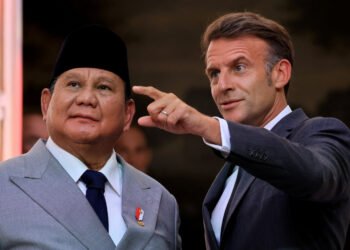
resident Prabowo Subianto is right to state that Indonesia needs innovative entrepreneurs and a stronger private sector, rather than youth who rely solely on civil-service employment. He is equally correct to call for faster licensing, wider access to credit and tighter cooperation between government, business, workers, MSMEs and regional authorities.
Unfortunately, his approach treats entrepreneurship as an output generated primarily by courses, loans and administrative encouragement. In reality, entrepreneurial formation is shaped by deep cultural conditioning that shifts slowly across two to three generations—roughly 50 to 75 years.
A recent doctoral thesis at Bandung Institute of Technology (ITB) reached a different conclusion after seven years of longitudinal research. Its system-dynamics model places funding and the university as exogenous variables—secondary amplifiers that can strengthen what culture already permits, but cannot initiate what culture has not yet sanctioned.
The endogenous core is driven entirely by culture, with the population’s preference for stable jobs acting as the primary lever. Family expectations, social legitimacy, fear of failure and the prestige of civil-service employment govern this core system. The President’s speech at the House of Representatives recently addresses the variables outside the engine; the engine itself runs on fuel he did not mention.
The proposal for post-graduation startup loans illustrates the problem directly. Funding is exogenous to the core system. It supports entrepreneurship only after credibility, traction and field legitimacy already exist.
Capital does not flow to aspiration; it flows to credibility, repayment probability and evidence of persistence. Pushing capital into a system before the underlying cultural conditions exist does not accelerate formation—it simply burns dry powder. Calling state-owned banks patriotic may generate political pressure, but it does not alter the risk structures those banks actually price.

Every Thursday
A fresh graduate with no operating history, weak cash flow, limited collateral and unproven persistence is not automatically an entrepreneur. He or she is a high-risk borrower. Often, that same graduate is simultaneously waiting on corporate recruitment, civil-service selection or state-owned enterprise openings.