PARLIAMENT
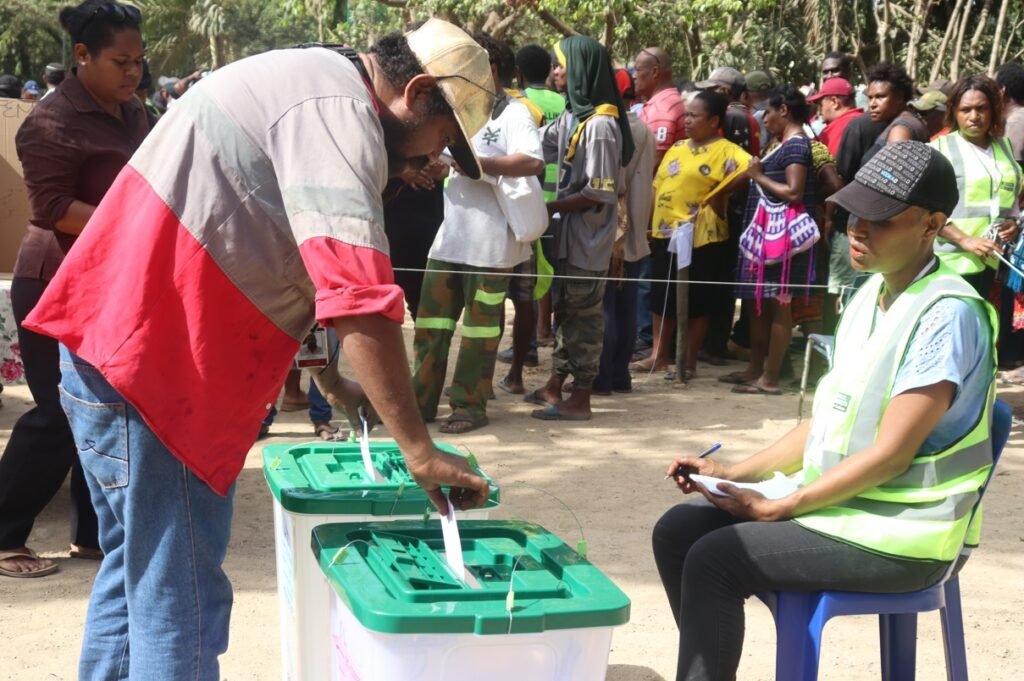
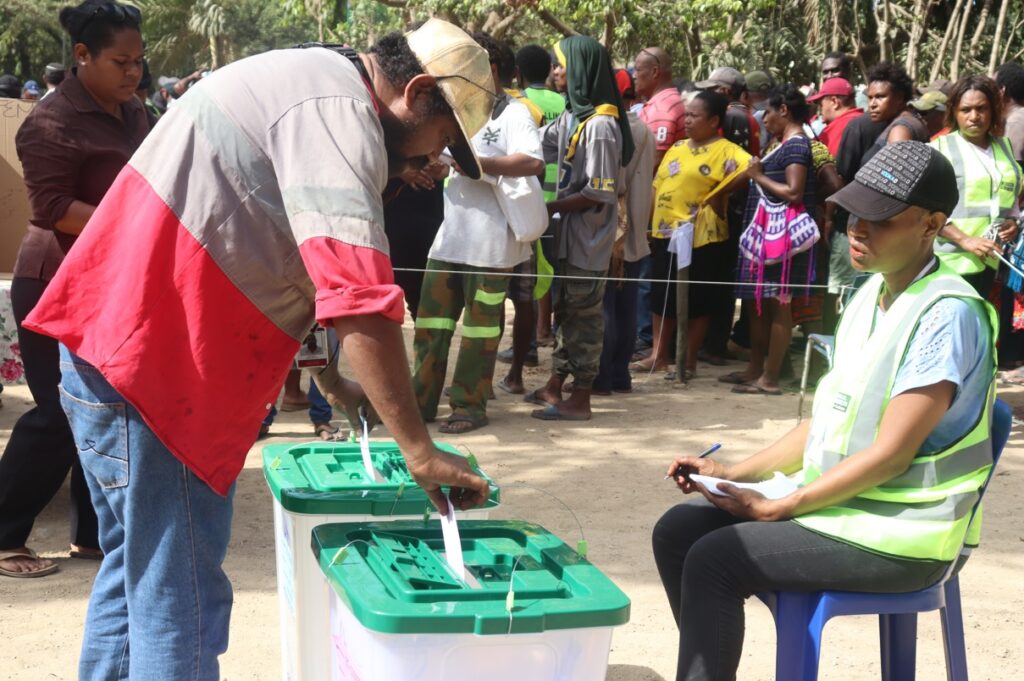
PAPUA New Guinea’s election processes are meant to protect the country’s democracy and allow eligible voters a free, fair and safe experience when casting their ballots.
However, these processes have been weakened over the years, with little done to improve them. The current parliament and has less than 12 months remaining before General Election 2027 (GE27).
Be that as it may, the Special Parliamentary Committee on General Election 2022 (GE22) has provided, in its report tabled in Parliament on Nov 30, 2023, a set of recommendations to address these issues.
These 23 recommendations are that:
FOR General Election 2027 (GE27), a new electoral roll needs to be developed by the end of 2024 and validated with the 2024 census data in 2025 and updated in 2026 in time for GE27. In 2026, a periodic check should be done twice to make sure the electoral roll is well updated;
- CONSISTENT with Section 71A of the Organic Law on National and Local Level Government Elections (OLNLLGE), an appropriate voter identification (ID) system must be instituted to identify all eligible voters (i.e. citizens aged 18 years and above). The voter ID can take any form described in Section 71A. In the long run, the national identification (NID) card system with its fingerprint technology be used as the primary ID for voter identification. For GE27, subject to the roll out of the NID, other ID forms may be used such as driver’s license, passport, work id or photo ID issued by the Electoral Commission. The maintenance and disclosure of the voter ID must comply with Sections 71B and 71C of the OLNLLGE;
- CONSISTENT with Section 19(5) of the OLNLLGE, and as part of voter registration and electoral roll update, the ward record book be used for validating the electoral roll. This should be done by returning officers and ward recorders in the provinces with the oversight of the Electoral Commission. Strong mechanisms be put in place in the OLNLLGE to protect the integrity of this process of electoral roll update and validation at the ward level (i.e. guard against any manipulation of the electoral roll update process at the ward level);
- WHILST every effort must be made to protect intending candidates against arbitrary discrimination to stand for public office via nomination to contest the elections, the relevant requirements such as mandatory completion of Form 24 for proper scrutiny of intending candidates and the requirement for public servants (officers) to resign at least 12 months before the issue of writs to contest the elections (per the amended Section 55 of the Public Service Management Act and Department of Personnel Management Circular Instruction No.27/2021), must be met to protect the integrity of the candidate nomination process, which is an integral part of the electoral system;
- STRONG measures be put in place under the OLNLLGE and relevant laws such as the Anti-Money Laundering and Proceeds of Crime Act to ensure that campaign finances are subject to auditing to determine whether such funds were spent within the framework of the law;
- MEDIA freedom must be maintained during the elections to ensure reporting of the election issues for public consumption and transparency of the process and this includes the media being able to enter and transmit information from counting rooms. After the elections, media freedom should be maintained by ensuring that campaign finance data, including audit reports, should be made freely available online to the public;
- THE planning, design and printing of ballot papers must be closely linked to the electoral roll update information to ensure that the number of ballot papers is equal to the number of voters in the electoral roll. The Electoral Commission must ensure that this is done as part of its administration of the election;
- ROVING polling be maintained as the primary method of polling and that centralised polling may be considered if and only if roving polling cannot be done due to unavoidable circumstances and on the condition that it is logistically and financially feasible to conduct centralised polling for the electorate or part of that electorate in question, while guaranteeing reasonable access to all affected voters in the jurisdiction;
- THE Electoral Commission plans for and conducts a pilot study in 2024 on the use of biometric technology for voter registration, voting and counting to assess the costs and benefits with clear recommendations for its potential adoption and use for the PNG Election system. The biometric technology be audited and the results of the pilot study be evaluated independently by a reputable private firm to ascertain its merits;
- THE photo-roll system be used in selected local level government (LLG) areas in the 2024 LLG elections to assess its merits and consider for use in future national general elections;
- HE limited preferential voting (LPV) system be maintained but made to work better by addressing the issues of implementation during the whole election process;
- CONSISTENT with Section 150 of the OLNLLGE, during counting, one scrutineer each for all candidates must be allowed to be present at the counting venue. In addition, the law must allow for election observers and the media to be present at counting venues. This will ensure that there is transparency in the process and reduce the incidences of electoral fraud and violence caused by ill-feeling and suspicions;
- THE full process of determining the electoral boundaries per Section 35-42 of OLNLLGE must be completed at least a year before the issue of writs to allow for timely incorporation of the new electorates into the administration, logistical and security planning for the elections;
- A THOROUGH assessment be done by an independent team under the Parliamentary Standing Committee on Electoral Matters (PSCEM) on the merits and practicality of the number of days required for polling for each electorate to ensure that the logistics and costs of conducting polling are properly determined for implementation during the election period. The assessment results must be included in the election plan and any special procedure for polling be captured consistent with Section 82A (Use of Special procedures in Elections) of the OLNLLGE;
- THE date of polling for an upcoming election referred to in Section 79 of the OLNLLGE must be decided upon and gazetted in March of the year after the previous election. The polling date will then provide the benchmark to work backwards in terms of planning and implementing the required activities and investments prior to and during the election year. The polling date shall be consistent with the provisions of Section 105 of the Constitution
- VOTING arrangements and logistics must include provisions for gender-sensitive and inclusive polling procedures. Having dedicated lines for women voters during polling in GE22 was a positive aspect of the election process that must be maintained and expanded with separate lines for voters with special needs and equipped with the appropriate infrastructure and equipment;
- THE design of the ballot papers must have a clear distinction between the ballot paper for regional seats and those for open seats so that voters can cast their votes on the correct ballot papers. This is due to the fact that the ballot paper is the most important document that captures the votes or choices of voters, hence its design and use is of critical importance to the success of an election;
- EDUCATION and awareness on counting under the LPV system must be done effectively in order for voters to understand the impact it has on the final result. This awareness must be done effectively by the Electoral Commission’s information and civic awareness branch as part of its work on election education and awareness starting from four years before the election year;
- THE Electoral Commission must address administrative factors that cause delays in polling, counting and declaration so that polling, counting and declarations are done on time and writs are returned on time, consistent with the legal provisions in the OLNLLGE, in particular, Section 80 (Date of return of writs) and Section 175 (Return of writs). For the impact of natural factors like the weather on polling, consideration could be given for adjusting the polling dates to appropriate time periods during the election year, but within the legal requirements for return of writs;
- THE Electoral Commission develops a clear set of criteria on what constitutes a successful election, which shall be used in determining the success or otherwise of an election result for a seat. The Electoral Commission shall issue a public statement on the criteria before the election year, as part of its education and awareness programmes;
- SECTION 175 1A(b) of the OLNLLGE regarding Special Circumstance Declaration be repealed to avoid the provision being abused and manipulated for political or administrative convenience. Instead, if an election process is not complied with for a successful election then the election for the seat must be declared as failed and a by-election shall be held;
- THERE must be clear criteria for election petitions with a filtering process so that only genuine cases proceed to the Court of Disputed Returns. This can be done via an amendment to Section 208, Subsection (a) of the OLNLLGE where the “facts relied on” must be clearly spelled out in law under this Subsection. If a case is criminal under the Criminal Code and/or Summary Offences Act, then such matters can be litigated under those relevant laws; and,
- PARTIES, candidates and voters must adhere to the Code of Conduct developed by the Electoral Commission and Integrity of Political Parties and Candidates Commission in the upcoming GE27 and future elections.

Next week: Part 3 of recommendations by Special Parliamentary Committee on General Election 2022