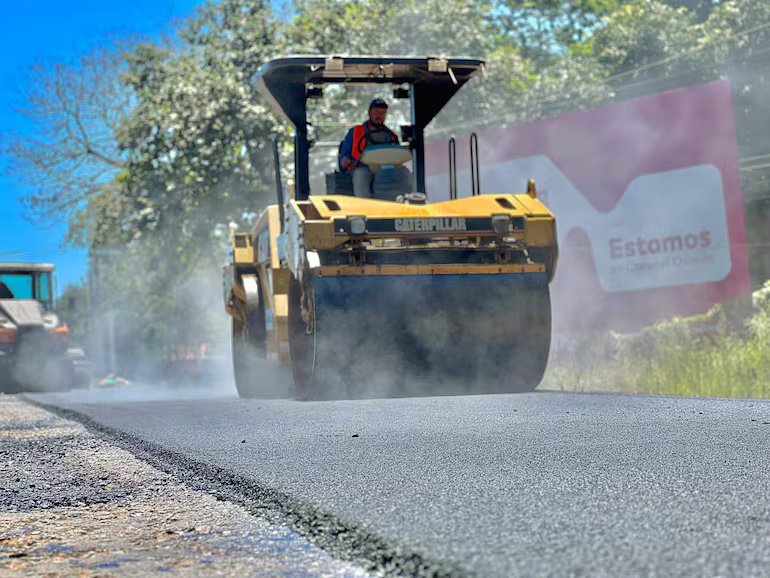
More than a year ago, the Itaipu Binationaldirected by Justo Zacarías Irunand the Ministry of Public Works and Communications (MOPC)headed by Claudia Centurionsigned a cooperation agreement to finance the paving of 1,000 km of urban roads throughout the country, called “Plan 1,000”.
Through this agreement, the binational had to execute these works with an investment of US$100 millionin seven strategic regions of the country, with support from the MOPC, covering 263 municipalities. The project contemplated various construction techniques, such as paving, cobblestones, rigid urban pavement and concrete.
For the implementation of the first stage, the binational signed 15 agreements —8 for asphalt and 7 for paving—with different non-governmental organizations (NGOs)which, through their own regulations, made calls for the preparation of executive projects, the hiring of companies construction companies (in batches, if necessary) and the inspection of works, according to official data.
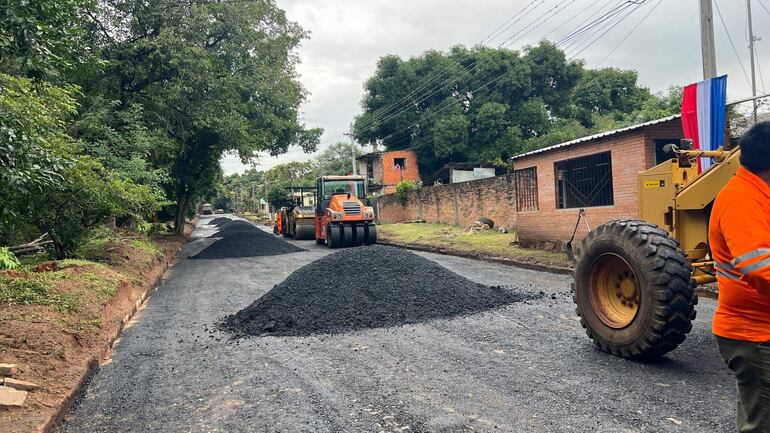
However, The selection mechanism of these organizations was not transparent.nor the specific scope of the works nor the sections that will be intervened. This occurs in coincidence with the electoral calendarwith internal and municipal elections scheduled for June and October of this year. Everything indicates that the works carried out will be functional for the campaigns of Colorado Party candidates.
First stage with investment of US$ almost 68 million
According to data from the Superintendence of Works of the binational, in this first stage the investment in asphalt-type paving on cobblestone amounts to about US$37 millionwith a goal of approximately 305 kilometers. At the same time, the investment in paving reaches other US$30.6 millionwith a projection of 324.7 kilometers, thus adding a total of almost US$68 million.
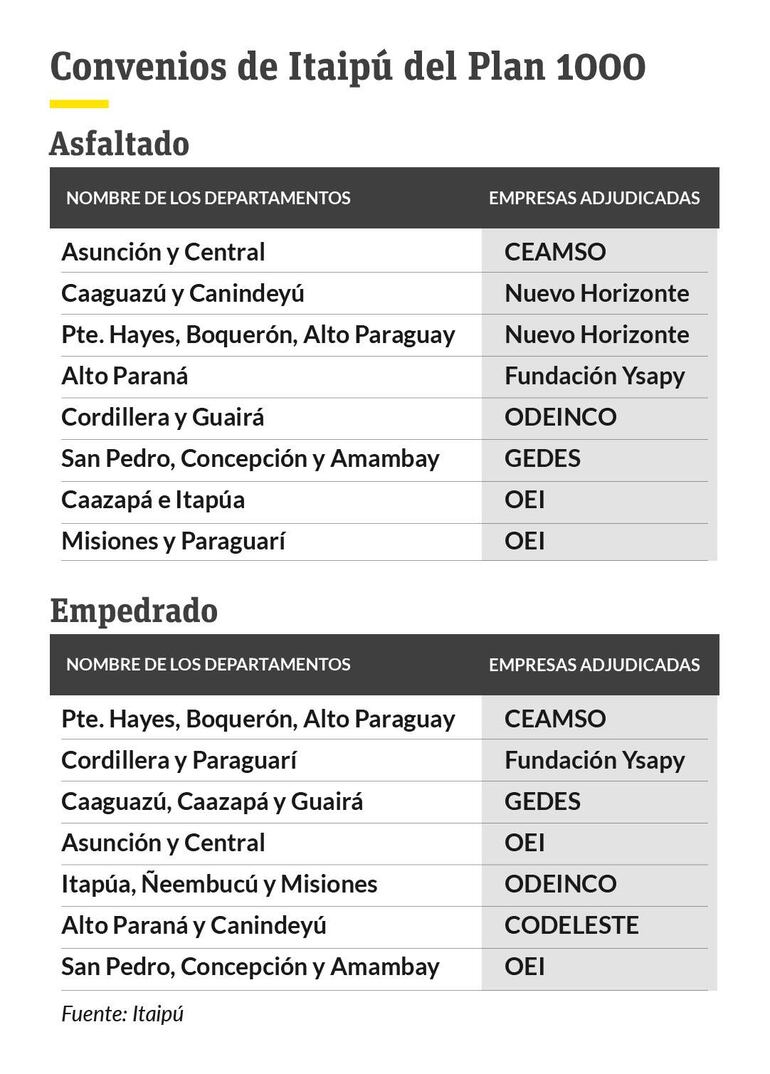
For the asphalt works in Asunción and Central, an agreement was signed with the Center for Environmental and Social Studies (CEAMSO); for Caaguazú and Canindeyú, with New Horizon; for President Hayes, Boquerón and Alto Paraguay, also with New Horizon; and for Alto Paraná, with the Ysapy Foundation.
The list continues with the Comprehensive Community Development Organization (ODEINCO) for Cordillera and Guairá; Social Development Management (GEDES) for San Pedro, Concepción and Amambay; and the Organization of Ibero-American States (OEI) for Caazapá, Itapúa, Misiones and Paraguarí.
Regarding the works of pavedagreements were signed with CEAMSO for President Hayes, Boquerón and Alto Paraguay; Ysapy Foundation for Cordillera and Paraguarí; GEDES for Caaguazú, Caazapá and Guairá; OEI for Asunción and Central; ODEINCO for Itapúa, Ñeembucú, Misiones, San Pedro, Concepción and Amambay; and CODELESTE for Alto Paraná and Canindeyú.
“He Plan 1,000 It is a road development strategy that contemplates the paving of urban and rural roads in strategic areas of the country. The project promises not only to improve road connectivity, but also boost the economy and reduce territorial inequalities“, highlighted the binational, without giving explanations about the selection criteria of the NGOs.
Likewise, he pointed out that the execution is carried out in coordination with governorates and municipalitiesprioritizing districts with the greatest needs for basic infrastructure, with a scope of 263 municipalities in the 17 departments of the country.
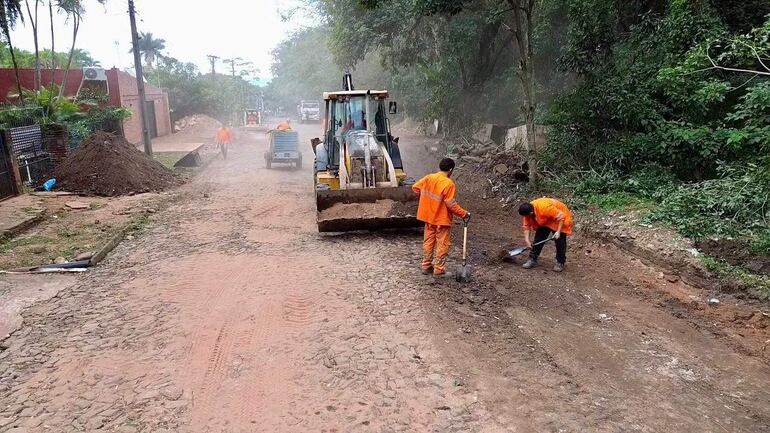
The Government of Santiago Pena has been executing million-dollar contracts through Itaipu Binational and the Itaipu Technology Park Foundationin projects that include routes, hospitals and charging stations for electric buses, among others, under schemes that have been questioned due to the lack of controls and transparency.