THE rain above average in São Paulo at the beginning of winter, contrary to expectations of a drier and hotter season, it is just a sample of the climatic diversity that the metropolis will face with the arrival of El Niño.
If in the national context the main characteristics of the phenomenon are more intense rains in the South and prolonged drought in the North and Northeast, the position of the capital of São Paulo in a transition zone makes it possible to experience both scenarios.
You almost one hundred millimeters of precipitation recorded in 24 hours between the afternoon of last Tuesday (23) and the morning of Wednesday (24) – more than half of what was expected for June – can be observed as a sample of what the phenomenon can do by intensifying the so-called high-level jets.
This very strong wind current at very high altitudes, when gaining even more strength, carries more rain to the South and also to the Southeast, according to meteorologist Enver Ramirez, head of the Weather and Climate Forecast Division at Inpe (National Institute for Space Research).
This does not mean that it will rain more, as El Niño does not tend to significantly alter the average annual rainfall in the city, which is approximately 1,400 millimeters. But there is a change in the pattern.
Softer rains that last for several days tend to become rarer, giving way to showers concentrated in specific points.
This pattern of storms is what most contributes to the occurrence of flooding and overflows in densely occupied urban areas, says Michael Pantera, meteorologist at the CGE (Climate Emergency Management Center) at São Paulo City Hall.
The most critical period is expected for the end of spring, when urban infrastructure will be tested by heat waves and storms that tend to arrive accompanied by gales.
Given this perspective, 13 areas of the city hall that work on a rain prevention plan were tasked with presenting in August – before the peak of the phenomenon, starting in September – their strategies for dealing with El Niño, according to the group’s coordinator, Isabel Silveira Camargo, who is a forestry engineer at the municipality’s Climate Change Secretariat.
The coordinator of the plan against the effects of storms highlights that cleaning watercourses and pruning trees are considered essential to mitigate the risks of flooding and accidents.
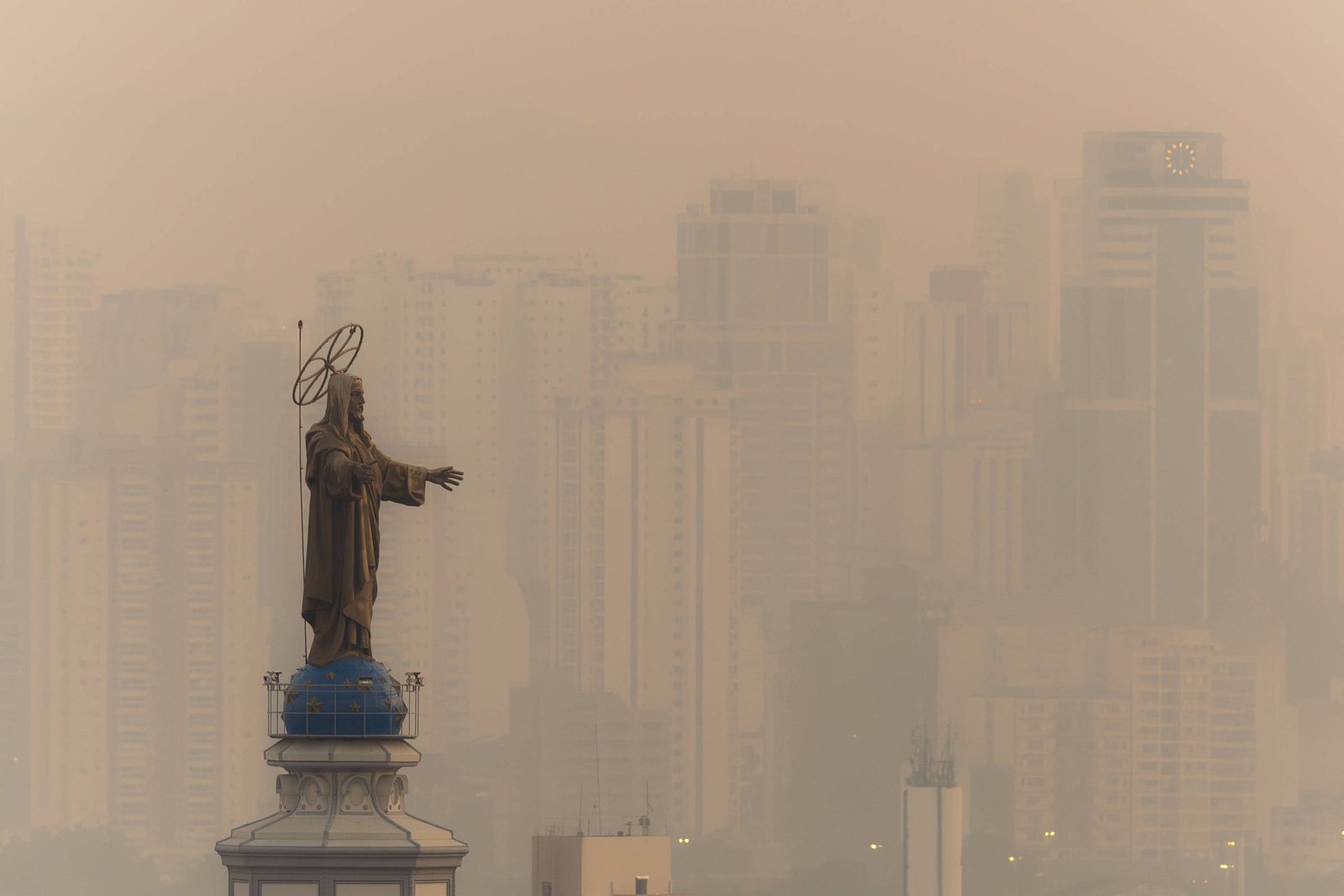
Before the wind and rain season arrives, however, residents of the capital and other regions of the state may still face days of intense heat, low humidity and air quality compromised by smoke from fires in forests and plantations, like those that occurred in 2024 in almost the entire interior of São Paulo, also due to the influence of the latest occurrence of El Niño.
Health
The effects of air degradation have direct consequences for public health, says doctor Evangelina Araújo, director of Instituto Ar. She says that fires, even in distant areas, the Amazon and Pantanal, produce pollutants with extremely small particles.
The material is capable of crossing the respiratory barrier and reaching the bloodstream, increasing the incidence of heart attacks and strokes in the elderly.
Pregnant women, children and the elderly are the groups most vulnerable to extreme pollution, according to the doctor.
To try to anticipate the spread of fires, the Government of the State of São Paulo announced that it will use artificial intelligence to analyze meteorological data, in addition to using the camera system on highways to locate outbreaks in forest areas.
Supply
In addition to heat waves during the winter, one of the possible effects of El Niño is the delay in the start of the rainy season, which normally begins in October.
In a pessimistic scenario, this combination of hot weather and lack of precipitation could result in a sharp reduction in the levels of the reservoirs that supply the metropolis.
A few days ago, the São Paulo government announced that the Cantareira system, the most important of the group of dams in Greater São Paulo, it will be a kind of new trigger for the government to adopt stricter measures to save water.
If the Cantareira level is proportionally lower than the others, the reduction in pressure from nighttime pumping may last for more hours. Currently pressure reduction is applied for ten hours at night.
Also considering flood prevention actions, such as the construction of swimming pools and desilting of important rivers such as the Tietê, the São Paulo government also says it has invested R$25 billion in its water resilience plan.
Despite the warning scenario, Fernando Dornelles, professor at the Hydraulic Research Institute at the Federal University of Rio Grande do Sul, considers that the magnitude of an El Niño is not a sure indication that the country will face major tragedies, especially those caused by events as atypical as the major floods that hit Porto Alegre and hundreds of municipalities in Rio Grande do Sul recently.
He states that although the probability of flooding increases during the phenomenon, the chance of a catastrophic event occurring remains statistically small.
Dornelles argues that the authorities’ focus should be on strengthening the capacity to deal with disasters through training and simulations, improving Civil Defense responses.