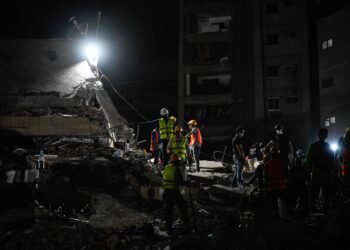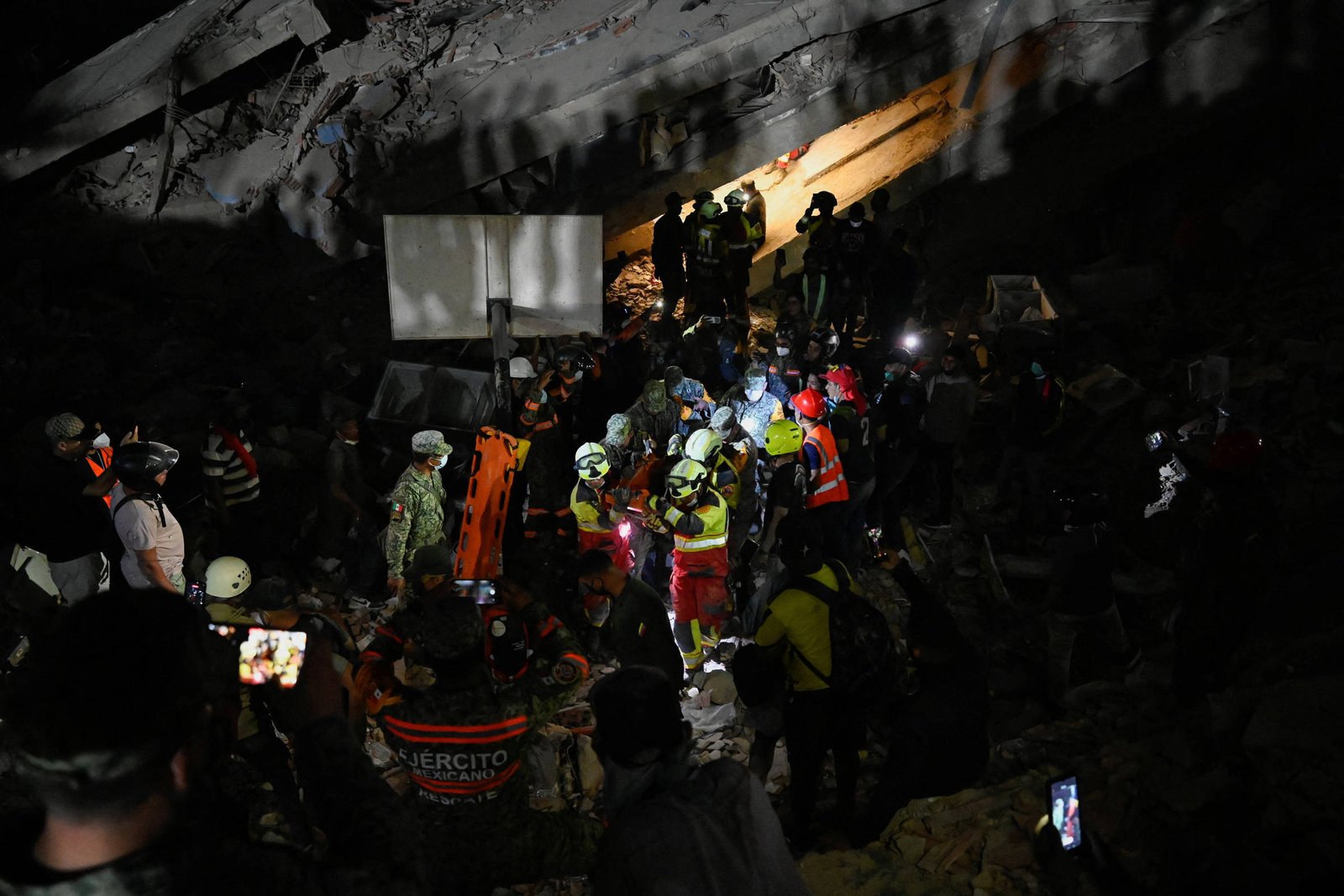
The hope of finding survivors amid the rubble in Venezuela decreases little by little, they say rescue team members on the front line of operations on this, which is the fourth day after the strong earthquakes that hit the coast of the Caribbean country.
“Our priority continues to be finding as many people as possible alive, but this Saturday it was already clear that we would only find corpses”, Venezuelan Andy, who heads the logistics of the Mexican group Topos Aztecas, sent to help, tells the report.
The group worked on Caracas until here and now approaches the epicenter of the crisisthe coastal city of La Guaira, behind the majestic El Ávila, a mountainous region that is the pride of Caraqueños.
In three days of rescue work at the historic Petúnia building, which collapsed, team rescued eight bodies. It is estimated that at least six others are there. The only one found alive was a puppy. “Now we know that the chance of finding them alive is 1%, and so we stick to that 1%,” says David Villa, another member of the group.
“Still, for us it is equally important to rescue the bodies, so that the families have dignity and can be with their loved ones”, continues Andy, who is heading to La Guaira amid the rain in the region, a factor that could complicate the search work.
According to the latest balance released by the Delcy Rodríguezthere are at least 1,450 dead, as “the result of the most brutal natural catastrophe that the country has ever suffered in its history”. The numbers also include 3,150 injured in hospitals and 12,721 people affected, without specifying what type of damage they suffered.
After the initial 72 hours that were critical to finding survivors, the humanitarian aid has also been restructured. The difficulty is understanding the different needs in different regions.
As in Brazil, Venezuelans use WhatsApp a lot. In instant messages, the items that volunteers map as priorities are publicized: among many other things, some of the immediate needs are eye drops, because there is a lot of ash and smoke amid the wreckage, and face masks, for safety and because the odor of decomposing bodies is pungent.
Communication coordinator for the NGOs Alimenta la Solidaridad and MiConvive, Claudia Astor explains that for ten years the organizations have been dedicated to helping comedores, the places that offer food to the low-income population. Now they have turned all their efforts to the tragedy of La Guaira, as the earthquakes have been called.
The UN estimates that there are more than 6.7 million affected throughout Venezuela, in some way, due to the natural disaster. The help work is never-ending.
But the logistics are also complicated. Accessing La Guaira is increasingly difficult. In order not to harm the searches and humanitarian transfers, the regime prohibited access to the area for those who do not have a so-called safe conduct.
It is difficult to find a Venezuelan in Caracas who does not know at least one victim of the tragedy. Or a missing person, who, with the hope that little by little disappears of finding survivors, is now starting to be considered another potential death.
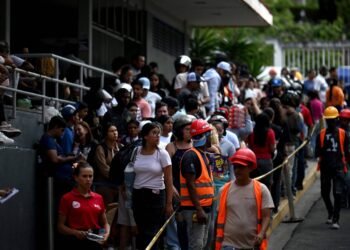
Caracas, however, still operates functionally. There are no reports of shortages. The most affected regions, in which buildings have fallen and where there are compromised structuresare upper middle class, like Altamira and Los Palos. There is a strong police presence. At gas stations, notices show photos of missing people and leave contact information; others provide information contact lines and hospital networks.
More and more volunteers and members of the huge Venezuelan diaspora arrive in the country, albeit with highly complicated logistics. With the collapse of the central airport in Greater Caracas, the three main access airports are in more distant areas: Maracaiboformer oil heartland; Valencia, former industrial heart; and Barcelonasix hours by land from Caracas. The flights are full of Venezuelans in exile who want to be with their family at this time and help the country.
The memory is already in the audible warning of the aircraft departing the Panama bound for Barcelona: “To those who travel to be with their loved ones. To those who travel to rebuild and rescue. We wish you strength. There are things that cannot be destroyed, like the strength of a people. Strength to the great people of Venezuela.”