The objective would be to capitalize on the lessons learned from this first experience and put in place a more structured system, capable of supporting the emergence of women’s projects with strong economic and social potential.
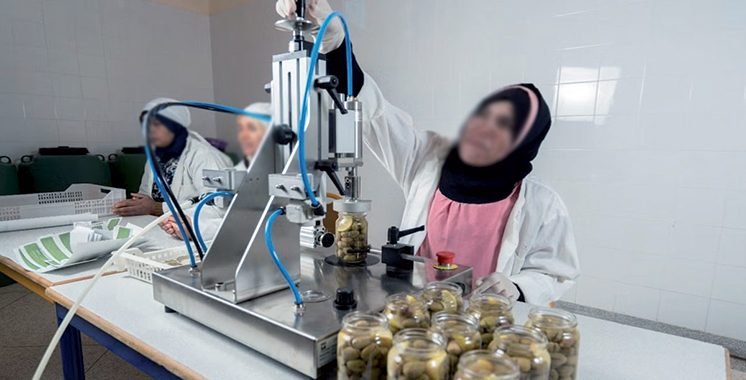
Social and solidarity economy: The State Secretariat for Crafts and the Social and Solidarity Economy is strengthening its Tahfiz Niswa program, as part of the government roadmap for employment and economic empowerment of women. After an initial experience carried out with the support of the Spanish Agency for International Development Cooperation (AECID), this initiative aims to capitalize on the achievements of the program, strengthen its governance and develop viable and high-impact women’s entrepreneurial projects. The department has just launched technical assistance which will focus on the evaluation of the results of the initial program, the development of methodological tools to support women’s economic initiatives as well as the design of a procedures manual intended to improve the management, transparency and effectiveness of the program.
The state secretariat responsible for crafts and the social and solidarity economy is continuing its strategy for the economic empowerment of women. After an initial experience carried out in partnership with the Spanish Agency for International Development Cooperation (AECID), it now intends to consolidate the achievements of the program and strengthen the support mechanisms for women’s entrepreneurial initiatives through the Tahfiz Niswa program. And this, “As part of the implementation of the government roadmap for employment and economic empowerment of women, and after the implementation of the first women’s empowerment program subject of the technical cooperation agreement between the ministry and the Spanish Agency for International Cooperation for Development (AECID), one of the major objectives of which is the contribution to strengthening the economic and social weight of the social and solidarity economy sector in improving the living conditions of the disadvantaged population and improving visibility of the sector,” explains the state secretariat responsible for crafts and the social and solidarity economy. The first program, implemented thanks to Moroccan-Spanish cooperation, aimed to strengthen the role of the social and solidarity economy (ESS) in improving the living conditions of vulnerable populations while contributing to better visibility of the sector. Today, those responsible for the program want to go further.
The objective would be to capitalize on the lessons learned from this first experience and put in place a more structured system, capable of supporting the emergence of women’s projects with strong economic and social potential.
To achieve this, technical assistance will be mobilized around several strategic axes. The first consists of carrying out an in-depth assessment of the initial program in order to identify the successes, the difficulties encountered and the main lessons to be learned. This analysis will focus in particular on the results obtained, the number of beneficiaries supported, the jobs created, the investments mobilized as well as the sectors of activity concerned.
The evaluation will also highlight the most promising sectors, the support mechanisms that have demonstrated their effectiveness and the good practices likely to be reproduced on a larger scale. Particular attention will be paid to the economic and social impact of the supported initiatives as well as their ability to persist over time. In addition to this diagnosis, the project plans to design a series of methodological tools intended to strengthen the structuring of economic activities carried out by women. Practical guides, benchmarks, organizational models and support materials will be developed to facilitate the formalization of projects and improve their economic viability.
The ambition is to build a portfolio of solid, reproducible women’s entrepreneurial projects adapted to local realities. These initiatives should serve as reference models to encourage their duplication in other regions of the Kingdom. The second phase of the project will be devoted to the development of a comprehensive procedures manual for the Tahfiz Niswa program. A true reference document, this manual will define the rules of governance, the financing mechanisms, the procedures for selecting projects and incubators as well as the monitoring and evaluation tools. The document will also specify the roles of the different actors involved in the program, whether the State Secretariat, regional partners, support structures or funding organizations. The objective is to guarantee harmonized, transparent and efficient implementation throughout the territory. In this sense, the State Secretariat aims to make Tahfiz Niswa a major lever for female entrepreneurship and economic inclusion. By strengthening support systems and professionalizing management tools, the program intends to make a lasting contribution to job creation, local economic growth and the empowerment of women, particularly in the most fragile territories.