
- Horacio Ochoa, the photographer who captured Cusco like few others and whose legacy (for so long ignored) is reborn again
- Sarah Bernhardt, the diva who charged a fortune in silver soles to appear in Peru and paralyzed the capital after the war with Chile
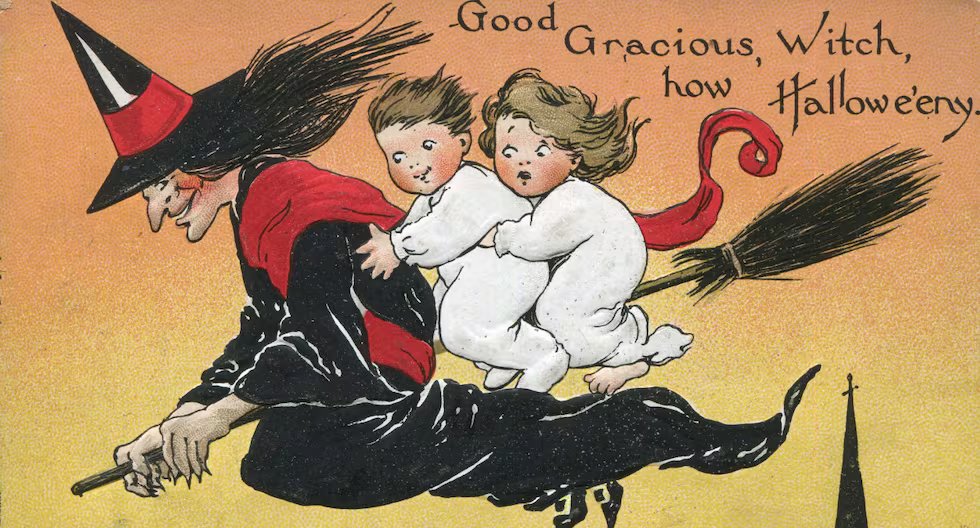
It’s like a virus in space, an epidemic of white mold, which appears every year. One enters a cafeteria or a doctor’s office or a restaurant and before sitting down, one can see the figurines of ghosts, skulls, dolls with wide mouths, grimaces, bones, entire skeletons smiling with a certain pale arrogance. It is a children’s festival of the dead that is a celebration of fear.
I enter a bank branch and find clouds of white threads. From them hang witches with brooms, demons with burning eyes, boastful and happy ghosts. It is an overwhelming spectacle, with which one can lose one’s senses. I try to control myself.
With my usual impertinence, I talk to an official I don’t know, and I ask him why the hell they follow a holiday foreign to us, which only seeks to infantilize a holiday like All Souls’ Day. And furthermore, I add, what they should be celebrating is the Creole Song Day. The man smiles at me with professional kindness (I notice a hint of compassion towards whom he considers an elderly and grumpy adult), and answers that he agrees with me. These are orders from headquarters, he observes. What are we going to do? Then he adds: “But I also prefer to celebrate Creole Song Day.” I tell him that instead of those little witches they should have here and in all the agencies the photos of Óscar Avilés, ‘Zambo’ Cavero and Chabuca Granda and Susana Baca. He smiles at me patiently. Well then. It is what it is, philosophy. Well, let’s continue with what I came to the bank to do and forget about the skulls.
The reason why one feels lost in this jungle of white nets and floating ghosts is the festival of Celtic origin. Samhain was celebrated between October 31 and November 1. In the northern hemisphere it marked the end of the harvest season and the beginning of winter. It was a way to face, therefore, a season of frozen weather, linked to illness and death. The night of the 31st in particular marked the threshold at which the dead could come to earth. That is why the ancient Celts sought to use masks and bonfires that would scare away the spirits. This belief, which is about three thousand years old, was known as All Hallows Evethat is, All Saints’ Eve. That name became halloween. Later in the 8th century, Pope Gregory established November 1 as All Saints’ Day. It was a way to confront pagan festivals. The medieval custom also appeared of children going from door to door asking for soul cakes in exchange for praying for the deceased relatives of the house. These traditions were brought to the United States by Irish and Scottish immigrants who found in pumpkins a container for their lit celebrations.
Soon we will see other absurd examples of an alienation typical of each end of the year. Simply imported from the winter of the northern hemisphere, Santa Claus suits will dress some gentlemen who are going to sweat in the heat of the winter for hours. El Niño phenomenon. For them it will be a fiery Christmas. The commercial interest of this whole shebang is part of our cult of the forms of the exterior. Better to celebrate Niño Manuelito. Maybe one day.